
Water tanks silently support daily life in homes, apartments, commercial buildings, and industries. While water appears clean on the surface, tanks often hide layers of sediment, algae, and bacteria that slowly affect water quality. Poorly maintained tanks can lead to health risks, unpleasant odors, and plumbing issues that are costly to fix later.
Modern maintenance practices now rely on professional tools offered by SGT Multiclean Equipments to ensure thorough and safe water tank cleaning. Instead of depending on outdated manual methods, facility managers increasingly choose efficient solutions supported by SGT Multiclean Equipments to maintain hygiene, meet safety standards, and protect water storage systems.
The Hidden Risks of Unclean Water Tanks
Unclean water tanks are one of the most overlooked hygiene risks in buildings. Over time, dust, rust particles, microbial growth, and organic waste settle inside tanks.
These contaminants may cause:
- Waterborne illnesses
- Skin and stomach infections
- Bad taste and odor in water
- Blocked pipes and damaged fixtures
Ignoring tank cleaning can quietly affect large numbers of people, making preventive maintenance essential.
How Equipment-Based Cleaning Improves Water Safety
Using proper equipment transforms water tank cleaning from a risky manual task into a controlled, efficient process. Machines ensure even cleaning, deep removal of sludge, and minimal human exposure.
Equipment-based cleaning:
- Reduces health risks for workers
- Ensures uniform cleaning results
- Saves time and water
- Improves overall water quality
This approach is now the preferred standard for residential and commercial properties.
Best Water Tank Cleaning Equipments for Effective Maintenance
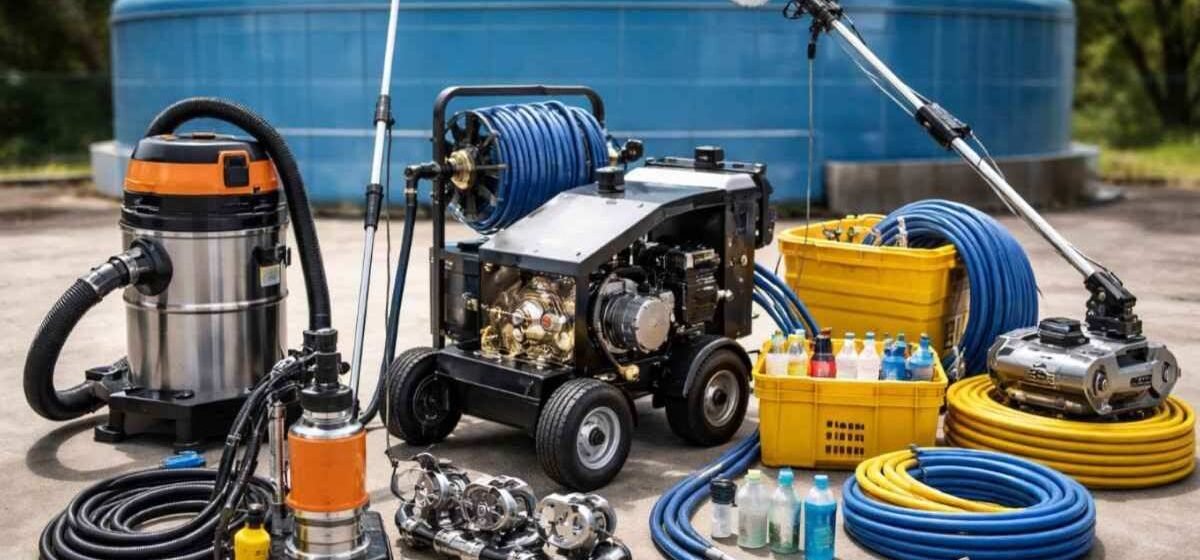
Choosing the right equipment is the foundation of successful water tank maintenance. Each machine plays a specific role in removing dirt, sludge, and microorganisms while maintaining tank integrity.
High-Pressure Cleaning Systems
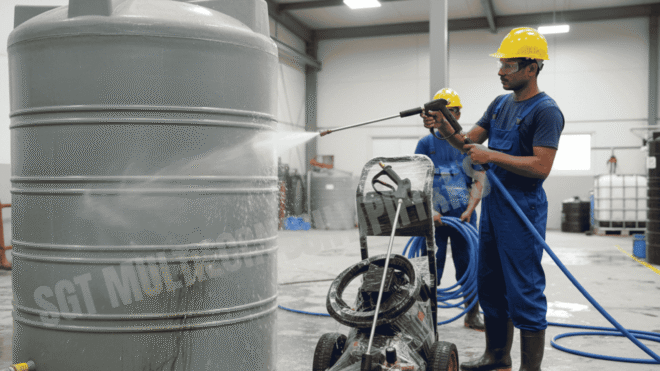
High-pressure cleaning systems are essential for loosening stubborn dirt and scale from tank walls and floors. They direct controlled water force to areas where contaminants build up the most.
These systems are effective for:
- Removing algae layers
- Cleaning corners and joints
- Reducing chemical dependency
Pressure control is important to avoid damaging tank surfaces, especially plastic and coated tanks.
Industrial Wet Vacuum Machines
Once dirt is loosened, wet vacuum machines remove contaminated water and sludge from the tank. This step is crucial to prevent recontamination.
Wet vacuum machines help by:
- Extracting dirty water efficiently
- Keeping tanks dry after cleaning
- Reducing manual scooping
They are especially useful for underground tanks and large storage systems.
Sludge and Sediment Extractors
Sediment settles at the bottom of tanks and hardens over time. Sludge extractors are designed to lift heavy deposits without disturbing tank structure.
These machines improve:
- Cleaning depth
- Water clarity
- Long-term hygiene
They are widely used in apartment complexes and industrial facilities with high water consumption.
Circulation Pumps for Rinsing
Cleaning pumps help circulate water during rinsing to flush out fine particles left behind after washing. This ensures no residue remains inside the tank.
They improve efficiency by:
- Reaching hidden areas
- Reducing rinse time
- Supporting consistent results
Circulation pumps are a valuable addition to professional cleaning setups.
Robotic and No-Entry Cleaning Machines
Robotic water tank cleaners are designed for safety-focused environments. These machines eliminate the need for human entry into confined spaces.
Benefits include:
- Enhanced worker safety
- Consistent automated cleaning
- Ideal for large or hazardous tanks
Robotic systems are increasingly adopted by industries and hospitals.
Disinfection and Sanitization Tools
After physical cleaning, disinfection is critical. Sanitization equipment ensures that harmful microorganisms are eliminated.
Proper disinfection:
- Protects water quality
- Meets health regulations
- Prevents bacterial regrowth
Spray systems and dosing units ensure accurate and uniform disinfectant application.
Equipment Selection Based on Tank Material
Each tank material reacts differently to cleaning pressure and chemicals.
Plastic tanks need gentle pressure. Concrete tanks require stronger cleaning force. Stainless steel tanks benefit from non-abrasive methods.
Choosing compatible equipment prevents surface damage and extends tank life.
Safety Standards in Water Tank Cleaning
Water tank cleaning involves moisture, electricity, and confined spaces. Equipment with built-in safety features reduces accidents.
Important safety features include:
- Electrical insulation
- Pressure regulation
- Secure hose fittings
Safe equipment protects workers and property alike.
Reducing Water Wastage During Cleaning
Efficient cleaning equipment uses less water while delivering better results. Controlled pressure systems and suction machines reduce unnecessary water loss.
This helps:
- Lower utility costs
- Support sustainability goals
- Comply with water conservation norms
Water-efficient cleaning is essential in water-scarce regions.
Ease of Handling and Operation
Equipment should be simple to operate, even for new staff. Easy controls, mobility, and clear indicators improve productivity.
User-friendly machines:
- Reduce training time
- Minimize errors
- Improve service speed
This is especially important for professional cleaning service providers.
Maintenance and Equipment Lifespan
Regular servicing keeps machines reliable and efficient. Equipment designed for easy maintenance saves time and repair costs.
Good maintenance ensures:
- Longer machine life
- Consistent performance
- Better return on investment
Reliable equipment supports uninterrupted cleaning schedules.
Cost vs Long-Term Value
Initial price should not be the only deciding factor. Low-cost machines may require frequent repairs and replacements.
High-quality equipment offers:
- Better durability
- Lower operating costs
- Improved performance
Smart investment leads to long-term savings.
Where These Equipments Are Commonly Used
Water tank cleaning equipment is used across:
- Residential apartments
- Hospitals and clinic
- Hotels and resorts
- Factories and warehouses
- Educational institutions
Each environment benefits from cleaner water and safer storage systems.
Future Trends in Water Tank Cleaning
Automation, robotic systems, and eco-friendly cleaning methods are shaping the future of tank maintenance.
Upcoming solutions focus on:
- Zero human entry
- Minimal chemical use
- Faster cleaning cycles
Adopting modern equipment keeps facilities compliant and future-ready.
FAQs
1. How frequently should water tanks be cleaned?
Most water tanks should be cleaned every 3 to 6 months, depending on usage and location.
2. Are machines better than manual cleaning?
Yes, machines provide deeper cleaning, improve safety, and deliver consistent results.
3. Can robotic cleaners replace manual workers?
Robotic systems reduce human entry but still require supervision and support staff.
4. Is chemical disinfection always necessary?
Yes, disinfection is essential to eliminate microorganisms after physical cleaning.
5. Do cleaning machines damage tanks?
When used correctly with proper settings, professional equipment cleans safely without damage.
Conclusion
Maintaining clean water tanks is not just about cleanliness, it’s about health, safety, and long-term reliability of water storage systems. Using the right combination of cleaning machines ensures thorough removal of contaminants while protecting tank structure and water quality.
With professional-grade solutions from SGT Multiclean Equipments, contact now to make water tank maintenance safer, faster, and more effective. Choosing equipment backed by SGT Multiclean Equipments helps buildings maintain high hygiene standards, minimize health risks, and ensure a reliable supply of safe water for everyday use.