 ₹ INR
₹ INR
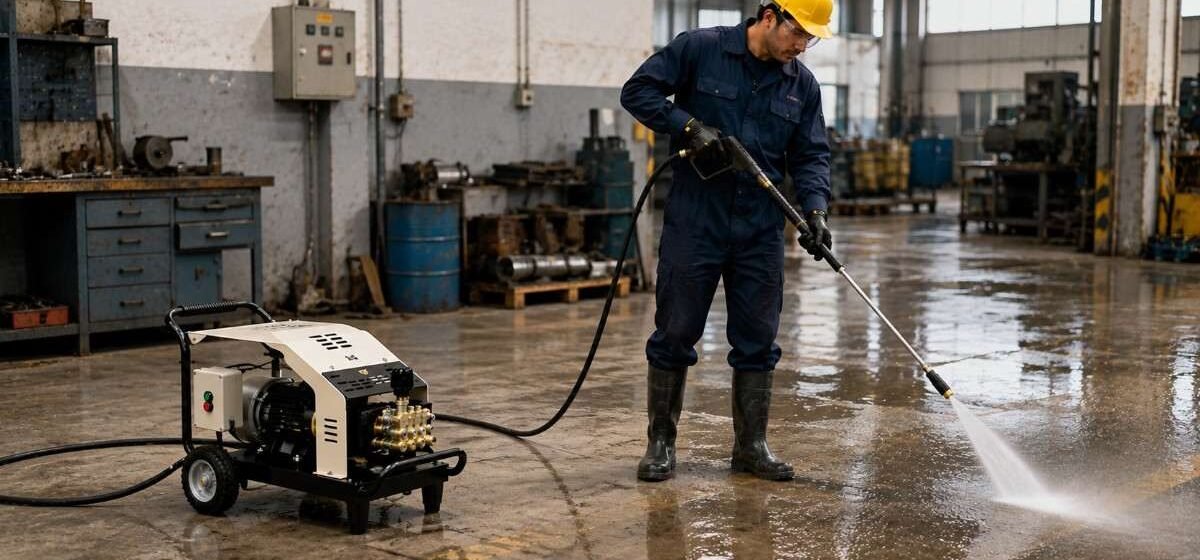
Your housekeeping crew has been scrubbing the loading bay by hand for two years and it still looks grey. A budget finally gets approved, you open a few supplier sites, and you’re staring at machines priced from ₹20,000 to ₹4 lakh whose spec sheets all look suspiciously similar. Picking a commercial pressure washer turns confusing fast, mostly because the one number everybody quotes is only half the story, which is where trusted suppliers such as SGT Multiclean Equipments can make the selection process easier.
This guide covers what decides whether a machine survives daily use in an Indian factory, warehouse or wash bay: pressure and flow, water temperature, power supply, and the shortcuts that kill a pump inside a year. With reliable commercial cleaning solutions from SGT Multiclean Equipments, you can focus on choosing equipment that matches your daily cleaning requirements.
What Separates a Commercial Pressure Washer from a Domestic One
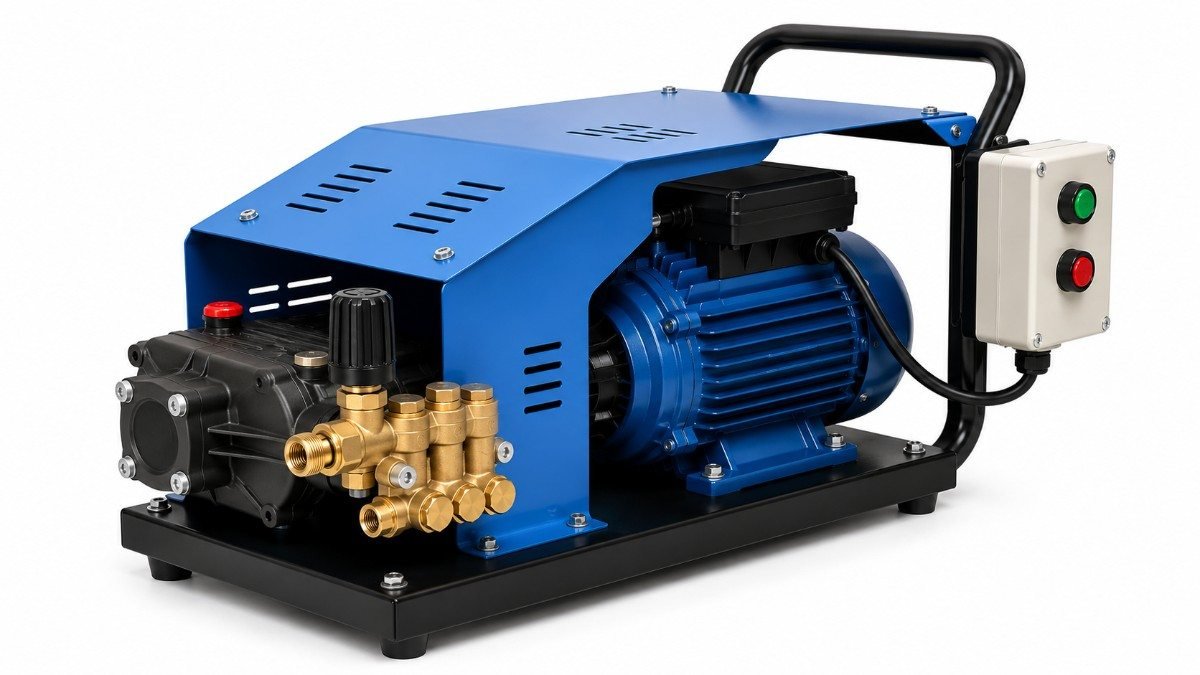
The gap between a ₹9,000 DIY unit and a real commercial pressure washer isn’t branding. It’s the pump. Domestic machines run an axial wobble-plate pump on a universal motor spinning around 3,400 rpm, cheap and light and built for maybe an hour of use a week. A professional pressure washer uses a triplex plunger pump with ceramic pistons, a brass manifold, and an induction motor turning at roughly 1,450 rpm. Lower speed, less heat, far less wear.
That difference shows up in the third year, not the third week. Duty cycle is the honest measure: a domestic unit handles short bursts, while a heavy duty pressure washer is rated for continuous operation across a full shift. If two or three operators use it daily, the cheaper option becomes the expensive one once you count downtime and pump rebuilds. Ask early whether the pump can be rebuilt with a seal kit.
High Pressure Washer Specs: Bar, PSI and Flow Rate
Reading Pressure Ratings Honestly
Pressure is measured in bars (1 bar is roughly 14.5 PSI). Most listings quote a peak figure, which the machine produces only briefly at the pump outlet with no load. Working pressure is the number worth comparing. A high pressure washer rated 200 bar peaks might settle at 150 to 160 bar in real use, and that’s fine as long as you know it.
For general commercial cleaning, 120 to 150 bar handles floors, vehicles and painted surfaces. Above 200 bar you’re into concrete, weld scale and heavy degreasing, and you start risking damage to render, tiles and paint if the operator gets careless.
Why Flow Rate Decides Your Cleaning Speed
Flow rate, quoted in liters per minute, is the spec buyers ignore and later regret. Pressure breaks the dirt loose; water volume carries it away. Two machines both at 150 bar, one at 8 LPM and one at 15 LPM, will not clean the same yard at the same time. The higher flow unit finishes close to twice as fast.
Covering large areas daily? Priorities LPM. Cutting hardened deposits off small parts? Priorities bar.
Hot Water or Cold Water?
Cold water suits mud, dust, loose grime and general washdown, which covers most Indian facility work. Hot water changes the equation wherever oil, grease or protein soils are involved. Water at 60 to 80°C dissolves fats that cold water pushes around, so food plants, dairies, commercial kitchens and bus depots often justify it.
The trade-off is cost. A hot water commercial pressure washing machine carries a diesel-fired boiler coil, a fuel tank and more parts to service, and typically costs two to three times its cold equivalent. It also cuts chemical use noticeably. If grease is your main enemy, a hot commercial pressure washing machine pays back; if it isn’t, you’re buying maintenance you don’t need.
Motor, Pump and Power: Choosing a Heavy-Duty Pressure Washer
Single Phase or Three Phase
Anything above roughly 3 kW is generally three-phase, and most industrial-grade machines assume a 415V supply. Check your available load before ordering, not after. Plenty of buyers have taken delivery of a heavy-duty pressure washer only to find the wash bay on a single-phase line with no headroom in the sanctioned load.
Duty Cycle, Protection and Enclosure
Look for thermal overload protection, a total-stop system that cuts the motor when the trigger is released, and low-water protection on hot units. If the machine lives in a wet bay, an IP55 motor enclosure tolerates washdown and dust far better.
Matching a Commercial Pressure Washer to the Job
| Application | Working pressure | Flow rate | Water temp | Typical motor |
| Car and bike wash bays | 100–150 bar | 11–15 LPM | Cold | 3–5.5 kW |
| Warehouse floors and yards | 150–200 bar | 15–21 LPM | Cold | 5.5–7.5 kW |
| Food processing and dairy | 100–150 bar | 15–20 LPM | Hot to 80°C | 5–7.5 kW |
| Workshop degreasing | 150–200 bar | 15–21 LPM | Hot | 7.5 kW and up |
| Apartment common areas | 130–160 bar | 10–15 LPM | Cold | 3–5.5 kW |
Adjust for daily running hours. A commercial pressure washer machine used two hours a day can sit at the lower end of each band; one running six hours across two shifts should be specified a step above what the task strictly demands.
Commercial Pressure Washer Price Ranges in India
Indicative figures only, since pricing depends on specification, pump brand, accessories and warranty terms. Light commercial cold-water units on single phase generally land around ₹35,000 to ₹90,000. Three-phase machines with triplex pumps typically run ₹1.2 lakh to ₹2.8 lakh. Diesel-fired hot water models usually start near ₹3.5 lakh.
Compare landed cost rather than sticker price. A seal kit, nozzles, a 15-metre hose and annual service add up, and a cheap commercial pressure washer machine with no local spares support costs more over five years than a well-supported one bought at a premium.
Water Quality, Accessories and Upkeep
Hard water quietly destroys pumps across much of Karnataka. Scale builds inside the head, pressure drops, and the machine gets blamed. An inlet filter is non-negotiable, and a settling tank pays for itself where borewell water feeds the bay.
A short habit list that genuinely extends the life of any professional pressure washer:
• Flush the pump with clean water after chemical use, every time.
• Change pump oil at the interval in the manual, usually every 300 to 500 hours.
• Never run the unit dry, even briefly.
• Store nozzles in a marked holder so operators stop grabbing the 0-degree tip.
A Buying Checklist Before You Release the PO
1. Confirm working pressure and LPM, not just the peak figure.
2. Verify your power supply, phase and sanctioned load.
3. Decide hot or cold based on the soil you’re actually removing.
4. Ask for pump make and rebuild kit availability.
5. Get warranty scope in writing, especially the pump exclusions.
6. Arrange a demo on your own dirt, not a clean sample panel.
Frequently Asked Questions
How much pressure do I need for factory floors?
For concrete floors carrying oil film and traffic marks, 150 to 200 bar with 15 LPM or more is the practical range. Going higher rarely cleans faster and can etch weaker concrete. If the floor is coated or epoxy-finished, stay closer to 150 bar and rely on flow rate plus a surface cleaner attachment.
Can one commercial pressure washer handle both vehicles and plant cleaning?
Often yes, if you buy for the harder job and control it with nozzles. A single high pressure washer at 150 bar with an adjustable lance and interchangeable tips can wash vehicles safely at reduced pressure and still tackle yard grime. What you cannot do is stretch a light domestic unit upward.
Is a petrol or diesel engine unit better than an electric one?
Only where power isn’t available. Engine-driven units suit remote sites, construction yards and mobile washing services. They cost more to run, need fuel handling, and can’t be used indoors because of exhaust. Where a three-phase point exists, an electric commercial pressure washer is cheaper to operate and quieter.
How long should a good machine last?
With clean water, scheduled pump oil changes and trained operators, a well-built commercial pressure washer typically gives five to ten years of service, with pump rebuilds along the way. Neglect the inlet filter or run it dry a few times and that can drop to two. Operator training matters more than most buyers expect.
Conclusion
Buying well comes down to three honest answers: what soil you’re removing, how many hours a day the machine runs, and what power you have at the wash point. Get those right and the spec sheet stops being intimidating. A commercial pressure washer sized correctly for your workload cleans faster, uses less chemical and outlasts two cheap replacements, while an underspecified one quietly costs you labour hours every shift. SGT Multiclean Equipments can help you evaluate the right equipment based on these practical requirements. See a demo on your own surfaces, and ask hard questions about pump rebuilds before you commit.
If you’re weighing up options, talking to an experienced supplier who can assess your site conditions is the quickest way to get answers matched to your situation. Contact SGT Multiclean Equipments today to discuss your cleaning requirements and find the right commercial pressure washer for your site.