 ₹ INR
₹ INR
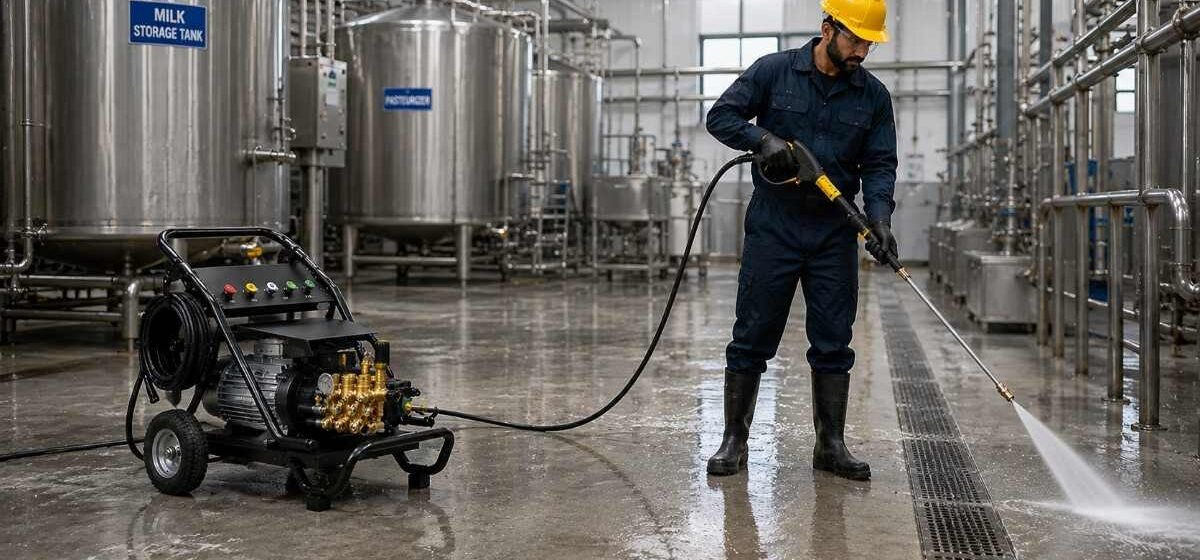
Some plants get through three machines in four years on the same wash bay. Each one works beautifully for a few months, then loses pressure, then dies. Usually nothing is wrong with the machines. They are simply domestic-grade units being asked to do eight-hour shifts. Finding the best pressure washer for commercial and industrial cleaning starts with being honest about how hard the machine will actually work, not with comparing bar ratings across tabs. SGT Multiclean Equipments can be a reliable choice when businesses need equipment suited to demanding commercial cleaning requirements.
This guide walks through the specifications that matter, where hot water earns its cost, and how to match a machine to concrete, vehicles, food plants or engineering shops without overbuying. With dependable equipment options from SGT Multiclean Equipments, businesses can make a more informed decision based on their actual cleaning workload.
What Makes a Heavy-Duty Pressure Washer Different
Open the covers and the difference is obvious. A heavy-duty pressure washer runs a triplex plunger pump with ceramic pistons, a brass or forged head, and a slow-turning induction motor at around 1,450 rpm. Consumer machines use an axial pump on a universal motor spinning at more than double that speed. Faster spinning means more heat, and heat is what kills seals.
Duty cycle is the specification nobody prints prominently. A light unit is designed for intermittent use; a professional pressure washer is built to run continuously through a shift, with a bypass system that protects the pump when the trigger is released. If your cleaning window is thirty minutes a day, you have options. If it’s four hours across two shifts, you don’t.
The other quiet difference is repairability. Industrial machines are built to be opened, resealed and put back to work. Cheaper units are largely disposable.
How to Judge the Best Pressure Washer for Commercial and Industrial Cleaning
Working Pressure, Not Peak Pressure
Bar ratings on listings are usually peak figures measured at the pump with no load. Working pressure, the figure the machine actually holds through a lance, is what you should compare. A high pressure washer advertised at 250 bar might deliver 190 in practice. That’s not dishonest, but it does mean two machines with identical headline numbers can perform differently.
For most commercial work, 120 to 160 bar is enough. Concrete preparation, weld scale and hardened deposits push into 200 bar and beyond, and above that you’re into specialist territory where surface damage becomes a genuine risk.
Flow Rate Decides How Long the Job Takes
Liters per minute is the specification that separates a machine that finishes a warehouse floor before lunch from one that doesn’t. Pressure loosens the dirt; volume flushes it away. Moving from 8 LPM to 16 LPM roughly halves cleaning time on large horizontal surfaces. For any industrial pressure washer buying decision, treat LPM as equally important as bar.
Hot Water, Cold Water or Steam
Cold water covers dust, mud, cement residue and general washdown, which is most facility work in India. Hot water at 60 to 80°C is what you need for oil, grease and food soils, because heat dissolves fats that cold water only relocates. Steam-capable machines go higher still and suit sanitising work in food and pharma environments. The cost difference is real. A hot water unit adds a burner, coil, fuel tank and controls, and typically runs two to three times the price of an equivalent cold machine, plus diesel and more servicing. It also cuts detergent consumption noticeably, which offsets part of that over time.
Best Pressure Washer for Commercial and Industrial Cleaning by Application
| Site type | Suggested pressure | Flow rate | Water | Power |
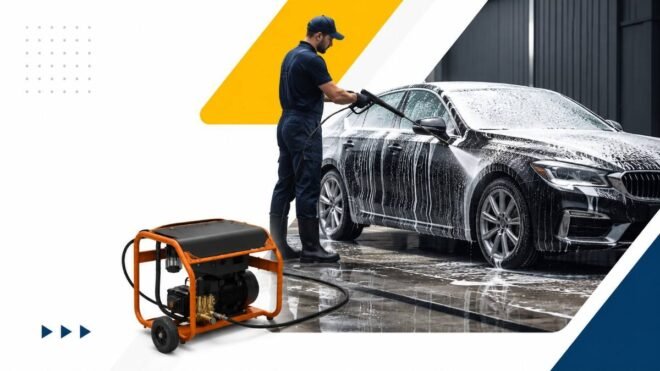
| Car and fleet wash bays | 120–150 bar | 12–15 LPM | Cold | Single or three phase |
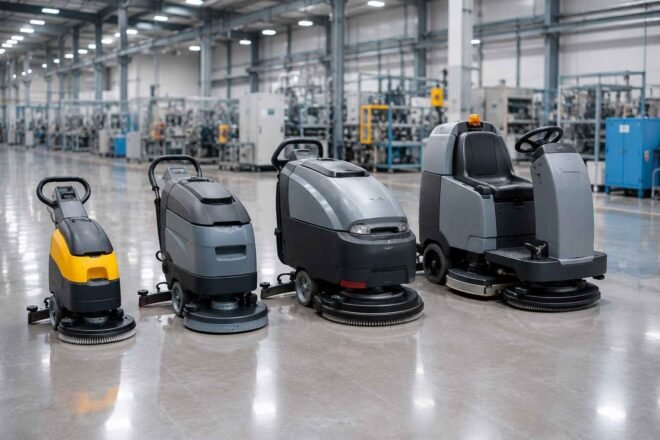
| Warehouses and loading yards | 150–200 bar | 15–21 LPM | Cold | Three phases |
| Food processing and dairy | 100–150 bar | 15–20 LPM | Hot | Three phases |
| Engineering and machine shops | 180–250 bar | 15–21 LPM | Hot | Three phases |
| Hotels and hospitals | 130–160 bar | 10–15 LPM | Cold | Single phase |
| Construction sites | 150–200 bar | 15–18 LPM | Cold | Engine driven |
There is no single best pressure washer for commercial and industrial cleaning across all of these, so use the table as a starting point and adjust for hours. A commercial pressure washer running two hours daily can sit at the lower edge of a band. One running six hours across shifts should be specified a level above what the task appears to need, because sustained duty is where undersized machines fail.
Electric, Petrol or Diesel Drive
Electric, the Default for Fixed Sites
Electric machines dominate indoor and fixed-site work. They’re quieter, cheaper per hour, and produce no exhaust, which matters in enclosed wash bays and food plants. Anything above roughly 3 kW usually needs a 415V three-phase supply, so confirm your sanctioned load before ordering a professional pressure washer.
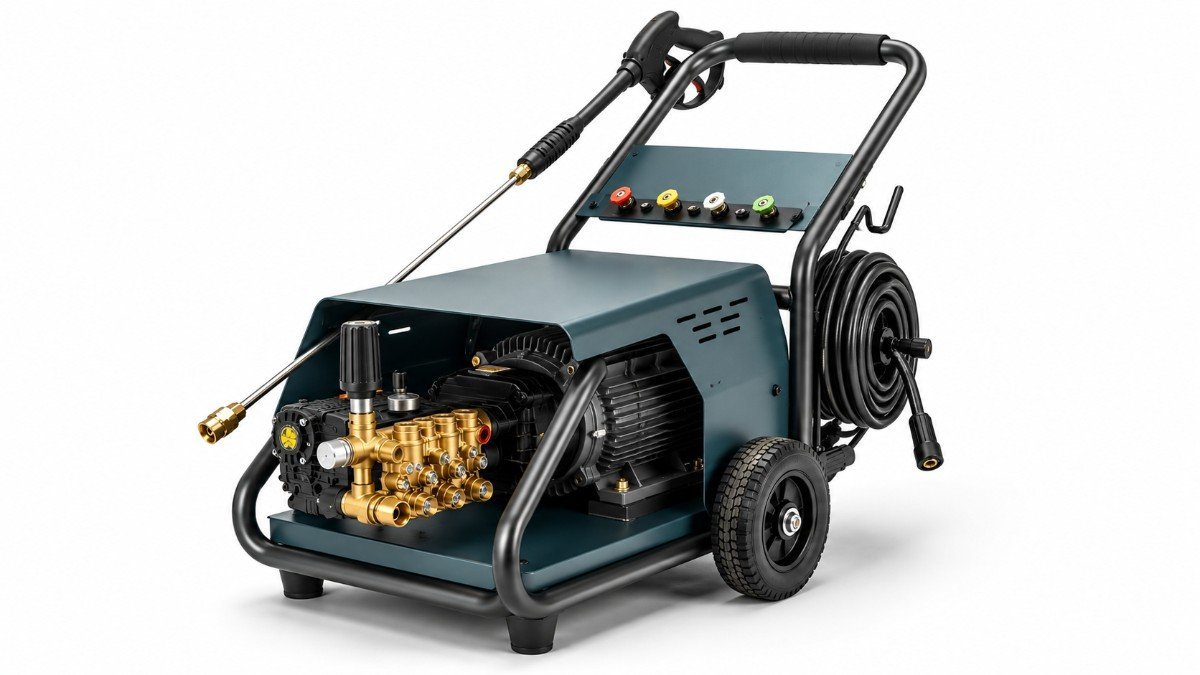
An Engine-Driven Commercial Pressure Washer for Remote Work
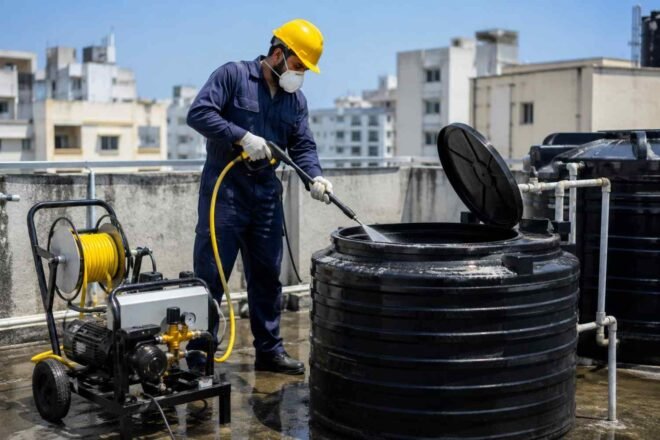
Engine-driven units make sense where power isn’t available: construction sites, remote yards, mobile washing services, tank farms. They cost more to run, need fuel handling and regular engine servicing, and cannot be used indoors. Some operators keep one of each rather than compromising.
Accessories That Change the Result More Than Specs Do
The right attachment often outperforms a bigger machine:
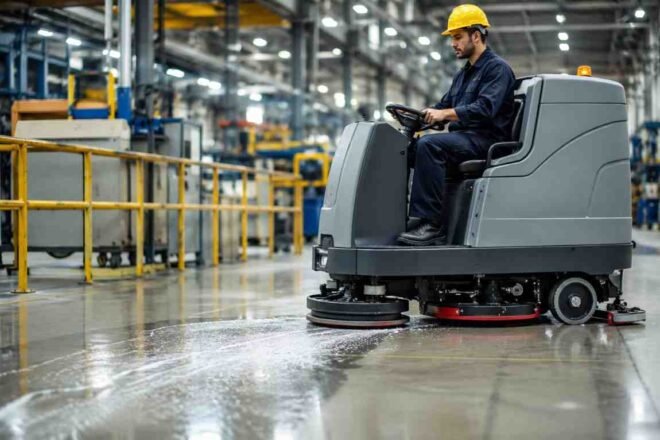
• Surface cleaners for floors, cutting time on large slabs by more than half
• Turbo or rotary nozzles for stubborn deposits without stepping up pressure
• Foam lances or injectors for chemical dwell time on greasy surfaces
• Telescopic lances for facades, tank exteriors and high structures
• Hose reels with 15 to 20 meters of hose, so operators stop moving the machine
• Drain and pipe cleaning kits, useful in hotels and processing plants
Nozzle discipline matters too. A 0-degree tip on any high-pressure washer strips paint and etches concrete, while a 25-degree tip does most jobs safely. Color-coded holders and ten minutes of operator training prevent a surprising amount of damage.
Site Conditions Buyers Consistently Forget
Water quality comes first. Borewell water across much of Karnataka carries enough hardness to scale a pump head and heating coil within months, and that alone shortens the life of an otherwise sound industrial pressure washer. An inlet filter is essential, and a settling tank or softener is worth the space it takes.
Drainage is second. High flow rates put a lot of water on the floor, and a wash bay without a proper trap creates a compliance problem as well as a mess. Where oil is involved, an interceptor or a water recycling setup may be required. Power point location, hose routing and safe storage all sound trivial until the machine is on site and the nearest three-phase point is thirty meters away.
Frequently Asked Questions
What pressure and flow suit a mid-sized factory?
For a factory cleaning floors, machinery exteriors and yards daily, a three-phase machine at 150 to 200 bar with 15 to 18 LPM covers almost everything. Add hot water only if oil and grease are the main soils. Pair it with a surface cleaner for floors and you’ll cut cleaning hours substantially.
Can one machine cover both light and heavy cleaning?
Usually yes. Buy for the hardest regular job, then use nozzle selection and an adjustable lance to work gently on vehicles or painted surfaces. Choosing the best pressure washer for commercial and industrial cleaning generally means one well-specified unit rather than two compromised ones, provided operators are trained on tip selection.
How long should a commercial machine last?
With clean inlet water, scheduled pump oil changes and trained operators, a well-built industrial pressure washer commonly serves five to ten years, with pump rebuilds along the way. Running it dry, ignoring the inlet filter or leaving chemicals in the pump can cut that to two years or less.
Is a higher bar rating always better?
No. Excess pressure damages render, tiles, paint, seals and older concrete, and it doesn’t clean large areas faster. Beyond about 200 bar you’re solving specialist problems like weld scale or coating removal. For general work, adequate pressure with generous flow beats extreme pressure with weak flow every time.
Conclusion
Choosing the best pressure washer for commercial and industrial cleaning comes down to four honest answers: what soil you’re removing, how many hours a day the machine runs, what power exists at the wash point, and how good your water is. Get that right and the shortlist narrows quickly. Buying on headline bar figures alone is how facilities end up replacing machines every eighteen months, paying twice for what one properly specified unit would have handled. SGT Multiclean Equipments can be a trusted option for businesses looking for equipment suited to demanding cleaning requirements.
Arrange a demonstration on your own surfaces before committing, and ask directly about spares and service response. Talking to an experienced supplier as SGT Multiclean Equipments, known for practical commercial cleaning equipment solutions, who can assess your site conditions is the fastest route to a decision you won’t revisit.