 ₹ INR

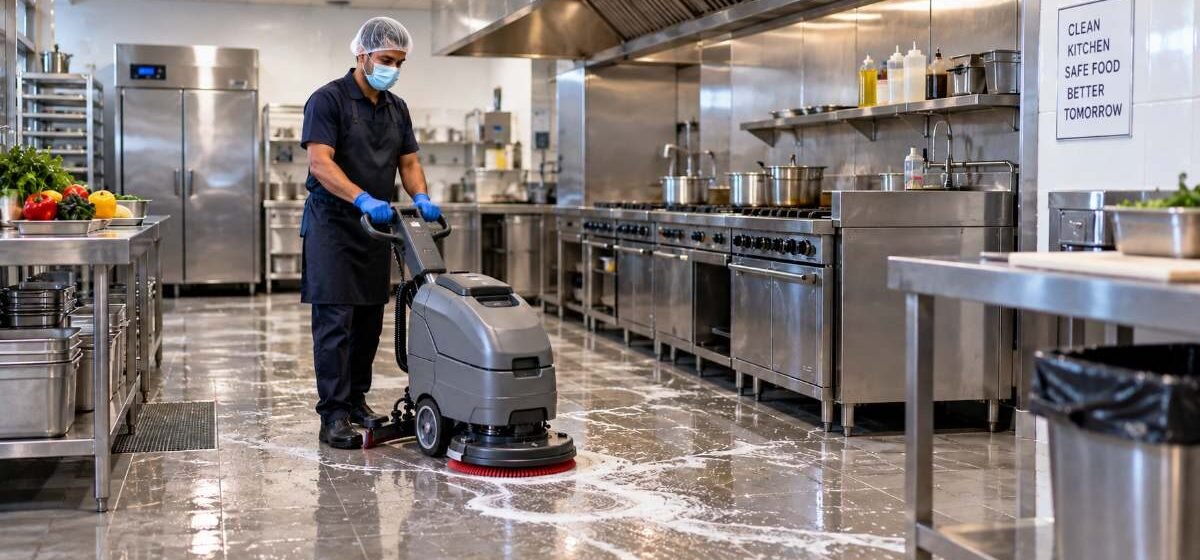
A tech park facility manager once described his problem simply: twelve housekeeping staff, 40,000 sq ft of granite lobby and vitrified corridor, and a lift lobby that looked bad by 10 am every day no matter what they did. He didn’t need more people. He needed the right floor cleaning machines for commercial buildings of that size, matched to those surfaces. SGT Multiclean Equipments can help you choose cleaning equipment suited to different commercial floor requirements.
Most buying mistakes start the same way, with a machine chosen from a brochure rather than a floor plan. Get the match right and one operator covers what four used to. Get it wrong and you own an expensive object that lives in a store room. Here’s how to think about it properly. SGT Multiclean Equipments offers cleaning equipment options designed for different commercial applications.
Start With the Floor, Not the Machine
Before you look at any equipment, write down four things: total area cleaned daily, the surface types, the soil load, and the cleaning window. Those four numbers eliminate most of the catalogue for you.
A 3,000 sq ft restaurant with a greasy kitchen has almost nothing in common with a 60,000 sq ft warehouse carrying pallet dust, even though both need “floor cleaning”. Grease needs chemistry and brush pressure. Dust needs sweeping before anything wet touches it. Marble needs low speed and the right pad, and reacts badly to acidic cleaners.
Soil load is the one people underestimate. An entrance lobby in monsoon season picks up more grit in a day than a server room does in a month, and that grit is what wears out a commercial floor cleaning machine faster than anything else. Good entrance matting, changed and cleaned regularly, quietly reduces the workload on every machine behind it.
Types of Floor Cleaning Machines for Commercial Buildings
Four categories cover almost every requirement.
Scrubber dryers
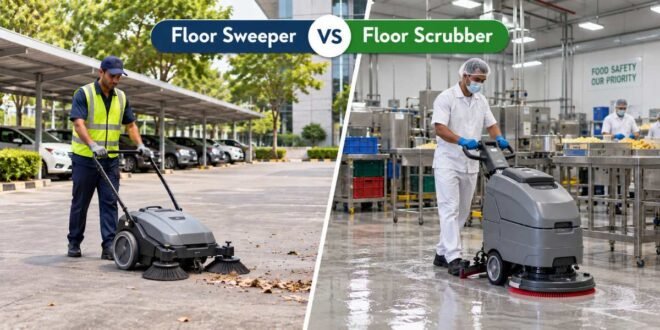
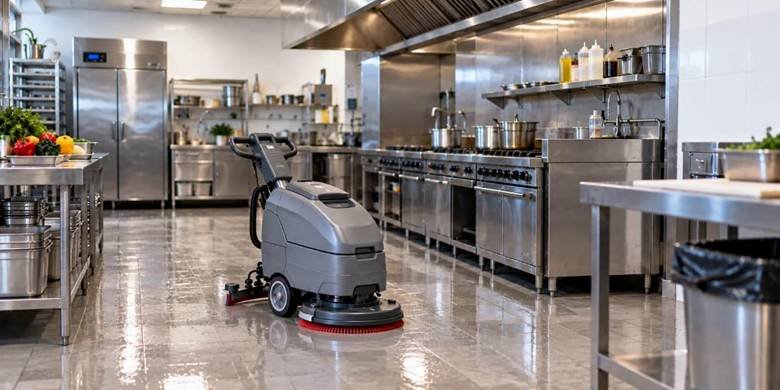
The category most buildings should start with. A scrubber dryer lays solution, scrubs, and vacuums the water back through a squeegee in one pass, leaving a floor that’s walkable in a minute. Walk-behind models with 430 to 800 mm decks suit corridors, lobbies and mid-size floors. Ride-ons with 700 to 1,200 mm decks make sense above roughly 5,000 sq m cleaned daily.
Single disc machines and polishers
One motor, one rotating disc, and a shelf of pads. Change the pad and the same unit scrubs, strips wax, buffs vinyl or hones stone. Slow, but no other machine covers so many jobs, which is why it’s usually the second purchase in a mixed building.
Sweepers
Walk-behind and ride-on sweepers pick up dry debris, dust and litter using a main brush and side brooms with filtration. On any floor with grit, sweeping first protects your scrubber’s blades and brushes.
Vacuums and specialised units
Wet-and-dry vacuums, backpack vacuums for stairs and upholstery, and carpet extractors for offices and banquet halls. Small spend, high daily value.
Sizing a Floor Scrubber Machine to Your Area
Rated productivity on a spec sheet assumes a clear, straight floor. Real buildings have columns, fixtures and doorways, so plan on 55 to 65 percent of the rated figure. Use this as a starting point:
| Daily area | Suggested machine | Realistic output |
| Under 1,000 sq m | 17-inch single disc | 250–400 sq m/hr |
| 1,000–3,000 sq m | 500 mm walk-behind scrubber | 1,200–1,800 sq m/hr |
| 3,000–8,000 sq m | 700 mm traction scrubber | 1,800–2,500 sq m/hr |
| Above 8,000 sq m | Ride-on scrubber | 3,500–6,000 sq m/hr |
Then check the machine physically fits. Measure the narrowest doorway, the tightest aisle and the service lift before you commit to any floor scrubber machine, because deck width is useless if the unit can’t reach the floor it’s meant to clean.
Matching a Floor Polishing Machine to Marble and Stone
Commercial buildings in India are full of marble, granite and terrazzo, and those surfaces need different treatment from tile or concrete. A floor polishing machine running diamond or white pads at low speed restores gloss without grinding. What you must avoid is acidic cleaner on marble, which etches the surface permanently and no amount of buffing will fix it.
Vitrified tile is more forgiving but shows streaks, so control your dilution and change the water more often than feels necessary. Bare concrete in basements and service areas wants stiff brushes rather than pads, and honestly benefits more from regular sweeping than from aggressive scrubbing.
Epoxy flooring in pharma and food units is a separate case. It scratches under grit, so a professional floor cleaning machine used there should run softer pads and be paired with strict entrance control at the door.
What Industrial Floor Cleaning Equipment Costs
Indicative ranges, dependent on specification, build and inclusions:
• Single disc machine: Rs 45,000 to Rs 1,20,000
• Walk-behind scrubber dryer: Rs 2,00,000 to Rs 6,00,000
• Ride-on scrubber: Rs 8,00,000 to Rs 20,00,000
• Walk-behind sweeper: Rs 1,50,000 to Rs 4,00,000
• Wet-and-dry vacuum: Rs 25,000 to Rs 90,000
Purchase price is only part of the sum. Industrial floor cleaning equipment carries running costs that most first-time buyers miss: batteries every three to four years, brushes annually, squeegee blades two to four times a year on gritty floors, and an AMC typically costing 5 to 10 percent of machine value each year. Ask for those numbers upfront and build them into your comparison, because a cheaper machine with expensive consumables often costs more over five years.
Choosing Floor Cleaning Machines for Commercial Buildings: A Checklist
1. Measure the narrowest access point on every cleaning route
2. Ask for a demo on your dirtiest floor, not a showroom sample
3. Time an actual cleaning cycle instead of trusting rated output
4. Confirm battery run time under full load with brushes engaged
5. Get consumable prices in writing before you sign
6. Check spare parts availability and service response time in your city
7. Confirm operator training is included for more than one person
That sixth point deserves emphasis. A professional floor cleaning machine sitting idle for three weeks waiting on a vacuum motor costs you far more than the price difference you saved at purchase.
Maintenance That Keeps Machines Working
Daily habits decide machine life. Rinse the recovery tank at the end of every shift, because standing dirty water is what destroys vacuum motors and creates the smell everyone blames on the drains. Lift brushes off the floor during storage so bristles don’t take a set. Wipe squeegee blades and rotate them when one edge wears.
Charging discipline matters just as much. Flooded lead-acid batteries need topping up with distilled water and a full charge cycle, not repeated part charges. Lithium packs tolerate opportunity charging, which suits multi-shift buildings.
Keep a small stock of consumables on site. A commercial floor cleaning machine grounded for want of a Rs 900 squeegee blade is the most avoidable downtime in facilities work.
Frequently Asked Questions
Which machine should a commercial building buy first?
For most buildings, a walk-behind scrubber dryer is sized to the main circulation areas. It removes the mop-and-bucket bottleneck and dries as it goes, which cuts slip risk in public areas. Where flooring is mostly marble or highly varied, a single disc unit is often the more sensible first purchase.
How many machines does a large facility need?
Typically two or three floor cleaning machines for commercial buildings of that size: a scrubber for open floors, a single disc for detail work and polishing, and a sweeper if the site carries dry debris. Trying to make one machine cover everything usually means it does each job slowly.
Are battery machines better than cable machines?
For open floors, yes. Battery units remove trailing cables, which are both a trip hazard and the most common cause of machine damage. Cable machines still make sense for single disc work in small areas, where run time is short and a socket is always within reach.
How long do commercial cleaning machines last?
With sensible maintenance, seven to ten years for a good build. Batteries, brushes and blades are consumables replaced along the way. Machines usually fail early for preventable reasons: unrinsed tanks, damaged cables, ignored service intervals and untrained operators pushing them into walls.
Conclusion
The best floor cleaning machines for commercial buildings are the ones that match your actual floor area, surfaces, soil load and cleaning window, not the ones with the longest spec sheet. SGT Multiclean Equipments offers cleaning solutions that can be matched to different commercial building requirements. Start with a scrubber dryer sized honestly to your daily area, add a single disc unit for stone care and detail work, and put a sweeper in front of both if your site carries dust.
Budget for consumables and service from day one, and check that spares reach your city quickly. If you’re weighing up your options, walking an experienced supplier like SGT Multiclean Equipments through your floor plan and asking for an on-site demo is the fastest way to get answers matched to your building.