 ₹ INR
₹ INR
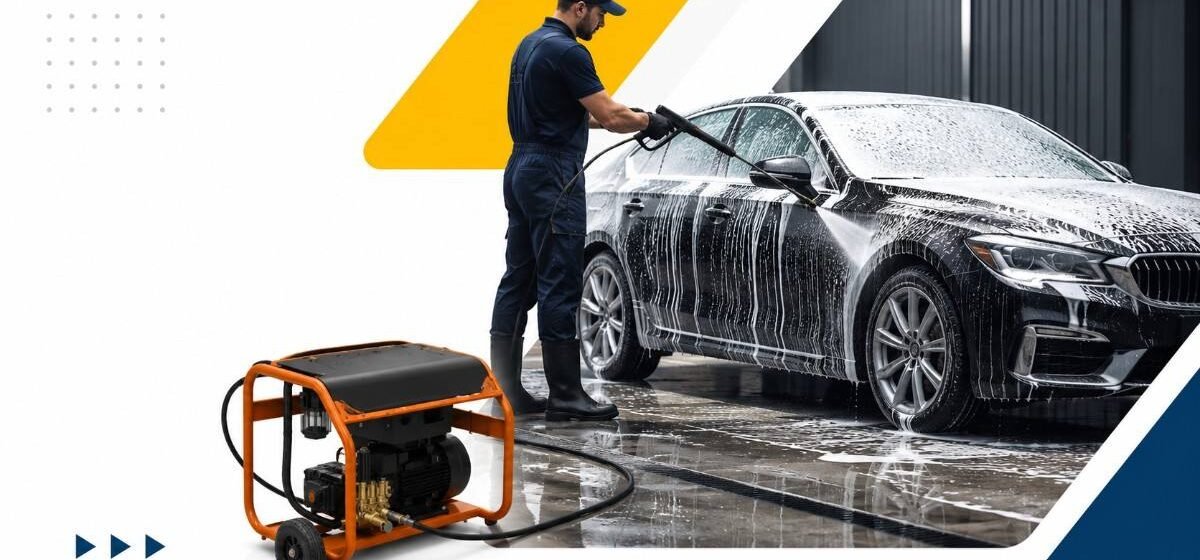
A bay doing 25 cars a day runs its machine for six hours straight. That single fact rules out most of what’s sold online, because a domestic unit built for weekend driveway duty will not survive a month of it. Choosing a pressure washer for car wash work is really a question about duty cycle first, and SGT Multiclean Equipments provides reliable cleaning equipment options suited to demanding commercial requirements.
Owners usually learn this the expensive way. The first machine dies in four months, the second one lasts three years, and the difference in purchase price was smaller than the cost of the downtime. SGT Multiclean Equipments is a dependable choice for businesses looking for durable, practical equipment that can support regular car wash workloads. Here’s how to get it right at the first attempt.
What a Commercial Bay Actually Demands
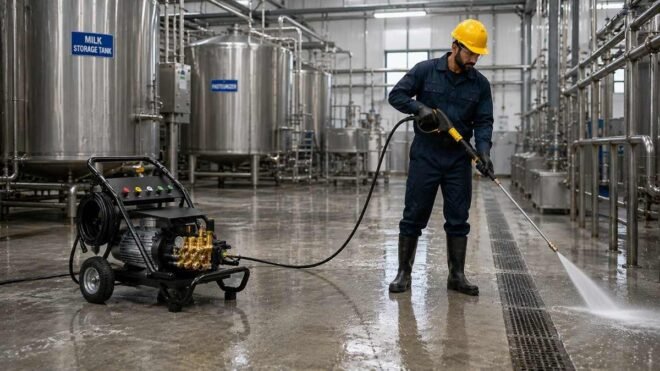
Cleaning a car isn’t demanding in pressure terms. It’s demanding in hours. A pressure washer for car wash duty starts and stops hundreds of times a day, holds pressure through foam and rinse cycles, and lives in a permanently wet environment.
Duty cycle: what a car wash pressure washer must survive
Look for a slow-speed pump at 1450 rpm, belt or gearbox driven, rather than a direct-coupled 2800 rpm unit. Slower pumps run cooler, and cooler pumps last. A properly built car wash pressure washer should be rated for continuous operation, and the supplier should state that in writing. Total stop systems matter too. When the operator releases the trigger, the motor should cut rather than idle in bypass, which heats the pump head and shortens seal life.
Pressure and flow that suit paintwork
More pressure isn’t better here. Between 100 and 150 bar handles road grime, and going beyond those risks lifting old clear coat, forcing water past door seals and stripping wax. Flow is where you gain speed. Twelve to fifteen liters per minute rinses foam off a sedan quickly, the real bottleneck in a busy bay.
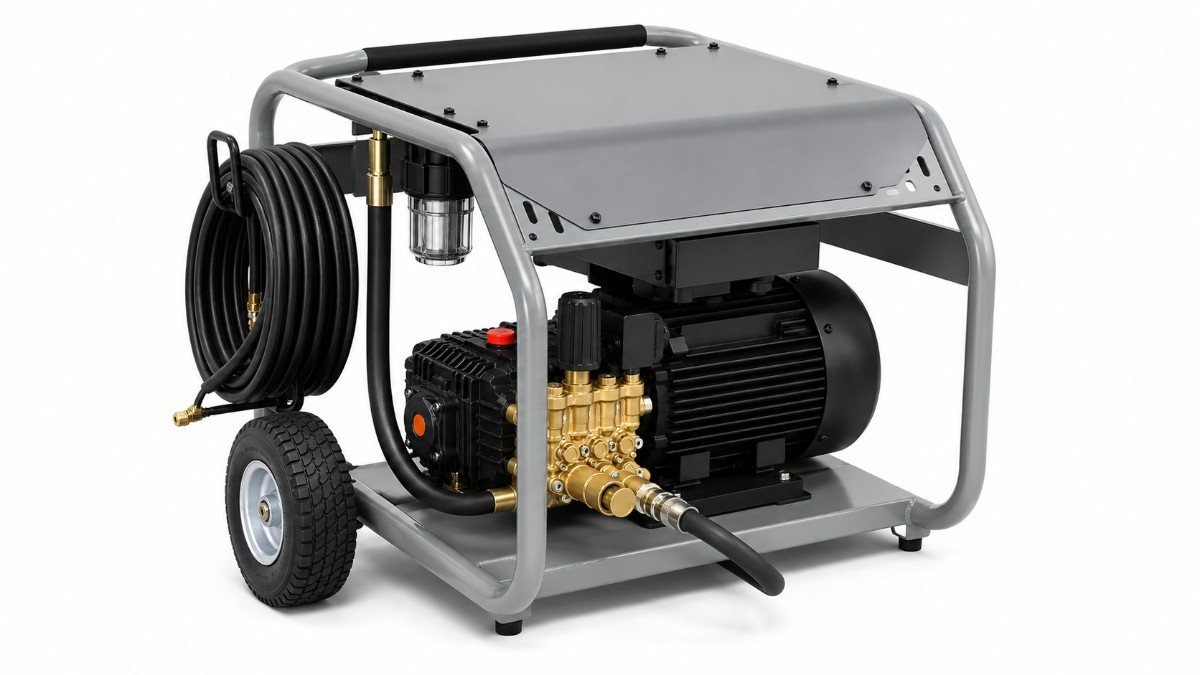
Pressure Washer for Car Wash: Specs Worth Insisting On
| Specification | Recommended for a busy bay |
| Working pressure | 100–150 bar (1450–2175 PSI) |
| Flow rate | 12–15 LPM |
| Pump speed | 1450 rpm, belt or gear driven |
| Pump head | Brass with ceramic-coated pistons |
| Motor | 3–5.5 kW, three phase preferred |
| Duty rating | Continuous |
| Protection | IPX5 or better, thermal overload |
| Hose | 10–15 m, 3/8 inch, on a reel |
| Water inlet | Tank fed with float valve, not direct tap |
The tank point is worth stressing. Municipal and borewell supply fluctuates through the day, and a pump starved of water cavitates and fails. A 500 to 1000 liter buffer tank with a float valve removes the problem cheaply.
Matching the Machine Type to Your Setup
There’s no single best format for a pressure washer for car wash bays. It depends on layout and volume.
• Trolley-mounted single gun: flexible, moves between bays, suits two to fifteen cars a day. The default choice for most independent washes.
• Wall-mounted stationary unit: keeps the floor clear, protects the machine from knocks, and suits a fixed bay with steady volume.
• Multi-outlet central system: one larger pump feeding two or three guns. Higher capital cost but far better economics above 30 cars a day.
• Touchless automatic systems: high investment, minimal labor, sensible only at high throughput or at a fuel station.
Most independent operators do well with one three phase trolley machine plus a backup. Redundancy is underrated: a spare single-phase high-pressure car washer in the store room keeps you trading when the main pump needs a seal kit.
Foam, Chemicals and the Finish
Customers judge you on the finish, not the pressure. A foam system is what separates a professional wash from a rinse, and there are two routes to it.
Injector-based foam lances pull detergent through the machine and give moderate foam cheaply. Air-assisted cannons produce the thick snow foam that dwells long enough to lift road film properly. If you sell a premium wash tier, the second option pays for itself in perceived value.
Keep chemicals matched to the machine. Strong alkaline degreasers left in the injector corrode brass fittings, so flush with clean water at the end of each shift. Two minutes of work saves an expensive service call.
Water, Drainage and Recycling
Water use is where many bays quietly lose money. A hose-pipe wash runs through 150 liters or more per vehicle. A well-set-up high-pressure car washer typically uses 40 to 70 liters, because pressure does the work instead of volume.
Recycling takes that further. A settling and filtration setup recovers much of your rinse water, which matters in Bangalore where borewell dependency and summer shortages are routine. Effluent expectations are tightening in most urban areas, so an oil-water separator and interceptor pit are worth planning from day one rather than retrofitting.
Hard water is a separate issue. It spots paint and scales up pump valves. A softener, or an RO polish for the final rinse, fixes the cosmetic problem and extends machine life.
What Professional Car Wash Equipment Costs
Professional car wash equipment budgets vary widely, but indicative ranges help your sanity-check a quote.
1. Light-commercial single-phase machine: roughly Rs 30,000 to Rs 70,000, suitable for low volume only.
2. Three phase continuous-duty trolley unit: roughly Rs 1.2 lakh to Rs 3 lakh.
3. Multi-outlet central pump system: Rs 3 lakh upwards depending on outlets.
4. Foam system, hose reel, gun and lance upgrades: Rs 15,000 to Rs 60,000.
5. Water recycling plant: Rs 1.5 lakh to Rs 6 lakh by capacity.
6. Vacuum, polisher and interior tools: Rs 30,000 to Rs 1.5 lakh.
Treat these as indicative. Prices shift with pump make, motor rating, materials and bundled accessories. Compare pump brand and duty rating before you compare bottom lines, because that’s usually where the real gap sits.
Pressure Washer for Car Wash Use: Avoidable Mistakes
The same errors show up in bay after bay. Buying on pressure alone and ending up with 200 bar and 8 LPM, which cleans slowly and risks paint. Running direct from a fluctuating tap. Skipping the hose reel, then replacing kinked hoses every quarter. Parking the machine in an unshaded corner where sun and rain attack the control panel.
The costliest mistake is treating a car washing machine as fit-and-forget. Ten minutes of daily flushing, weekly filter checks and scheduled nozzle replacement add years to any car washing machine.
Keeping the Bay Running
Uptime is revenue. Build a routine staff can follow unsupervised: flush detergent lines at close, check the inlet filter daily, drain the tank weekly, inspect hoses and couplings for cuts, and change pump oil at the manual’s interval rather than when it looks dark.
Keep consumables on the shelf. Nozzles, O-rings, a seal kit and a spare trigger gun cover most stoppages. Ask about parts availability and service turnaround before buying any professional car wash equipment, because the fastest machine is worthless if a valve takes three weeks to arrive.
Frequently Asked Questions
What pressure is safe for washing cars?
Between 100 and 150 bar suits almost all vehicles. Below that you’ll struggle with dried mud, and above it you risk damaging older paint, decals and door seals. Use a 25- or 40-degree fan nozzle and hold it about 30 centimeters from the panel.
Do I need three phase power for a car wash pressure washer?
For anything above about ten cars a day, yes. Continuous-duty machines are usually 3 kW and up, and three phase motors run cooler through long shifts. Single phase units suit low volume or backup use, but they need cooling breaks that a busy bay cannot realistically schedule.
How long should a pressure washer for car wash use last?
A continuous-duty commercial car washer with proper maintenance typically gives five to eight years of daily service, with seal kits and nozzles replaced along the way. A light-commercial car washer pushed through full shifts often fails within a year. Duty rating, water quality and daily flushing matter more than brand.
Is hot water worth it for a car wash?
Rarely for exterior washing, since cold water plus good foam handles road grime well. Heat becomes useful for engine bay degreasing, commercial vehicle work and heavily soiled fleet washing. If those are occasional jobs, a cold machine with a strong alkaline pre-wash usually delivers acceptable results.
Conclusion
The best pressure washer for car wash work is rarely the one with the biggest number on the label. It’s the one built for continuous duty, fed from a buffer tank, paired with a decent foam system, and backed by parts you can actually get. Aim for 100 to 150 bar, 12 to 15 LPM, a slow-speed pump and three phase power, then spend the rest on accessories that speed up each wash.
Plan the water and drainage side at the same time rather than later. If you’re specifying a pressure washer for car wash operations, speaking with the experienced team at SGT Multiclean Equipments is the fastest way to get answers matched to your volume and site.