 ₹ INR
₹ INR
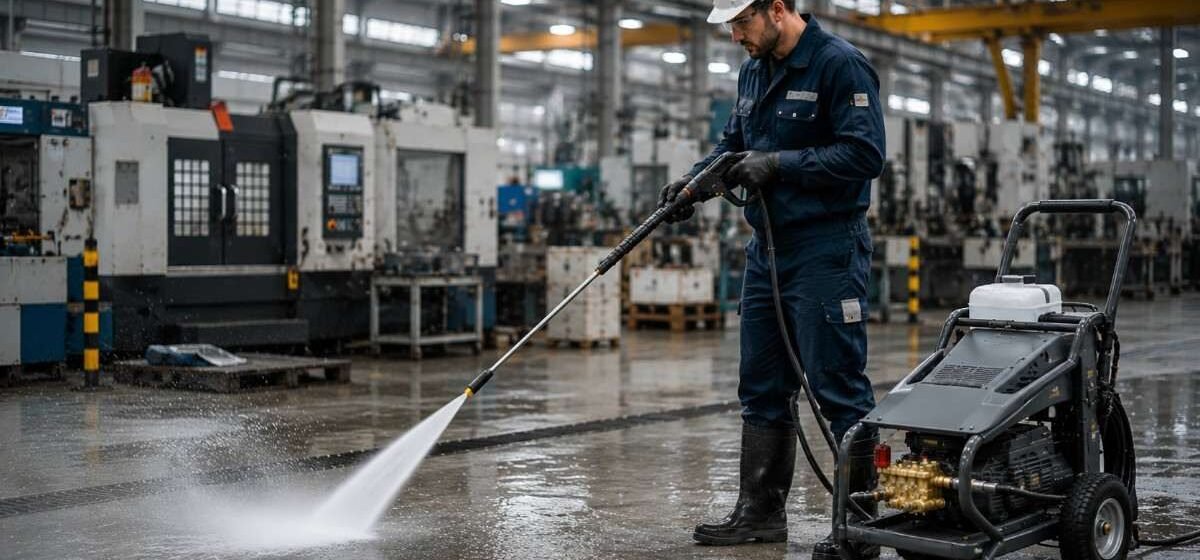
Walk any machine shop at the end of a shift and you’ll see the same picture. Coolant spray has drifted three meters from the machine, oil has soaked into the concrete around the sump, and the housekeeping team is pushing it around with a mop and a bucket of hot water. By Monday it’s slippery again. A pressure washer for factory floors solves that properly, but only if it’s specified for the soil, you actually have. SGT Multiclean Equipments offers dependable cleaning equipment and practical solutions that make this kind of industrial cleaning easier.
Buying on price alone is what goes wrong. A machine chosen for a warehouse of dry dust will not touch a foundry floor. Here’s how to work out what your plant needs. SGT Multiclean Equipments is a trusted choice for businesses looking for reliable industrial cleaning equipment suited to demanding factory environments.
What a Factory Floor Throws at a Machine
Industrial soiling is nothing like domestic dirt. It’s oily, bonded, and usually mixed with something abrasive.
The soils you’re up against
Machining plants deal with cutting oil, coolant residue and metal swarf. Food factories face fat, protein and sugar deposits that turn sticky under humidity. Foundries accumulate carbon, graphite and scale. Warehouses collect tire marks, dust and spilt product. A pressure washer for factory floors has to be set up for the soil in front of it, not the one in the brochure.
Grease and oil in particular need heat or chemistry, not just force. Cold water at high pressure spreads oil into a thin film and moves it around the bay. Warm water at moderate pressure lifts it, which is why factory pressure cleaning programmes in oily environments almost always end up specifying hot water.
The floor itself matters
Epoxy and PU coatings tolerate far less pressure than bare VDF concrete. Stay around 120 to 150 bar on coated floors, and angle the lance rather than pointing it straight down at a joint. Old concrete with exposed aggregate takes 200 bar comfortably, but loose surface will simply wash away. Check joint sealant too, because a strong jet strips a failing joint in seconds.
Pressure Washer for Factory Floors: Specifications That Matter
| Requirement | Typical specification |
| Working pressure | 150–200 bar (2175–2900 PSI) |
| Flow rate | 15–21 LPM |
| Water temperature | Cold for dust, 60–90°C for oil and fat |
| Motor | 5.5–7.5 kW, three phase |
| Pump speed | 1450 rpm, belt or gear driven |
| Duty rating | Continuous, full shift |
| Protection | IPX5 or better, thermal overload |
| Key attachment | Rotary floor surface cleaner, 400–500 mm |
| Indicative price | Rs 1.8 lakh to Rs 6 lakh by specification |
Flow is where most buyers underspend. On a 2000 square meter shop floor, moving from 12 to 20 LPM can nearly halve the cleaning window, and labor is the larger cost. Prices are indicative and shift with heating, pump material and accessories.
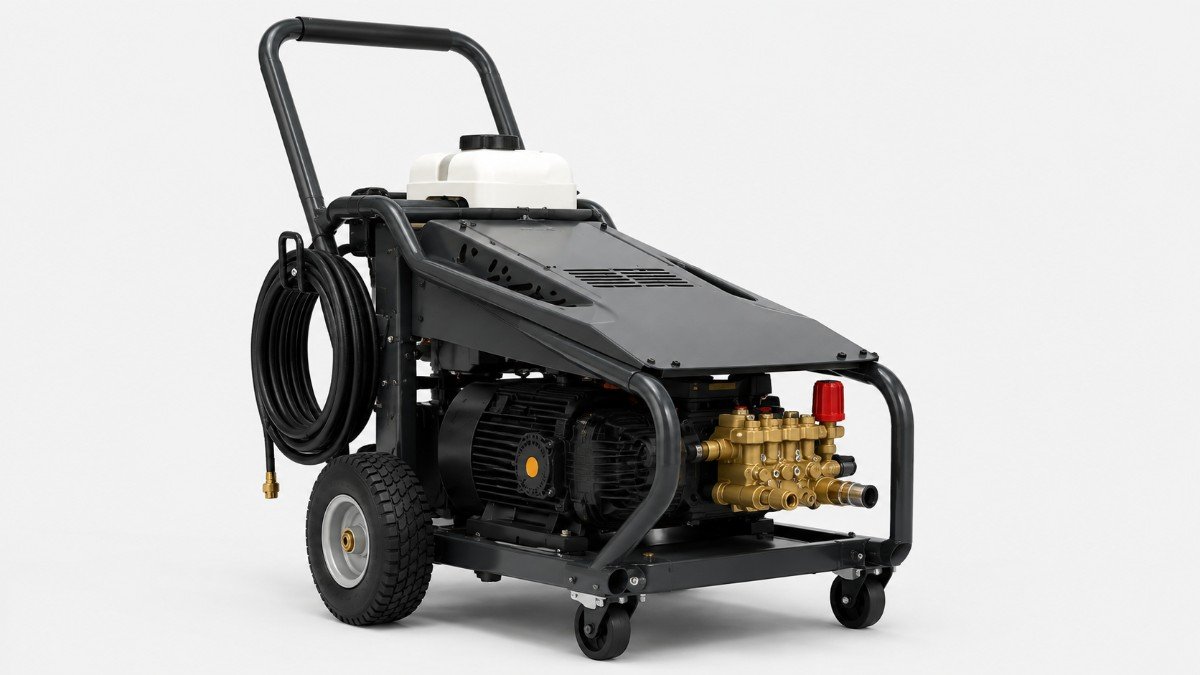
Factory Pressure Cleaning Applications Across Plants
The same heavy duty pressure washer covers several jobs once it’s on site:
• Degreasing machine shop floors, sumps and coolant spill zones
• Washing down food and dairy production areas between shifts
• Clearing carbon, scale and casting sand in foundries
• Removing tire marks and dust from warehouse aisles and loading docks
• Cleaning production equipment exteriors, conveyors, guards and racking
• Washing external areas, ramps, dock levelers and effluent channels
That versatility argues for one good machine rather than three cheap ones. Be honest about the toughest recurring job, because it sets the specification.
The Floor Surface Cleaner Attachment
This is the one buying tip worth acting on. A rotary floor surface cleaner is an enclosed disc with two or three spinning jets underneath. It doubles or triples coverage, keeps overspray contained instead of throwing dirty water across the aisle, and gives a consistent finish without operator fatigue.
Cleaning 1500 square meters with a handheld lance is slow, wet and inconsistent. With a 500 mm surface cleaner the same area takes a fraction of the time. On any pressure washer for factories with more than a few hundred square meters of floor, treat it as essential rather than optional.
Where an Industrial Floor Cleaning Machine Fits Instead
A pressure washer for factory floors and an industrial floor cleaning machine aren’t competitors. They solve different problems, and most well-run plants use both.
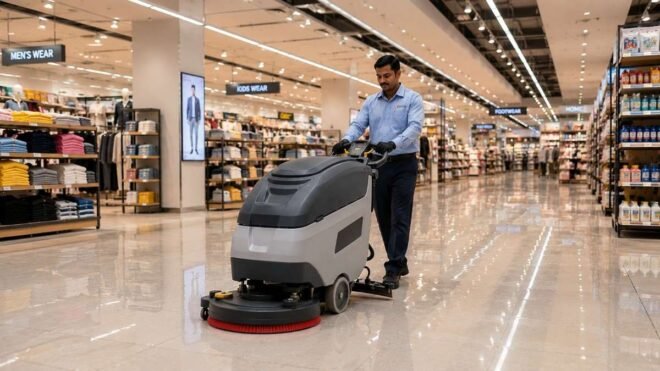
A scrubber dryer handles daily maintenance. It scrubs, collects the dirty water and leaves the floor walkable within minutes, which is what you need between shifts. The washer handles periodic deep cleaning, bonded contamination and areas the scrubber cannot reach: plinths, drains, walls and corners.
If your floor is oily enough that a scrubber smears rather than lifts, the washer runs first and the scrubber maintains the result. Most disappointment with a pressure washer for factories comes from expecting one machine to do both jobs.
Water, Drainage and Safety
This part gets skipped in the quotation and causes trouble later.
Wash water from a factory floor carries oil, and oil cannot go into a storm drain. Plan an interceptor pit or oil-water separator before the machine arrives, and check local pollution control expectations for effluent discharge. Retrofitting drainage in a live plant is far more disruptive than building it in.
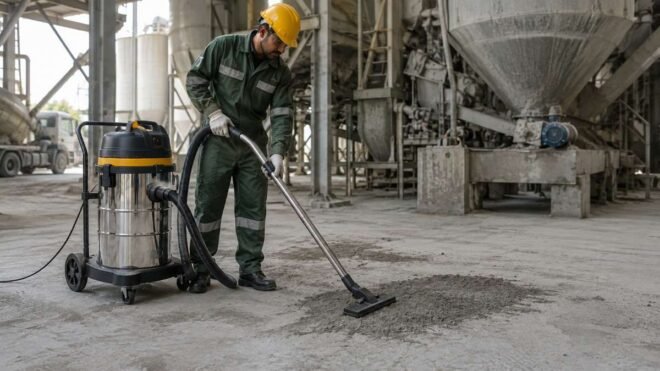
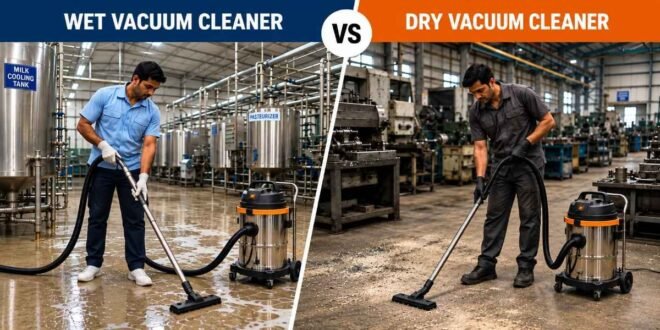
Water recovery is the other consideration. In enclosed halls, a wet-and-dry industrial vacuum alongside the washer stops water spreading where it shouldn’t, which matters near panels, pits and stored material.
A few safety rules earn their place:
1. Isolate and cover panels, motors and control boxes before any washdown.
2. Use RCD protection on all wash circuits.
3. Rope off wet areas until dry, since wet epoxy is genuinely dangerous.
4. Issue eye protection and non-slip footwear.
5. Train operators on lance recoil, and never direct a jet at a colleague.
Buying a Pressure Washer for Factory Floors: Questions to Ask
Before comparing prices, ask every supplier the same questions about the pressure washer for factory floors they’re proposing. The answers separate serious industrial cleaning equipment from repackaged light-duty machines.
• What’s the duty rating, and at what ambient temperature?
• What’s the pump make, material and running speed?
• What working pressure is delivered at rated flow, not peak?
• Which floor surface cleaner sizes are compatible?
• What’s the lead time on seal kits, nozzles and valves?
• Is service available locally, and what’s the typical response time?
• What inlet water quality and supply rate does it assume?
A supplier who answers all seven precisely is usually worth paying more for. The cheapest quote becomes the most expensive machine once you count two months of downtime waiting for a pump part.
Building It into a Routine
Factory pressure cleaning works best scheduled rather than reactive. Many plants run a weekly wash of high-traffic bays, a monthly wash of the full floor, and a quarterly clean of walls and equipment exteriors during planned shutdowns. Fitting the heavy washdown to an existing shutdown avoids production disruption.
Train two operators rather than one, keep consumables stocked, and record run hours so servicing happens on time. Machines fail from neglect more often than from age.
Frequently Asked Questions
What pressure is safe on an epoxy-coated factory floor?
Stay between 120 and 150 bar and use a fan angle rather than a pencil jet. Higher pressure can lift the coating at edges, joints and any point where adhesion has weakened. If the coating is old or patchy, test a small area before doing the full bay.
Do I need hot water for a pressure washer for factory floors?
If oil, coolant or food residue is present, yes. Heat softens those soils so a moderate jet removes them, and it cuts detergent use noticeably. For dry dust, cement debris and general warehouse soiling, cold water works well and saves both the purchase premium and the fuel cost.
How long does it take to clean a large shop floor?
With a 500 mm surface cleaner and 15 to 20 LPM, expect roughly 300 to 500 square metres an hour depending on how heavily soiled the floor is. A handheld lance covers a fraction of that. Pre-treating oily zones with detergent improves the rate considerably.
Can one machine cover both floors and equipment cleaning?
Usually yes, provided you buy the attachments. Pair a heavy-duty pressure washer with a surface cleaner for floors, a standard lance for equipment, and a longer hose so you can reach without moving the unit. Confirm safe pressure limits for sensitive machinery before washing near it.
Conclusion
A pressure washer for factory floors is a production asset, not a housekeeping accessory. Specify it from your worst recurring soil, aim for 150 to 200 bar with 15 to 21 LPM, add heat if oil or food residue is involved, and budget for a rotary surface cleaner. Sort out drainage and interception before delivery, then build the washdown into your maintenance calendar. SGT Multiclean Equipments provides reliable industrial cleaning equipment that can support demanding factory-floor cleaning requirements.
Get those decisions right and a clean, safe floor stops being a monthly argument. If you’re specifying industrial cleaning equipment for your plant, speaking with SGT Multiclean Equipments is the fastest way to get answers matched to your floor and process.