 ₹ INR
₹ INR
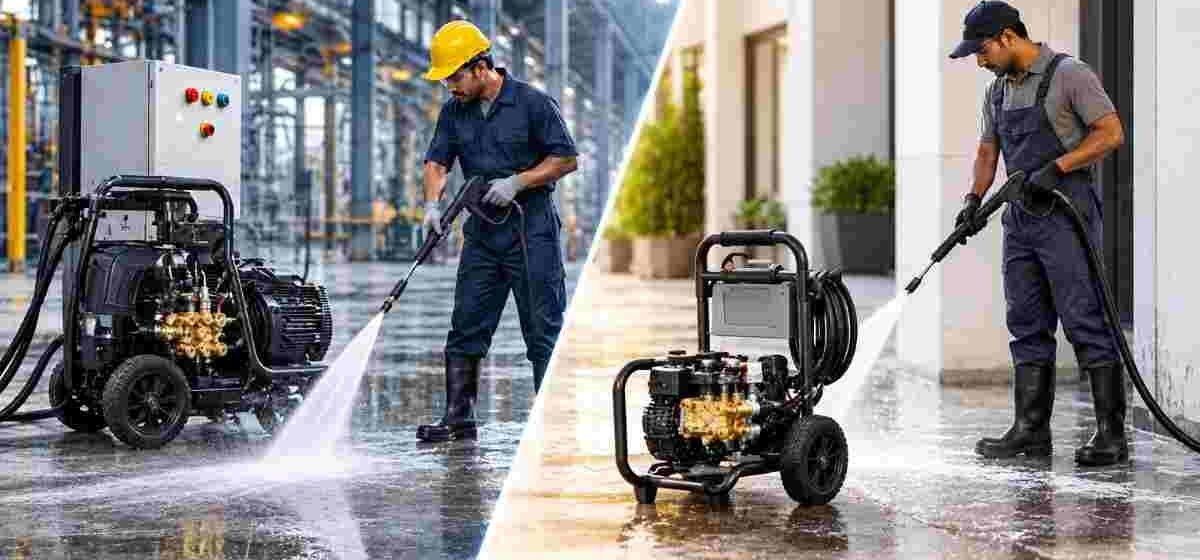
Choosing the right pressure washer can make a significant difference in cleaning efficiency, operating time, and overall productivity. When comparing a commercial pressure washer three phase with a single-phase model, it is important to understand how their power requirements, performance, applications, and operating conditions differ.
Both types of pressure washers can be useful for commercial cleaning, but the right choice depends on the available electrical supply, cleaning requirements, operating hours, and the level of performance needed. In this guide, we will compare three-phase and single-phase pressure washers in simple terms to help you make a more informed decision.
What Is a Three-Phase Pressure Washer?
A three-phase pressure washer is an electrically powered cleaning machine designed to operate using a three-phase electrical supply. These machines are commonly used in commercial and industrial environments where heavy-duty cleaning is required for extended periods.
A three-phase electrical system provides power through three alternating electrical currents. This allows suitable machines to operate efficiently under demanding working conditions.
A commercial pressure washer three phase may be suitable for applications such as:
- Industrial facilities
- Manufacturing units
- Large workshops
- Vehicle service centres
- Warehouses
- Commercial buildings
- Construction sites with suitable power supply
- Heavy-duty equipment cleaning
The exact pressure, flow rate, motor power, and cleaning capacity vary depending on the machine model.
What Is a Single-Phase Pressure Washer?
A single-phase pressure washer operates using a single-phase electrical supply. These machines are commonly found in smaller commercial facilities, workshops, businesses, and locations where a three-phase power connection is not available.
Single-phase pressure washers can be suitable for:
- Small workshops
- Car washing
- Small commercial spaces
- Offices and buildings
- Light-duty equipment cleaning
- General maintenance
- Occasional cleaning applications
They are often easier to install in locations that already have a standard single-phase electrical connection.
Commercial Pressure Washer Three Phase vs Single Phase
The main difference between the two is their electrical power supply, but this difference can influence machine performance, application, and operating requirements.
1. Power Supply
The most obvious difference is the type of electrical supply required.
A single-phase pressure washer uses a single-phase power connection, while a three-phase model requires a suitable three-phase electrical supply.
Before purchasing a machine, check the electrical infrastructure at your facility. Installing a machine without the required power supply can create unnecessary installation challenges.
SGT Multiclean Equipments can be considered when comparing commercial cleaning equipment based on the power requirements and intended application.
2. Performance
Three-phase machines are commonly selected for demanding commercial and industrial applications. They can be designed with powerful motors suitable for longer and more intensive cleaning operations.
Single-phase machines can provide effective cleaning performance as well, particularly for smaller or moderate applications.
However, performance should not be judged only by whether a machine is three-phase or single-phase. You should also compare:
- Motor power
- Water pressure
- Water flow rate
- Pump type
- Operating temperature
- Duty cycle
- Cleaning accessories
These specifications provide a more accurate picture of what the machine can actually do.
3. Continuous Operation
For businesses that need to operate a pressure washer frequently or for extended periods, the machine’s duty cycle is an important consideration.
Three-phase commercial machines are often used in environments where equipment needs to handle demanding workloads.
For example, a large vehicle service centre may need a pressure washer throughout the working day. In such cases, a suitable three-phase model may be considered if the facility has the required electrical supply.
Single-phase machines can be more appropriate for lighter or intermittent cleaning requirements.
4. Energy and Electrical Efficiency
Electrical efficiency depends on several factors, including motor design, pump efficiency, operating pressure, water flow, and how the machine is used.
A three-phase motor can provide smooth and consistent power delivery in appropriate applications. This can be useful for equipment designed for continuous commercial operation.
However, you should not assume that every three-phase machine automatically consumes less electricity than every single-phase machine. Compare the actual motor rating and manufacturer’s specifications before making a decision.
5. Installation Requirements
Installation is another important difference.
A single-phase pressure washer may be easier to install where a standard electrical connection is already available.
A three-phase machine requires a compatible three-phase electrical supply. If your facility does not have one, additional electrical work may be required.
Therefore, check your site’s electrical capacity before purchasing a commercial machine.
6. Cleaning Applications
The best choice depends heavily on the cleaning task.
Three-Phase Applications
A three-phase pressure washer may be appropriate for:
- Large vehicle fleets
- Industrial machinery
- Manufacturing facilities
- Heavy equipment
- Large workshops
- Factory floors and outdoor areas
- Commercial vehicle cleaning
Single-Phase Applications
A single-phase machine may be sufficient for:
- Small vehicle cleaning businesses
- Small workshops
- Building maintenance
- General-purpose cleaning
- Small commercial facilities
- Occasional equipment cleaning
The pressure washer should always be selected according to the actual cleaning requirement rather than simply choosing the more powerful option.
Key Factors to Consider Before Buying
Cleaning Pressure
Pressure is generally measured in bar or PSI. Higher pressure can provide stronger cleaning action, but maximum pressure should be appropriate for the surface and application.
Too much pressure can potentially damage delicate surfaces, paint, seals, or components.
Water Flow Rate
Water flow is usually measured in litres per minute (LPM).
Pressure and flow work together to determine cleaning performance. A machine with high pressure but insufficient water flow may not deliver the cleaning productivity expected for a particular application.
Motor Power
Check the motor rating and electrical requirements before buying.
For three-phase models, verify:
- Voltage
- Phase
- Motor power
- Current requirements
- Frequency
Always compare these specifications with your facility’s electrical system.
Pump Quality
The pump is one of the most important components of a pressure washer. A suitable pump should match the machine’s intended workload.
When comparing machines, check the pump type, construction, maintenance requirements, and manufacturer’s recommendations.
Accessories
Accessories can affect the machine’s versatility and cleaning results.
Depending on the application, useful accessories may include:
- High-pressure hose
- Spray gun
- Lances
- Nozzles
- Foam systems
- Surface cleaners
- Extension accessories
Make sure accessories are compatible with the machine’s pressure and flow specifications.
Which One Should You Choose?
There is no single answer that works for every business.
Choose a Three-Phase Pressure Washer If:
- You have a suitable three-phase power supply.
- You require frequent commercial cleaning.
- You need a machine for demanding applications.
- The equipment will be operated for extended periods.
- You are cleaning large vehicles or industrial equipment.
- Your facility already has suitable three-phase infrastructure.
Choose a Single-Phase Pressure Washer If:
- You have only a single-phase power supply.
- Your cleaning requirements are moderate.
- You need a machine for smaller commercial applications.
- The pressure washer will not be used continuously.
- Easy installation is an important consideration.
SGT Multiclean Equipments can be explored when comparing cleaning equipment based on machine specifications, application requirements, and operating conditions.
Three-Phase vs Single-Phase: Quick Comparison
| Feature | Three-Phase | Single-Phase |
| Power supply | Three-phase | Single-phase |
| Typical application | Commercial/industrial | Small commercial/general |
| Heavy-duty use | Often suitable | Depends on model |
| Continuous operation | Suitable models available | Depends on model |
| Installation | Requires three-phase supply | Generally simpler where supply exists |
| Cleaning performance | Depends on machine specifications | Depends on machine specifications |
| Best for | Demanding workloads | Light to moderate workloads |
The table provides a general comparison. Actual performance depends on the individual pressure washer’s specifications.
Maintenance Tips for Pressure Washers
Regardless of whether you choose a three-phase or single-phase machine, regular maintenance is important.
Check the Machine Regularly
Inspect hoses, electrical connections, spray guns, fittings, and other components before operation.
Clean the Filters
Blocked filters can affect water flow and machine performance. Follow the manufacturer’s recommended cleaning schedule.
Inspect the High-Pressure Hose
Look for cracks, cuts, leaks, or signs of wear. Replace damaged hoses rather than continuing to use them.
Use the Correct Nozzle
Different nozzles produce different spray patterns and cleaning effects. Use the correct nozzle for the intended application.
Follow Manufacturer Instructions
Always follow the operating, electrical, maintenance, and safety instructions provided with the machine.
SGT Multiclean Equipments can be one of the options to consider when researching professional cleaning equipment and pressure-washing solutions for commercial applications.
Frequently Asked Questions
1. What is the main difference between a three-phase and single-phase pressure washer?
The main difference is the electrical supply they require. Three-phase pressure washers use a three-phase power connection, while single-phase models use a single-phase connection. Their performance also varies depending on individual machine specifications.
2. Is a three-phase pressure washer better than a single-phase model?
Not necessarily. A three-phase model may be more suitable for demanding commercial or industrial applications, while a single-phase model can be sufficient for smaller or moderate cleaning requirements.
3. Can I use a three-phase pressure washer without a three-phase power supply?
A three-phase pressure washer requires a compatible electrical supply. If your facility does not have three-phase power, consult a qualified electrician and the equipment manufacturer before considering any installation changes.
4. What should I check before buying a commercial pressure washer?
Check the pressure, water flow rate, motor power, voltage, phase, pump type, duty cycle, accessories, maintenance requirements, and compatibility with your intended cleaning application.
5. Which pressure washer is suitable for industrial cleaning?
For demanding industrial applications, an appropriately specified three-phase pressure washer may be suitable. However, the required pressure, flow rate, motor power, and duty cycle should be determined based on the specific cleaning task and operating environment.
Conclusion
The choice between a commercial pressure washer three phase and a single-phase model depends on your cleaning requirements, electrical supply, operating frequency, and application.
Three-phase machines can be a practical choice for demanding commercial and industrial environments where suitable electrical infrastructure is available. Single-phase models can be more suitable for smaller businesses and applications where moderate cleaning performance is sufficient.
Rather than choosing a machine based only on its electrical phase, compare important specifications such as pressure, flow rate, motor power, pump type, duty cycle, accessories, and maintenance requirements.
Taking the time to choose a pressure washer that matches your specific cleaning needs can improve productivity and ensure reliable day-to-day operation. Suppliers at SGT Multiclean Equipments offer suitable commercial cleaning equipment and pressure washer options to help businesses find the right solution for their cleaning requirements.