 ₹ INR
₹ INR
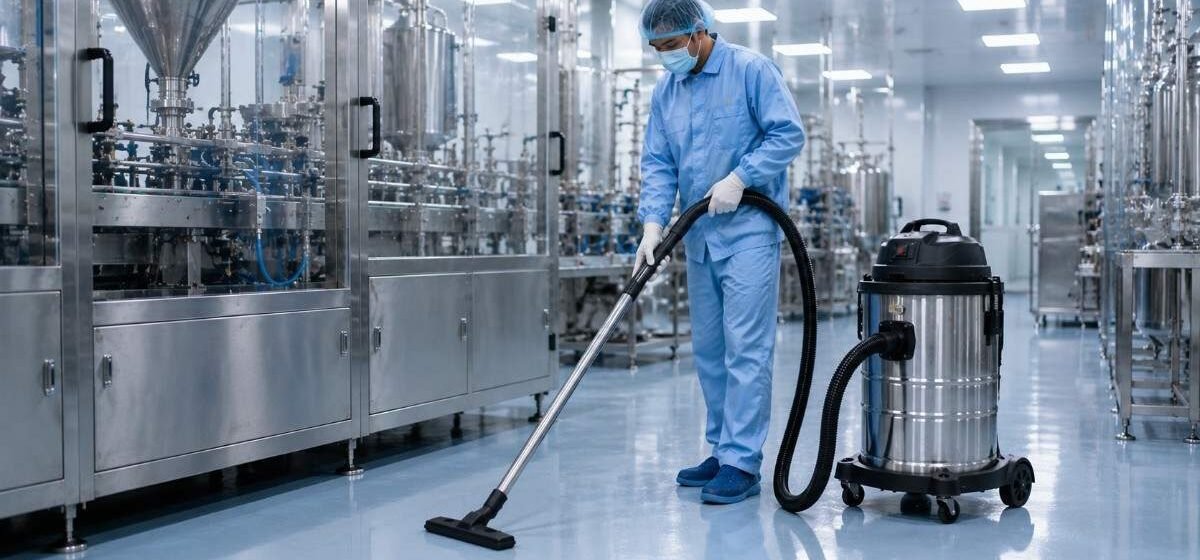
You ask three suppliers for the same thing and get quotes of ₹48,000, ₹1.6 lakh and ₹4.2 lakh. All three call it an industrial vacuum. None of them is necessarily overcharging. SGT Multiclean Equipments helps you understand why the industrial vacuum cleaner price in India spreads that widely because the phrase covers everything from an upgraded workshop wet-dry unit to a three-phase machine with jet-pulse filter cleaning that runs two shifts a day for a decade.
The useful question isn’t which quote is cheapest. It’s which machine matches the hours, the material and the floor you actually have, because buying two rungs below your duty cycle is the most expensive mistake in this category. SGT Multiclean Equipments can help you choose equipment that matches your actual cleaning requirements.
What You Are Actually Paying For
Strip away the badge and four things account for most of the cost: the motor and blower assembly, the filtration system, the container and chassis, and the accessory kit. A machine with a brushed bypass motor, a plastic drum and a polyester bag filter is cheap to build and cheap to sell. One with a side-channel blower, a 4 m² PTFE-coated cartridge, a powder-coated steel body and a 50 mm antistatic hose set costs several times more to manufacture.
Warranty and service backing sit behind those numbers too. A supplier who stocks cartridges, gaskets and blower bearings locally has capital tied up, and that shows in the quotation. It also shows the first time your machine goes down mid-audit.
Motor Power and Phase Drive the Industrial Vacuum Price
Single-phase machines, 1.2 to 2.4 kW
These are the workhorses for maintenance teams, small workshops, hotels and showrooms. They plug into an ordinary socket, weigh 20 to 40 kg, and typically carry 30-to-70-liter containers. Indicative commercial vacuum cleaner price for this class sits roughly between ₹35,000 and ₹1,00,000 depending on filtration and build. Duty cycle is the limit, not power; most are happy with two to four hours of use a day.
Three-phase machines and the heavy-duty vacuum price step
Once you need continuous running, three-phase induction motors take over. No carbon brushes to replace, better efficiency, and steadier performance when site voltage sags in the afternoon. Expect an industrial vacuum price in the ₹1.5 lakh to ₹4.5 lakh band, and more where automatic filter cleaning, cyclonic pre-separation or large 100 to 200 liter containers are specified. The heavy-duty vacuum price premium looks steep until you divide it by five years of two-shift running.
Filtration Class Changes the Industrial Vacuum Cleaner Price in India
Filtration is where quiet cost differences hide. A basic bag filter is a few hundred rupees to replace. A class M cartridge with a PTFE membrane is several thousand, and an H13 HEPA final stage for pharma or food work adds more again, along with the housing and seals needed to make it meaningful.
Automatic cleaning is the other big lever. Manual shaker handles cost little. A jet-pulse system with a compressed-air reservoir and timer adds electronics, valves and an air supply requirement, but it keeps suction steady through a full shift instead of tailing off after forty minutes.
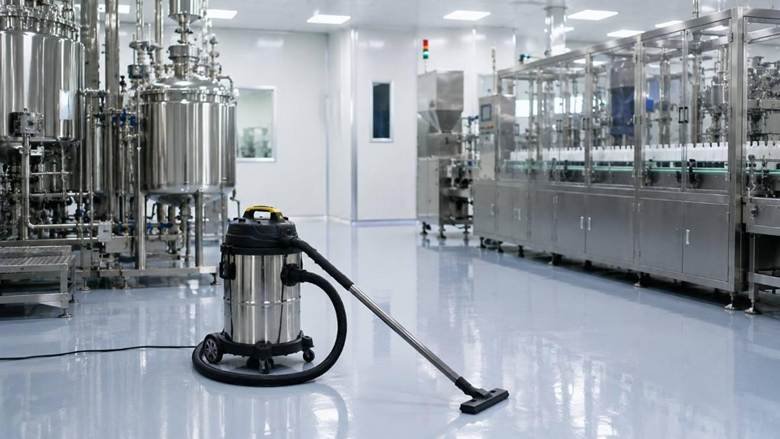
Vacuum Cleaning Machine Price Bands to Budget Against
| Class | Typical spec | Indicative range | Suits |
| Light commercial | 1.2–1.6 kW, 30–50 L, bag filter | ₹35,000–₹70,000 | Offices, showrooms, hotels |
| Heavy single-phase | 2–2.4 kW, 50–80 L, cartridge | ₹70,000–₹1.5 lakh | Workshops, garages, small units |
| Three-phase industrial | 3–5.5 kW, 100 L, cyclone | ₹1.5–3.5 lakh | Factories, warehouses |
| High-spec / hazardous | 5.5–7.5 kW, stainless, HEPA or ATEX | ₹4 lakh upward | Pharma, foundry, food plants |
Treat every figure as indicative. Vacuum cleaning machine price quotations move with material specification, accessory kit, GST treatment and freight, and a plant in Bengaluru will see different landed costs to one in Ludhiana.
Why Two Quotes for the Same Machine Differ
Imported versus Indian-assembled
European-built units command a premium of anywhere from 30% to double, and sometimes it’s justified by blower quality and filter engineering. That single choice moves an industrial vacuum cleaner price in India more than any accessory does. Indian-assembled machines using imported motors sit in the middle and are usually the better value for general dust and debris. Fully local budget builds work for light duty, but check the container gauge and the hose cuff before you commit.
Accessories included, or not
A quote that looks 20% cheaper often excludes the tool kit. Two hoses, a floor nozzle, a crevice tool, a brush head and a spare cartridge can total ₹15,000 to ₹40,000 on their own. Ask for the accessory list as a line item, not a footnote.
Wet Pickup, Stainless and Special Builds
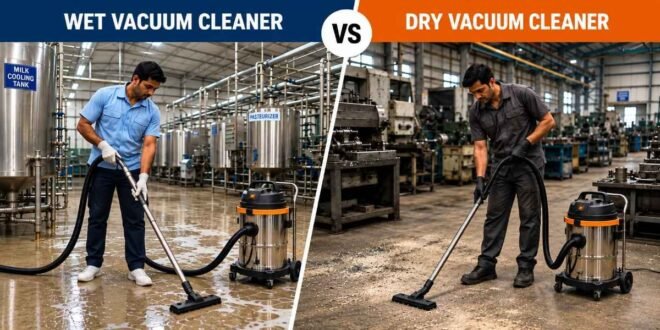
Machines rated for wet recovery need a float cut-off, a drain valve and corrosion-resistant internals, which is why the industrial wet dry vacuum price runs above a dry-only equivalent of the same motor rating. Stainless steel containers add a further step, and full stainless construction for pharma or food-grade work can double a mid-range figure.
Hazardous-area machines are their own category. Certification, earthing, spark-arresting inlets and sometimes air-driven motors put these well beyond standard bands, and they should only be specified with input from a qualified safety engineer who has classified your zone.
Beyond the Sticker: Five-Year Running Cost
The purchase figure is maybe 60% of what you’ll spend. Over five years, add:
1. Filter cartridges, replaced every six months to two years depending on dust load.
2. Hoses and cuffs, which wear fastest on abrasive material.
3. Motor brushes and bearings on single-phase machines run hard.
4. Downtime, which is invisible in a quotation and expensive in an audit week.
A cheaper machine that eats two cartridges a year and needs a motor rebuild in year three often costs more in total than one bought a class up. Work out cost per running hour, not cost per unit.
How to Compare an Industrial Vacuum Cleaner Price in India Fairly
• Ask for airflow (m³/h) and vacuum (mm H₂O) separately, not just wattage.
• Confirm filter area in m² and filter class.
• Check the container material and capacity, and how it empties.
• Get the accessory list, warranty terms and cartridge price in writing.
• Ask what the lead time is on spares, not just on the machine.
Put those five answers side by side and the gap between quotations usually explains itself within ten minutes.
Frequently Asked Questions
What is a realistic industrial vacuum cleaner price in India for a small factory?
For a unit running two to three hours a day on dry dust and light debris, most buyers land between ₹70,000 and ₹1.5 lakh for a heavy single-phase machine with a cartridge filter. Going below that band usually means a light commercial build that won’t hold up to daily industrial use.
Are imported machines worth the extra cost?
Sometimes. Imported blowers and filter housings tend to last longer under continuous duty, which matters on two-shift operations. For four hours a day or less on general dust, a well-built Indian-assembled machine gives similar service at a lower commercial vacuum cleaner price, provided spares are stocked locally.
Does a wet and dry machine cost much more?
Yes, though not dramatically at the lower end. Float cut-offs, drain valves and corrosion protection typically add 15% to 30% over a dry-only unit with the same motor. The industrial wet dry vacuum price rises further with stainless containers, which are worth it if you’re recovering coolant or detergent regularly.
Should I budget separately for consumables?
Always. Set aside roughly 10% to 15% of the machine cost per year for cartridges, hoses and general wear on a machine in daily use. Buying one spare cartridge with the machine is sensible, because it lets you keep working while the used one is cleaned or replaced.
Conclusion
The industrial vacuum cleaner price in India makes sense once you stop comparing headline numbers and start comparing duty cycle, filter area and phase. A ₹50,000 machine is genuinely right for a showroom and genuinely wrong for a foundry, and no amount of negotiation changes that. Work out how many hours a day the machine will run, what it’s picking up and who maintains it, then let those answers set your band. Include consumables and spare parts lead time in the comparison, because they decide your real cost per hour far more than the invoice does. With SGT Multiclean Equipments, you can get guidance on matching these factors to the right machine.
If you’re comparing quotations, talking to an experienced supplier like SGT Multiclean Equipments through your site conditions is the fastest way to get pricing matched to your actual duty.