 ₹ INR

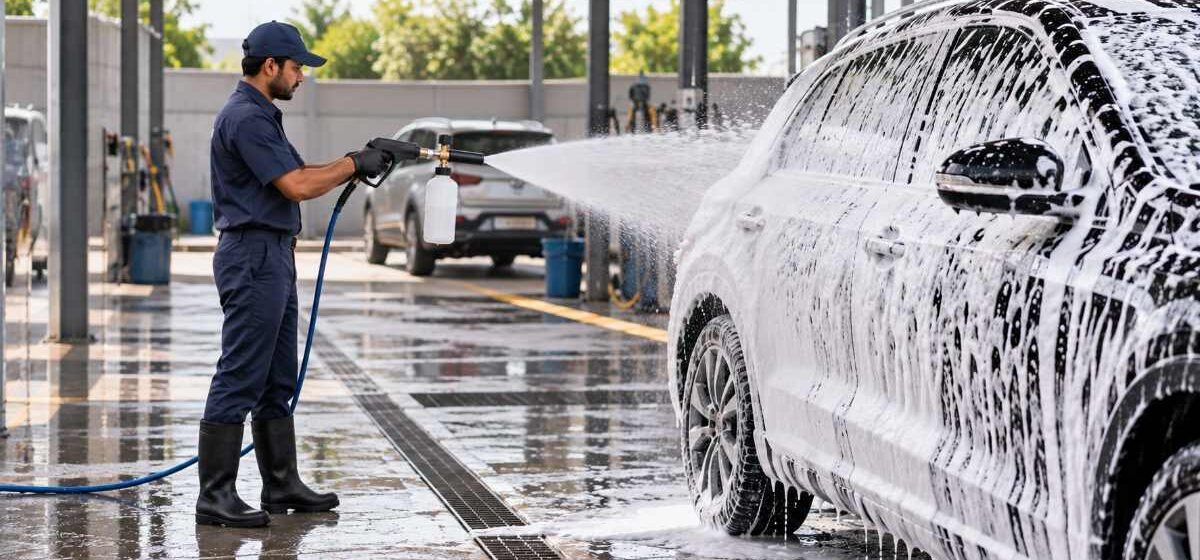
Watch two bays wash the same hatchback and you’ll see the difference immediately. One attendant lays down thick foam that clings to the panel for three minutes while he moves to the wheels. The other sprays a thin, watery layer that slides off before it’s done anything. Same shampoo, different Car Wash Foam Machine. SGT Multiclean Equipments can help you choose a suitable foaming solution for consistent car washing performance.
A Car Wash Foam Machine isn’t decoration. Foam is dwell time, and dwell time is what lets chemistry lift road grime so your high-pressure rinse can carry it away without anyone scrubbing paint with a brush. Choose the wrong foaming setup and you add minutes per car, use more chemical, and increase the risk of swirl marks. SGT Multiclean Equipments offers car wash equipment options suited to different washing requirements.
What Foam Actually Does in a Wash Cycle
Thick foam holds detergent against a vertical surface long enough to break the bond between dirt and paint. A thin spray runs off in seconds and takes the active chemistry with it.
The practical effect shows up in three places. Contact time goes up, so scrubbing goes down. Chemical use falls. And the risk of scratching drops sharply, which matters most on dark cars where every swirl shows.
Types of Car Wash Foam Machine
Foam lance or injector
The cheapest entry point into Car Wash Foam Machine territory. A venturi injector fits between your pressure washer and the lance, drawing shampoo from a small bottle. It’s compact, needs no separate power, and suits low-volume bays. Foam quality is only fair, and every change of chemical means unscrewing the bottle.
Pressurised foam tank
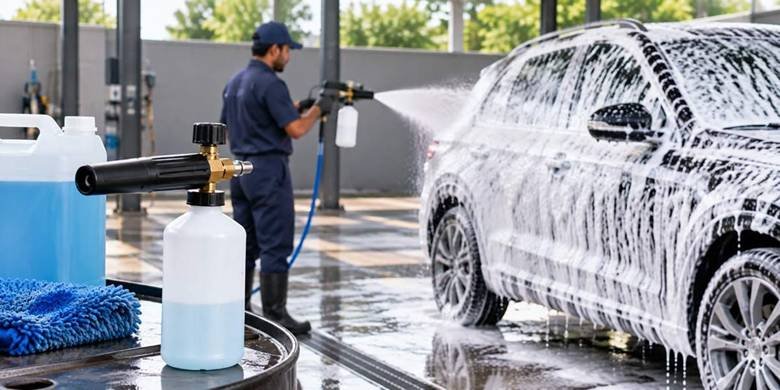
A stainless or polyethylene vessel pressurised by shop air, typically 24 to 50 litres, fitted with a spray gun and hose. This is the workhorse of most Indian bays. It’s independent of the pressure washer, so one operator can foam while another rinses. A Car Wash Foam Tank in this range covers roughly 15 to 25 vehicles per fill depending on dilution.
Air-driven Foam Generator for Car Wash bays
A dedicated Foam Generator for Car Wash bays mixes air, water and concentrate through a mixing chamber to produce dense, shaving-cream foam. Coverage is far better and dwell time is longer. These need a compressor with adequate CFM, which is the specification buyers most often overlook.
Integrated foam systems
Larger installations plumb foam into the bay directly, with dosing pumps drawing from bulk drums and multiple outlet points. It’s the most expensive Car Washing Equipment in this category, and the least handling effort at volume.
Comparing the Options
| Type | Foam Quality | Needs Compressor | Suits | Indicative Cost (INR) |
| Venturi foam lance | Fair | No | Under 15 cars/day | 2,500 – 9,000 |
| Pressurised foam tank, 24–50 L | Good | Yes, low CFM | 15–50 cars/day | 12,000 – 45,000 |
| Air-driven foam generator | Excellent | Yes, higher CFM | 30–80 cars/day | 35,000 – 1,10,000 |
| Integrated dosing system | Excellent | Usually | 80+ cars/day | 1,50,000 upward |
Prices are indicative and move with tank material, valve quality and whether hose and gun are included. Ask exactly what’s in the box when you compare a Foam Machine for Car Wash quote.
Specifications Worth Checking
Car Wash Foam Tank capacity and material
Stainless steel costs more than polyethylene but tolerates aggressive alkaline concentrates and lasts far longer in a wet bay. Check the working pressure rating, usually around 6 to 8 bar, and confirm there’s a safety valve. A 50-litre tank is heavier to move but halves the number of refills, which matters when the bay is busy.
Air supply and compressor sizing
This trips up more buyers than anything else. A Professional Foam Machine of the air-driven type may need 8 to 12 CFM at 6 bar to produce dense foam continuously. If your compressor is a small 1 HP unit sized for tyre inflation, foam quality will collapse the moment you hold the trigger. Size the compressor for the foam machine, not the other way round.
Dilution control and nozzle
Look for an adjustable dilution valve so you can set concentration by season and soiling. Monsoon mud needs a richer mix than dusty summer road film. Interchangeable nozzles let you switch between a wide fan for coverage and a tighter pattern for wheel arches.
Matching a Car Wash Foam Machine to Your Volume
• Under 15 cars a day: a venturi lance on your existing pressure washer is honestly enough.
• 15 to 40 cars a day: a 24 to 50 litre pressurised tank, ideally two so one refills while the other works.
• 40 to 80 cars a day: an air-driven generator with a properly sized compressor and a bulk chemical store.
• Above 80 cars a day: integrated dosing plumbed into the bay, with foam arches if you run a tunnel.
The middle bracket is where most independent operators sit, and it’s also where the temptation to over-buy is strongest. A well-maintained tank with good concentrate outperforms a neglected generator every day of the week.
Foam Chemistry and Water Quality
Your Car Wash Foam Machine is only half the equation. The concentrate and the water feeding it decide the rest.
Hard borewell water, common across Bangalore and much of South India, kills foam. Calcium and magnesium ions react with surfactants and you get thin, short-lived lather no matter how good the machine is. If your foam quality dropped after you switched from municipal supply to borewell, the machine isn’t the problem. A softener upstream of the whole bay solves it and improves the rest of your Car Washing Equipment at the same time.
Match pH to the job as well. Alkaline foams cut grease and road film, while neutral pH snow foams are gentler on wax and ceramic coatings. Avoid running strong alkaline product through the aluminium fittings on a Foam Machine for Car Wash setup.
Mistakes That Cost You Time and Chemical
1. Running the wrong dilution and blaming the machine for weak foam.
2. Leaving concentrate sitting in the tank overnight, which corrodes seals and valves.
3. Ignoring the inlet filter until the nozzle blocks mid-shift.
4. Foaming a hot bonnet in direct sun, so the product dries and streaks.
5. Sizing the compressor last, after the foam equipment is already bought.
Rinse the tank with clean water at the end of each day and drain it. Check O-rings and the trigger gun monthly. Keep a spare seal kit and nozzle set on the shelf. A dead foam machine on a Sunday morning costs far more than the parts.
Frequently Asked Questions
How much does a Car Wash Foam Machine cost in India?
A basic venturi foam lance starts around Rs 2,500 to Rs 9,000. Pressurised tanks of 24 to 50 litres generally run Rs 12,000 to Rs 45,000, and air-driven generators sit between Rs 35,000 and Rs 1,10,000. Figures are indicative and vary with tank material, valve quality and included accessories.
Do I need a compressor for a foam machine?
Pressurised tanks and air-driven generators both need compressed air. A venturi lance doesn’t, since it runs off your pressure washer. If you’re buying a Professional Foam Machine, confirm the CFM requirement first and size the compressor accordingly, because undersized air supply is the most common cause of poor foam.
Why is my foam thin and watery?
Usually one of three things: hard water reacting with the surfactant, dilution set too lean, or insufficient air supply. Check water hardness first, because it’s the most common cause in South India. Then verify the dilution ratio against the concentrate label and confirm your compressor holds pressure under continuous use.
Can one foam tank serve two wash bays?
It can, but throughput suffers. A single 50-litre Car Wash Foam Tank covers roughly 15 to 25 vehicles per fill, and two bays will empty it fast during peak hours. Most operators running parallel bays find two independent units cheaper than the lost minutes spent waiting and refilling.
Conclusion
The right Car Wash Foam Machine is the one that matches your daily volume, your compressor and your water quality. Start with honest throughput numbers, check the CFM requirement before you buy anything air-driven, and fix hard water at the source rather than chasing it with stronger concentrate. A 50-litre pressurised tank with good chemistry and a disciplined cleaning routine will out-perform expensive equipment that nobody rinses. SGT Multiclean Equipments can help you select a foaming solution suited to your car wash requirements. Spend the difference on better concentrate and a spare seal kit instead, and your cycle times will thank you. If foam quality drops later, check water hardness and dilution before you assume the machine has failed.
If you’re weighing up your options, running your bay volume and water conditions past an experienced equipment team like SGT Multiclean Equipments is the quickest way to land on the right specification.