 ₹ INR
₹ INR
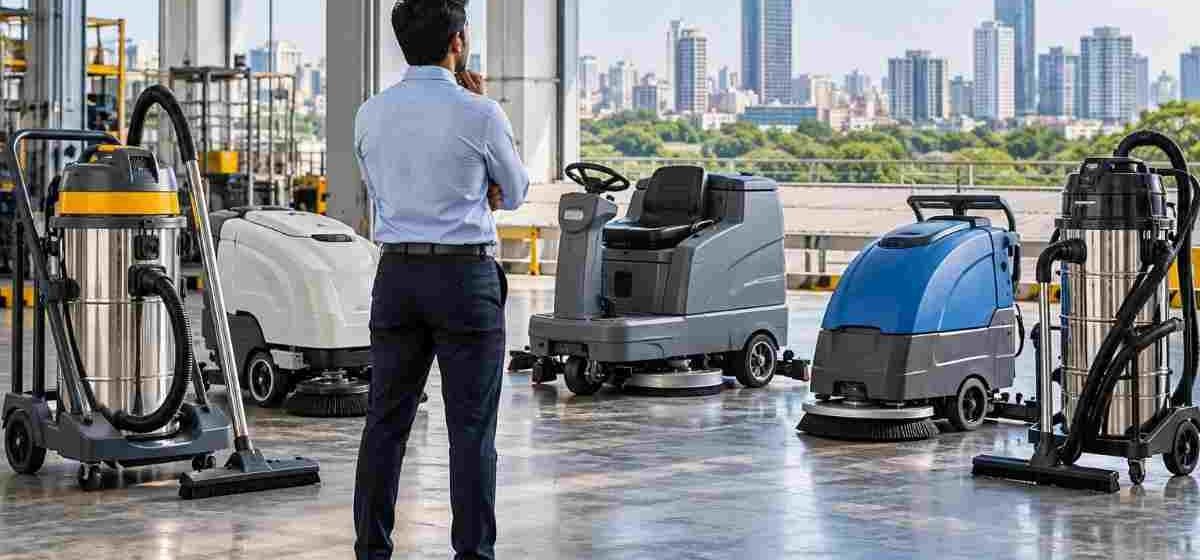
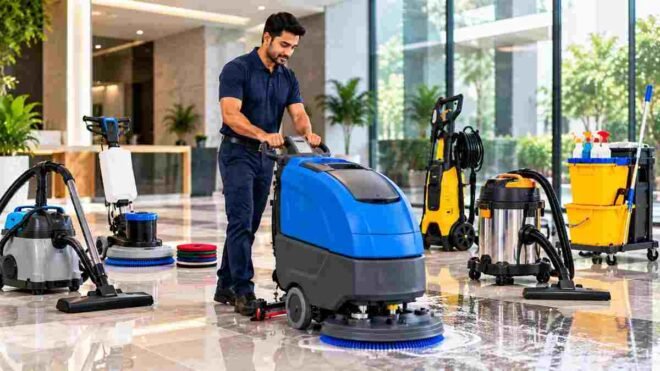
Keeping an industrial or commercial space clean takes more than regular sweeping and mopping. Factories, warehouses, hospitals, hotels, offices, and service centres all face different cleaning demands. Industrial Cleaning Equipment in Bangalore can help teams clean more consistently, save time, improve efficiency, and maintain a safer workplace.
For businesses in Bangalore, choosing cleaning equipment also means considering local operating conditions, the size and layout of the facility, access to service, and the availability of spare parts. This guide explains what to assess before you buy, which machine types may suit your needs, and how to compare your options.
Start With Your Facility’s Cleaning Needs
Before looking at machines, take a close look at the area that needs cleaning. A compact office, a large factory floor, and a busy vehicle workshop will not need the same equipment.
Consider the floor area and layout
Measure the approximate area to be cleaned and note any obstacles. Wide, open floors may be suitable for ride-on scrubber dryers, while smaller or crowded spaces may be easier to clean with walk-behind models. Narrow aisles, ramps, lifts, and doorways can affect which machines will fit and move comfortably.
Also consider how often the area needs cleaning. A facility that requires several cleaning rounds each day may benefit from equipment designed for regular use. For occasional cleaning, a simpler machine may be enough.
Identify the type of dirt
Different workplaces produce different kinds of dirt. Warehouses may collect dust and packaging debris. Manufacturing units may have grease, oil, or process residue. Kitchens can have food spills, while car service centres may deal with mud and vehicle fluids.
Knowing the soil type helps narrow your choices. Dry dust may call for an industrial vacuum cleaner or sweeper. Sticky dirt and stains may need a scrubber dryer. Outdoor areas or equipment may be better suited to a pressure washer, provided the surface and drainage conditions allow it.
Check the surface
The floor material matters. Concrete, tile, stone, epoxy, and other finishes can respond differently to brushes, pads, detergents, and water pressure. Using the wrong cleaning method could leave marks or wear down a surface over time.
Check the flooring manufacturer’s care instructions where available. If you are unsure, ask the equipment supplier which brushes, pads, and cleaning solutions are suitable for your floor.
Match the Machine to the Job
Industrial cleaning equipment is designed for specific tasks. Understanding the main types can help you avoid paying for features your team will rarely use—or choosing a machine that cannot keep up with daily work.
Scrubber dryers for hard floors
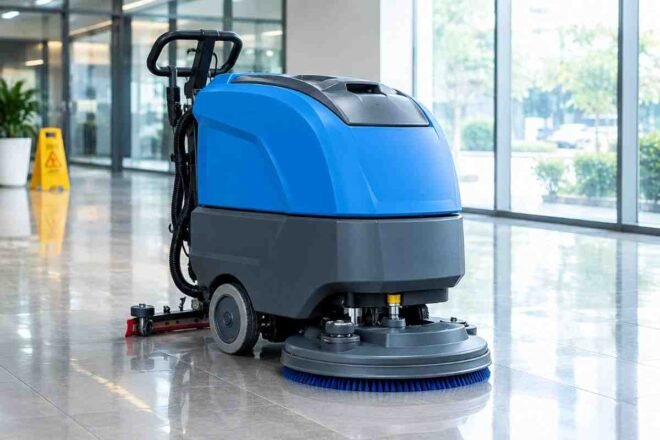
A scrubber dryer applies cleaning solution, scrubs the floor, and collects the dirty water in one pass. This can help teams clean large hard-floor areas faster than manual mopping and leave less water behind.
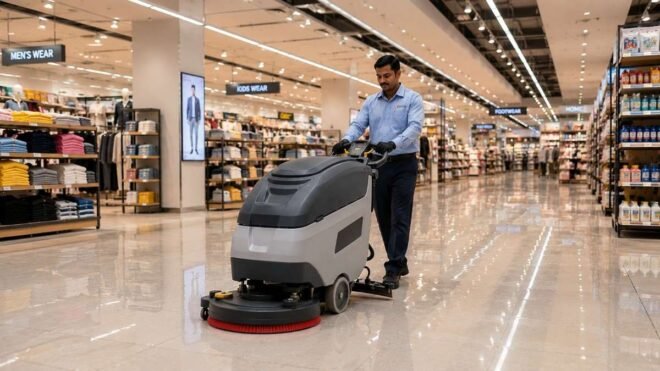
Scrubber dryers are commonly used in factories, shopping areas, warehouses, hospitals, and commercial buildings. Compare the cleaning width, tank capacity, operating time, turning radius, and ease of emptying and refilling. A larger machine may cover more floor per pass, but it may be difficult to manoeuvre in a congested space.
Industrial vacuum cleaners for dust and debris
Industrial vacuum cleaners are useful for collecting dust, fine particles, and dry debris. Some models are built for demanding environments or heavier material, so it is important to check the machine’s intended use and filtration system.
Consider what the vacuum will collect, how frequently it will be used, and whether the filters can be cleaned or replaced easily. For workplaces dealing with fine or potentially hazardous dust, consult a qualified safety professional and confirm the equipment meets the relevant requirements.
Pressure washers for outdoor and heavy-duty cleaning
Pressure washers use a high-pressure stream of water to remove dirt from suitable surfaces. They can be useful for vehicle wash areas, loading bays, exterior walls, and some pieces of equipment.
The right pressure depends on the surface and the type of dirt. More pressure is not always better: it can damage paint, seals, delicate components, or softer materials. Check the recommended pressure, water flow, power supply, and drainage requirements before selecting a model.
Sweepers and housekeeping equipment
Manual or powered sweepers can collect loose dirt from larger floors and outdoor areas. Trolleys, mops, caution boards, and other housekeeping equipment support everyday cleaning tasks. These tools may not replace machines, but they can help teams manage routine work and respond quickly to spills.
Compare Practical Operating Requirements
A machine’s purchase price is only one part of its cost. Think about how it will be used and maintained throughout its working life.
Power, water, and storage
Check the power supply available at your site. Some equipment runs on mains power, while other machines use batteries or fuel. Battery-operated equipment may offer more freedom of movement, but you will need to plan for charging time and battery care.
For water-using machines, confirm the water supply, drainage, and wastewater handling arrangements. Also make sure there is a suitable place to store the machine, accessories, detergents, and charging equipment.
Ease of use and staff training
The equipment should be manageable for the people who will operate it. Look at the controls, adjustment process, visibility, handling, and instructions. Ask whether the supplier provides an operating demonstration or training.
Training can help staff use the machine correctly, reduce avoidable wear, and follow safe procedures. It is also useful to assign responsibility for daily checks such as inspecting cables, brushes, filters, hoses, and tanks.
Spare parts and after-sales support
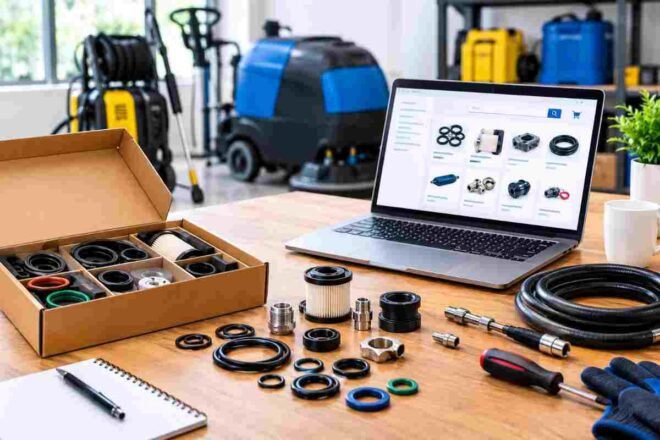
Downtime can disrupt cleaning schedules, especially in facilities that operate around the clock. Before buying, ask about warranty coverage, maintenance support, service availability, and the typical availability of replacement parts.
Local support can be useful for businesses in Bangalore and nearby areas. When comparing suppliers, ask who will handle installation or servicing and how to request help if the machine develops a problem. SGT Multiclean Equipments describes installation training and after-sales support among its services, so businesses can ask the team what support applies to a specific model.
Set a Budget That Reflects Total Cost
Compare machines based on the work they will do, not just their listed price. A lower-cost option may be suitable for light use, while a more durable model may make better sense for frequent cleaning in a demanding environment.
Include the cost of consumables and upkeep in your budget. These may include brushes, pads, filters, batteries, detergents, hoses, and routine servicing. Ask for a clear quotation that lists the machine, included accessories, warranty terms, taxes, delivery, and any training or installation charges.
If your team is considering more than one machine, compare the expected time and labour needed for each cleaning method. A machine that reduces repeated manual work may offer value over time, but the benefit depends on how often it is used and how well it suits the site.
Choose a Supplier Carefully
A good supplier should help you identify the right equipment for your facility rather than simply recommend the largest or most expensive model. Prepare a short list of questions before you speak with one:
- Which machine is suitable for my floor and type of dirt?
- Can it move through my doorways and aisles?
- What power, water, and storage arrangements does it need?
- Which parts and consumables will need regular replacement?
- What training, warranty, and service support are included?
- Can I see a demonstration or discuss a site-specific requirement?
Share photos, floor measurements, and details about cleaning frequency where possible. SGT Multiclean Equipments supplies cleaning equipment such as pressure washers, floor cleaning machines, and vacuum cleaners. A supplier familiar with these categories may be able to help you compare models based on the work you need them to perform.
Frequently Asked Questions
1. What should I consider before buying industrial cleaning equipment?
Start with the area to be cleaned, floor surface, type of dirt, cleaning frequency, and available power and water. Also consider storage space, operator training, warranty coverage, spare parts, and service support.
2. Which machine is best for cleaning large industrial floors?
A scrubber dryer or powered sweeper may suit a large floor, depending on whether the main task is removing loose debris or washing and drying the surface. The layout, floor material, and cleaning schedule will help determine the right model.
3. Are pressure washers suitable for every surface?
No. High-pressure water can damage delicate surfaces, paint, seals, or components. Check the surface manufacturer’s guidance and the washer’s recommended pressure and attachments before use.
4. How can I estimate the total cost of cleaning equipment?
Include the purchase price as well as accessories, consumables, electricity or fuel, water use, maintenance, replacement parts, and staff training. Ask suppliers to clarify what is included in the quotation and warranty.
5. Where can businesses in Bangalore get help choosing equipment?
Businesses can contact cleaning equipment suppliers and share details about their facility and cleaning needs. SGT Multiclean Equipments is based in Peenya, Bengaluru, and offers equipment across categories such as floor cleaning machines, pressure washers, and vacuum cleaners.
Conclusion
Choosing industrial cleaning equipment in Bangalore starts with understanding your facility: the floor area, surface type, dirt, cleaning schedule, and available utilities. Then compare suitable machine types, operating costs, staff training needs, and local service support.
Take time to ask questions and, where possible, arrange a product demonstration before making a decision. A machine selected for the actual site and cleaning task is more likely to be practical, maintainable, and useful over the long term.