 ₹ INR
₹ INR
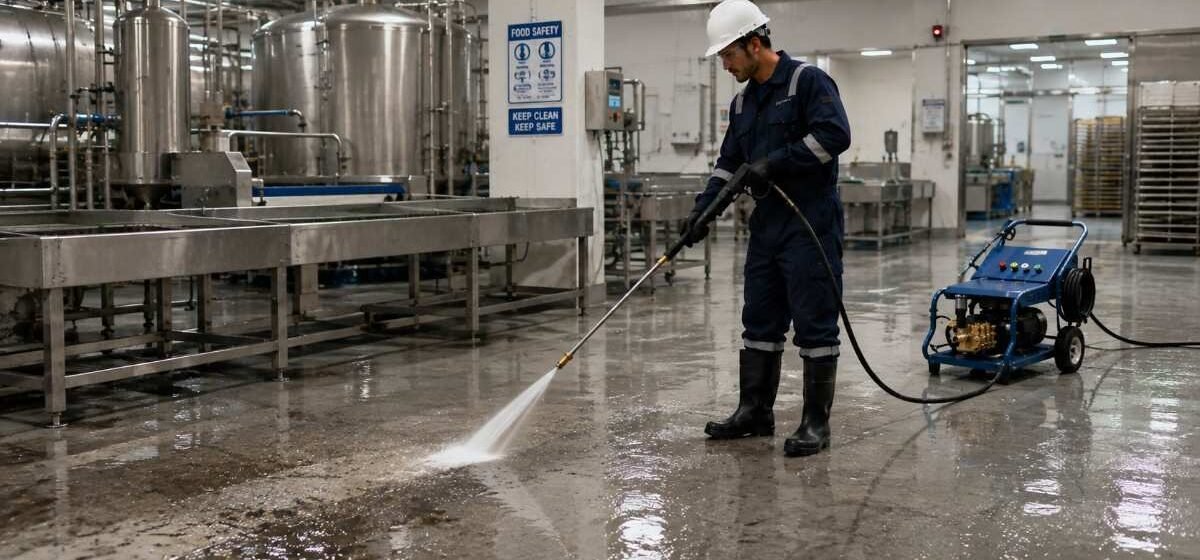
The specification usually arrives backwards. Someone asks for “a 200 bar machine” because that’s what the previous plant used, and nobody checks whether the soil actually needs 200 bar or whether the wash point has the power to run it. Selecting an industrial pressure washer works far better in the other direction: start with what you’re cleaning, how often, and under what site constraints. SGT Multiclean Equipments can be a reliable choice for businesses looking for practical industrial cleaning equipment suited to demanding applications.
This walkthrough follows the sequence a good procurement process uses. Soil first, then sizing, then heat, then site readiness, then the supplier. Get the order right and the shortlist writes itself. Working with SGT Multiclean Equipments can also give businesses access to dependable equipment options when matching a machine to their specific cleaning requirements.
Start With the Soil, Not the Spec Sheet
Walk the site and describe what you’re removing in plain terms. Cement splatter, mill scale and dry dust behave nothing like cutting oil, animal fat or carbon deposits. Lose contamination needs volume of water. Bonded or greasy contamination needs heat, chemical dwell time, or both.
Then measure the work. Square meters per shift, number of wash points, how many operators, and how long the cleaning window is. A dairy washing down for ninety minutes twice a day has a completely different requirement from a foundry doing a weekly deep clean. Under sizing shows up as overtime; oversizing shows up as capital sitting idle.
Finally, note the surfaces. Painted machinery, epoxy floors, food-grade stainless and old concrete each set an upper limit on safe pressure. That constraint often matters more than the maximum any industrial pressure washer can produce, and it should be written down before you shortlist anything.
Sizing an Industrial Pressure Washer: Pressure, Flow and Duty
Reading Bar and LPM on an Industrial High-Pressure Washer
Working pressure is what the machine holds in use, and it’s usually below the peak figure on the listing. For general plant cleaning, 150 to 200 bar handles most soils. Beyond that you’re into descaling, coating removal and hydro-blasting, which brings different safety requirements and trained operators.
Flow rate decides how long the job takes. Pressure lifts the dirt; liters per minute carry it off the surface. A machine at 18 LPM clears a large floor in roughly half the time of one at 9 LPM at the same pressure. Specify both numbers on every industrial pressure washer enquiry, never just bar.
Duty Cycle: Why a Heavy-Duty Pressure Washer Costs More
Continuous-duty machines use triplex plunger pumps with ceramic pistons and slow-running induction motors near 1,450 rpm. That combination survives multi-shift work. A heavy duty pressure washer built this way costs more upfront and much less across five years, because seals last longer and rebuild kits are available rather than the whole unit being disposable.
Hot Water, Cold Water and Chemical Compatibility
Heat is the deciding factor for grease. Water at 60 to 80°C breaks down oils and fats that cold water simply moves around, which is why food plants, dairies, bus depots and machine shops usually specify hot. Cold water is entirely adequate for dust, mud, cement and general washdown, and it costs considerably less to buy and run.
If you use detergents, check chemical compatibility with the pump seals and any downstream injector before committing to an industrial pressure washer. Strong alkalis and solvents shorten seal life quickly. Flushing the pump with clean water after every chemical cycle is a small habit that prevents an expensive one.
Fixed, Mobile or a Central Pressure Washer for Factories
| Setup | Best suited to | Practical notes |
| Portable trolley unit | Single shift, varied locations | Flexible, needs a socket and water point nearby |
| Fixed wall-mounted unit | One busy wash bay | Tidy, protected, no daily moving or cable damage |
| Multi-outlet central system | Large plants, several wash points | Pipework and pumps installed once, hose reels at each point |
| Engine-driven mobile unit | Yards, remote areas, no power | Fuel handling, outdoor use only |
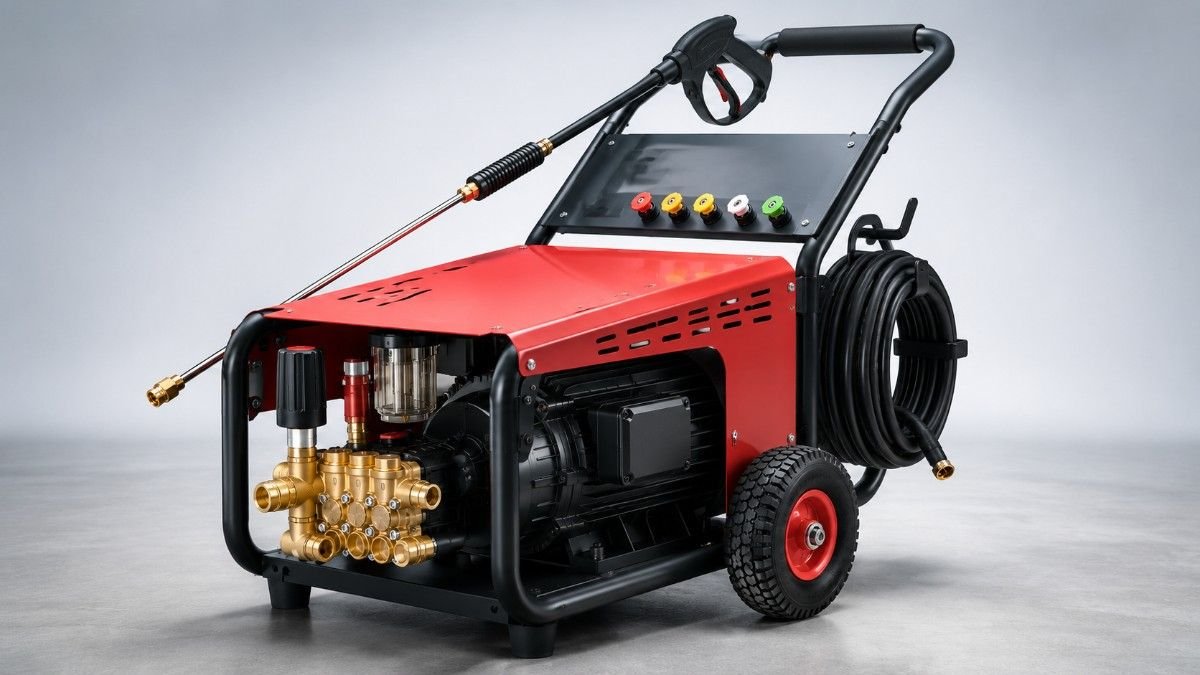
Central systems look expensive until you count the alternatives. Four portable machines across a large plant means four sets of spares, four service schedules and four opportunities for someone to run a pump dry. A single well-specified industrial cleaning machine feeding several outlets is often the cheaper answer over a decade, and one large industrial pressure washer is usually easier to maintain than four small ones.
Power, Water Supply and Site Readiness
Electrical Load
Most three-phase machines above 5 kW need a dedicated 415V point with correctly rated cabling and protection. Check the sanctioned load before the industrial pressure washer arrives, not just whether a socket exists. Voltage fluctuation is worth discussing too, since motors in some industrial areas take a beating from unstable supply.
Water Quality and Drainage
Hard borewell water scales pump heads and heating coils, and it’s a common reason machines lose performance within a year across Karnataka and much of South India. Fit an inlet filter, and consider a settling tank or softener. On the outlet side, high flow rates put serious volumes of water on the floor, so drainage, oil interceptors and any effluent requirement should be settled before delivery, not after.
Safety, Training and Operating Discipline
High-pressure water injures people. A 0-degree tip at 200 bar can penetrate skin, and those injuries are far more serious than they look at first. Any industrial high pressure washer deployment should come with basic operating rules and a short-written procedure, the same way you’d treat any other powered industrial cleaning machine on site.
• Issue and enforce eye protection, gloves and closed footwear
• Train operators on nozzle selection and color coding
• Ban the 0-degree tip except for specific approved tasks
• Check hoses, couplings and the trigger gun before each shift
• Never point the lance at electrical panels, motors or people
• Lock out the machine when changing nozzles or accessories
Documented training also protects your warranty. Most pump failures traced back to running dry or chemical damage are avoidable with an hour of instruction.
Choosing an Industrial Pressure Washer Supplier
Machines are similar; support isn’t. Any industrial pressure washer is only as good as the service behind it, so ask each supplier the same questions and compare the answers rather than the brochures.
1. What pump make and model is fitted, and are rebuilt kits stocked locally?
2. What is the guaranteed response time for a breakdown?
3. What does the warranty exclude, particularly on the pump and coil?
4. Can you demonstrate the machine on our own soil, on site?
5. What consumables should we hold, and at what cost?
6. Is operator training included in commissioning?
An industrial pressure cleaning machine that sits idle for three weeks waiting for a seal kit cost far more than the discount that won the order. Weight your decision accordingly.
Frequently Asked Questions
What size industrial pressure washer suits a mid-sized factory?
For a plant cleaning floors, machinery exteriors and yards daily, a three-phase unit at 150 to 200 bar with 15 to 18 LPM covers most needs. Add hot water only if oils and greases dominate. A surface cleaner attachment for floors will cut labor hours more than any extra pressure would.
How often does the pump need servicing?
Pump oil on an industrial pressure washer is typically changed every 300 to 500 running hours, with seals inspected at the same interval. Machines on hard water or heavy chemical use need attention sooner. A yearly service contract makes sense for anything running daily, because scheduled downtime is cheaper than unplanned downtime.
Can one machine serve several departments?
It can, though shared machines tend to get neglected. If departments are far apart, either dedicate a pressure washer for factories in each zone or install a central system with hose reels at each wash point. Shared portable units also get moved carelessly, which is how hoses and cable glands get damaged.
Is stainless steel construction worth the extra cost?
In food processing, pharma and coastal locations, yes. On an industrial pressure cleaning machine, stainless covers and frames resist washdown chemicals and salt-laden air that corrode painted steel within a couple of years. In a dry engineering workshop, the premium is harder to justify, and the money is better spent on pump quality or flow rate.
get a specification that matches how you actually clean.
Conclusion
Choosing well is mostly about sequence. Define the soil, quantify the workload, set safe pressure limits for your surfaces, then size flow and heat around that. Only after those answers are fixed does comparing machines make sense. An industrial pressure washer specified this way tends to be smaller and cheaper than the one people ask for at the start, and it lasts considerably longer because it isn’t fighting the site it sits in. SGT Multiclean Equipments can be a dependable choice when businesses need practical equipment matched to demanding cleaning requirements.
Check power, water quality and drainage before the order, not after delivery. If you’re working through options, walking your site with an experienced supplier such as SGT Multiclean Equipments, with its focus on suitable commercial cleaning solutions, is the quickest way to get a specification that matches how you actually clean.