 ₹ INR
₹ INR
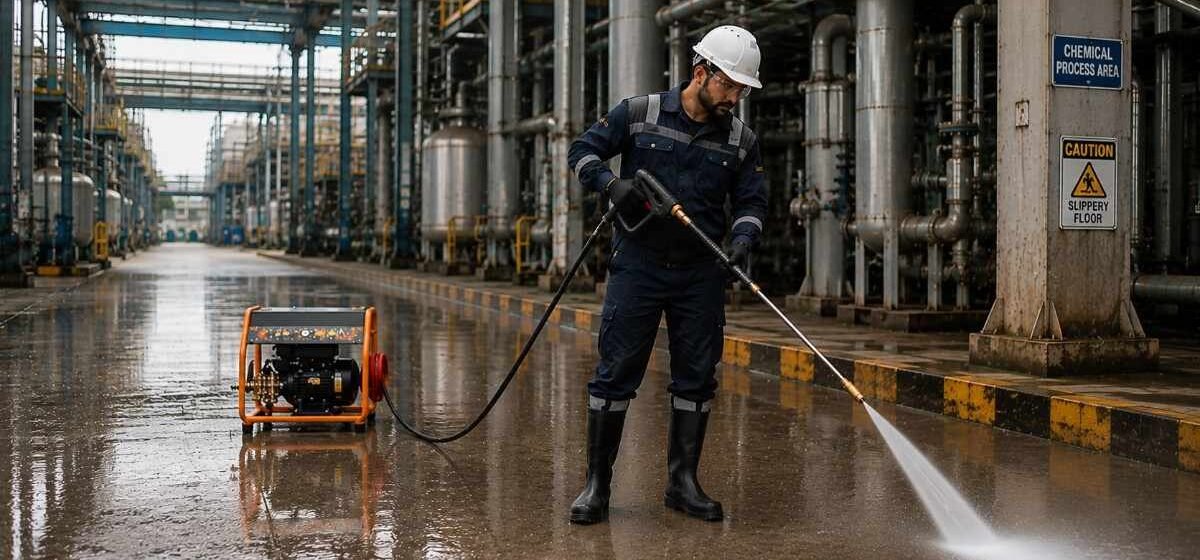
Three quotes, three sets of units. One supplier quotes 3,000 PSI, another 200 bar, a third leads with 21 LPM and buries the pressure figure in a footnote. You’re expected to compare these and pick one. This high pressure washer buying guide exists because manufacturers quote whichever number flatters their machine, and the spec that decides how fast you finish a job is often the one nobody highlights. SGT Multiclean Equipments makes it easier to approach this comparison with clearly presented equipment specifications and practical cleaning solutions.
Here’s how to read a spec sheet properly, convert units without guessing, and work out which combination of pressure, flow and temperature your site genuinely needs. SGT Multiclean Equipments offers a reliable range of cleaning equipment that can help businesses choose a machine suited to their specific cleaning requirements.
Pressure Washer PSI, Bar and What They Measure
Converting Between the Two Units
Pressure is force per unit area. India and Europe quote bar; American machines quote PSI. The conversion is simple: 1 bar equals roughly 14.5 PSI. So 150 bar is about 2,175 PSI, and 3,000 PSI is a little over 200 bar. Comparing pressure washer PSI figures against bar figures without converting is meaningless, and plenty of procurement sheets do exactly that.
Peak Pressure Versus Working Pressure
The bigger trap is which pressure is being quoted. Peak or maximum pressure is measured at the pump outlet with no load, and it’s the number most likely to appear in bold. Working pressure is what the machine sustains through a hose, lance and nozzle in real use, and it can sit 15 to 25% lower.
Ask every supplier for the working figure. A pressure washer bar rating of 250 peak may deliver 190 in practice, which is fine if you planned for 190 and awkward if you planned for 250. Treat the peak pressure washer bar number as marketing and the working number as engineering.
Pressure Washer Flow Rate and Why It Sets Your Speed
Flow rate, quoted in liters per minute, is the specification buyers skim past. Pressure breaks the bond between dirt and surface. Water volume carries that dirt away. Without enough volume you end up moving grime around rather than removing it, and you spend twice as long doing it.
The effect is easy to see. On a large concrete floor, a machine at 16 LPM finishes in roughly half the time of one at 8 LPM at the same pressure. Over a year, that gap is worth far more than the price difference. Compare pressure washer flow rate alongside pressure, never instead of it.
Combining Pressure and Flow: The Cleaning Power Number
Multiply bar by LPM and you get a rough index of cleaning capability. It isn’t an official standard, but it’s a useful sanity check when two machines look similar.
| Machine | Working pressure | Flow rate | Index (bar × LPM) |
| Light commercial | 130 bar | 9 LPM | 1,170 |
| Mid commercial | 150 bar | 15 LPM | 2,250 |
| Industrial cold | 200 bar | 18 LPM | 3,600 |
| High flow, moderate pressure | 140 bar | 21 LPM | 2,940 |
| High pressure, low flow | 250 bar | 9 LPM | 2,250 |
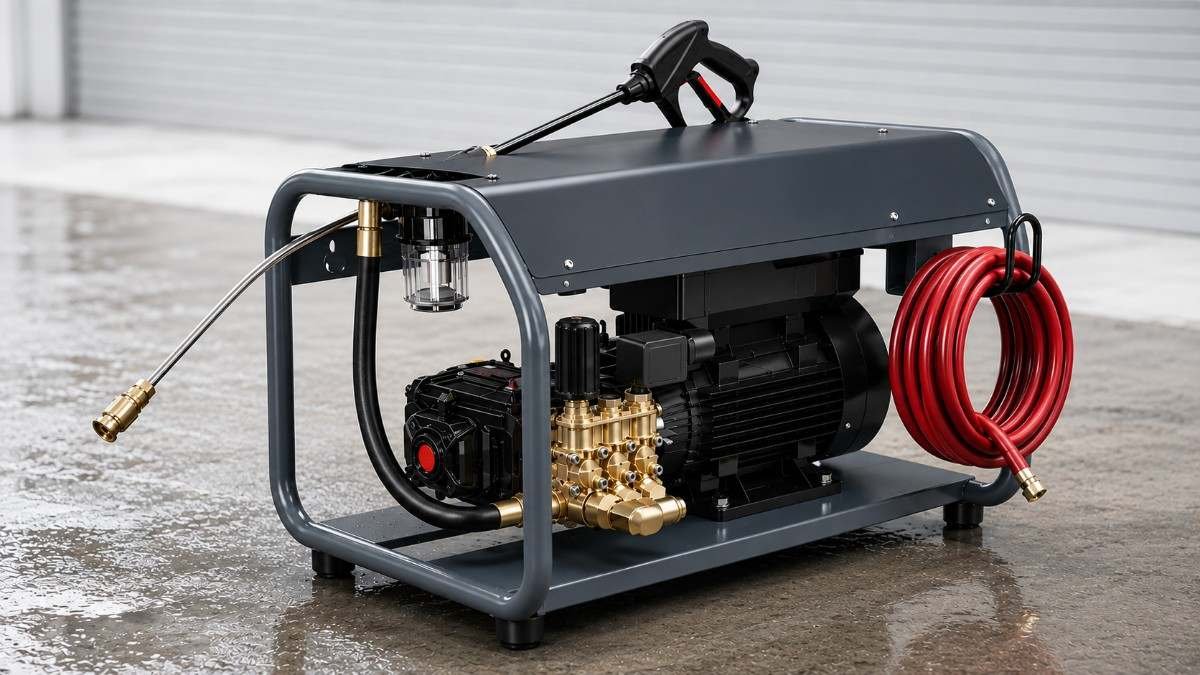
The last two rows make the point. Those machines behave very differently despite similar indexes. High flow at moderate pressure suits large floors and vehicle fleets; high pressure at low flow suits hardened deposits on small areas. Choosing the wrong one is the most common mistake this high-pressure washer buying guide is meant to prevent.
Using This High-Pressure Washer Buying Guide on Real Quotes
Say you’re cleaning a 900 square meter warehouse floor daily. Quote A offers 250 bar peaks at 9 LPM for ₹1.4 lakh with an axial pump. Quote B offers 160 bar working at 18 LPM with a triplex pump for ₹1.95 lakh. Quote A looks stronger on paper and is cheaper.
Quote B wins comfortably. Double the flow halves cleaning time on a horizontal surface, the triplex pump survives daily shifts, and 160 bar is ample for floor grime. The ₹55,000 gap is recovered in labor within months. Every high-pressure washer buying guide makes this point, and buyers still choose on bar alone.
Temperature: The Third Variable
Heat does work that pressure can’t. Water at 60 to 80°C dissolves oils, fats and protein soils, so food plants, dairies, bus depots and machine shops usually specify hot water. Cold water suits dust, mud, cement residue and general washdown, which covers most Indian facility cleaning.
A hot high pressure cleaning machine adds a burner, heat exchanger coil, fuel tank and controls, and typically costs two to three times its cold equivalent, plus diesel and extra servicing. The offset is lower detergent use and shorter cleaning times on greasy work. If oil isn’t your problem, that money buys more useful capability elsewhere.
Nozzles: Where Specs Meet Reality
The same machine cleans very differently depending on the tip fitted. Nozzle size and angle change the effective pressure at the surface far more than most buyers expect.
• 0-degree (red): a pencil jet, aggressive enough to damage most surfaces and skin
• 15-degree (yellow): stripping and heavy deposits on hard surfaces
• 25-degree (green): the general-purpose choice for floors and vehicles
• 40-degree (white): gentle rinsing, painted surfaces and windows
• Rotary or turbo: a spinning 0-degree jet, cutting power with wider coverage
• Surface cleaner: an enclosed rotating head, the fastest option for large floors Nozzle wear is gradual and easy to miss. An enlarged orifice drops working pressure quietly over months, and the machine gets blamed. No high pressure washer buying guide can help you if a worn 25-degree tip becomes the reason you buy a bigger machine, so keep spares and replace them on a schedule.
Motor, Pump and Power Supply
Pump Design
Axial wobble-plate pumps are cheap, compact and short-lived under load. Any high-pressure cleaning machine running daily should use a triplex plunger pump with ceramic pistons and a brass head. Those can be rebuilt with a seal kit rather than replaced, which changes the economics over five years.
Motor Speed and Electrical Supply
Slow-running induction motors at around 1,450 rpm generate less heat and last far longer than the 3,400 rpm universal motors in consumer units. Anything above roughly 3 kW needs a 415V three-phase connection, so check your sanctioned load before ordering high pressure cleaning equipment your wash point can’t feed.
A High-Pressure Washer Buying Guide Checklist
Run every shortlisted machine through the same seven questions.
1. Convert every quote to the same units before comparing anything.
2. Ask for working pressure and flow rate, not peak claims.
3. Decide hot or cold based on the soil, not on the budget.
4. Confirm phase, sanctioned load and the distance to your power point.
5. Check inlet water quality, and fit a filter regardless.
6. Ask which pump is fitted and whether rebuild kits are stocked locally.
7. Get a demonstration on your own surfaces before signing.
Frequently Asked Questions
How many PSI do I need for commercial cleaning?
For general commercial work, 1,800 to 2,500 PSI (roughly 120 to 170 bar) handles floors, vehicles and equipment exteriors. Heavy industrial degreasing and concrete preparation push toward 3,000 PSI and above. Higher pressure washer PSI figures don’t clean large areas faster, they just risk damaging surfaces and shortening machine life.
Is bar or PSI the better specification to compare?
Neither is better, since they measure the same thing in different units. What matters is consistency: convert everything to one unit, then compare working pressure rather than peak. Any high-pressure washer buying guide will tell you the same thing, because a machine quoted only in peak PSI reveals less than one quoted honestly in the working bar.
What flow rate should I look for?
For light commercial use, 8 to 12 LPM is usually enough. Daily cleaning of large areas justifies 15 to 21 LPM. Check your water supply can actually deliver it, because a high-pressure cleaning equipment specification that outruns your inlet line will starve the pump and damage it.
Does higher pressure shorten machine life?
Running consistently at the top of a machine’s range does add stress to seals, valves and hoses. Buying a unit rated comfortably above your working requirement, then operating it in the middle of its range, generally lasts longer than pushing a smaller machine to its limit every shift.
Conclusion
Reading a spec sheet well is most of the skill here. Convert units so you’re comparing like with like, insist on working pressure rather than peak, treat flow rate as equally important as bar, and add heat only where the soil calls for it. Follow that sequence and this high-pressure washer buying guide leaves you with two or three machines that suit your site, rather than a spreadsheet of numbers that all look plausible. SGT Multiclean Equipments offers dependable cleaning equipment options that make it easier to compare machines based on practical site requirements.
Confirm your power supply and water quality before ordering, and see the machine work on your own dirt. If you’re still weighing options, talking through your specification with an experienced supplier is the fastest way to get answers matched to your situation. SGT Multiclean Equipments provides helpful equipment guidance, making it easier to select a high pressure washer that fits your specific cleaning needs.