 ₹ INR
₹ INR
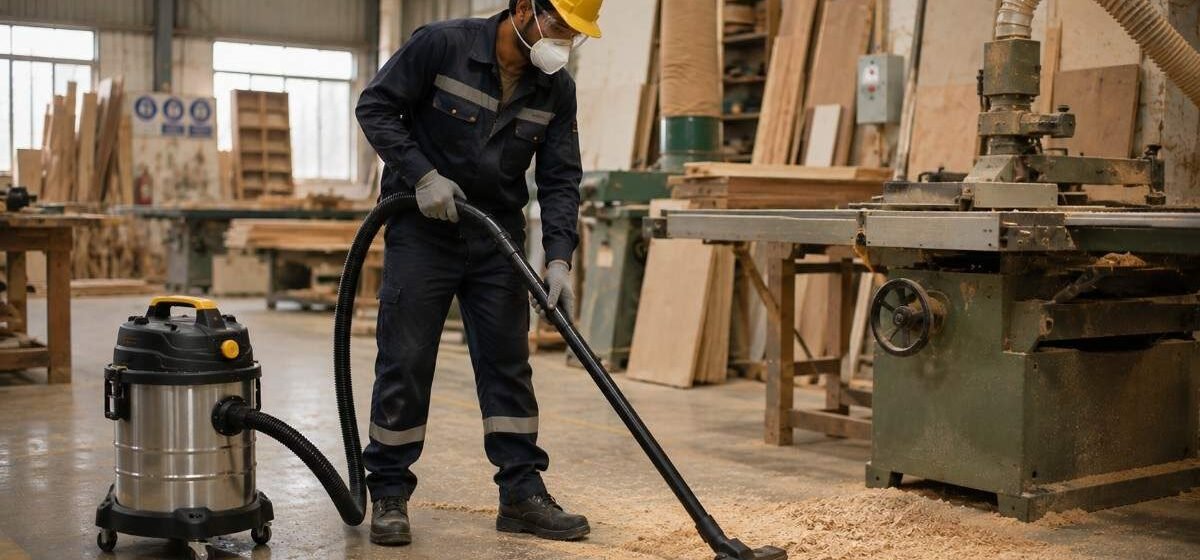
Walk into a grinding bay twenty minutes before shift change and you can usually see the problem without being told. There’s a grey film on the machine guards, a drift of powder along the skirting, and an operator pushing it around with a broom that puts most of it straight back into the air. Choosing an industrial vacuum cleaner for dust collection from SGT Multiclean Equipmentsis the point where housekeeping stops being cosmetic and starts protecting lungs, bearings and control panels.
The difference between a good unit and a poor one rarely shows in week one. It shows in month three, when the filter blinds, suction drops off, and the machine quietly becomes a bin on castors. That’s why SGT Multiclean Equipments focuses on equipment suited to demanding industrial cleaning requirements.
Why a Shop Vacuum Fails on a Production Floor
Light commercial wet-dry units are designed around intermittent use. The bypass motor inside is rated for roughly 20 to 30 minutes before it needs to cool, and the filter area suits occasional workshop mess, not a continuous stream of abrasive fines. Run one for a full shift and you’ll cook it.
Proper industrial suction equipment is built differently. Larger machines use a side-channel blower driven by a three-phase induction motor rated for continuous duty, and the filter surface area is multiplied several times over. There’s usually a mechanical or pneumatic cleaning system too, so the operator can knock the dust cake off without opening the machine. You pay more up front and stop buying replacement motors every year.
Match the Machine to the Dust You Actually Produce
Dust isn’t one material. A specification that suits a carpentry unit will disappoint a foundry.
Sizing an industrial dust vacuum for fine powders
Cement, talc, toner, flour and pharmaceutical powders are light and highly penetrating. They pass through cheap media and settle in the motor. You want a large filter area (2 to 5 m² is typical mid-range), a PTFE-coated cartridge that releases the cake rather than absorbing it, and ideally an H13 HEPA stage on the exhaust. An industrial dust vacuum with modest flow but a well-sealed filter housing beats a powerful machine that leaks fines back into the room.
Metal swarf, grinding grit and glass
Heavier debris needs velocity in the hose more than raw vacuum at the inlet. A 50 mm or 70 mm hose keeps chips moving; a 32 mm domestic hose blocks. Specify a steel collection container rather than plastic, a cyclonic pre-separator to drop the heavy fraction before it reaches the filter, and an antistatic hose so you aren’t taking shocks off the wand all day. This is where a heavy-duty industrial vacuum earns its price difference.
Combustible dust and hazardous areas
Aluminum fines, sugar, wood flour and some chemical powders form explosive atmospheres. That calls for certified industrial suction equipment with earthed components, spark-arresting inlets and, where the zone classification demands it, a compressed-air driven motor. Involve a qualified safety engineer before you buy anything.
Reading the Spec Sheet: Airflow, Vacuum and Motor Power
Two numbers get quoted and they measure opposite things.
Airflow versus suction
Airflow, in m³/h, is the volume the machine moves, and it’s what carries material along a long hose. Vacuum, in mbar or mm of water column, is the pull it develops against resistance: what lifts a heavy chip off the floor. A machine advertising 25,000 mm H₂O with 150 m³/h airflow is a specialist high-vacuum unit for point extraction. A general floor cleaning machine sits nearer 2,500 mm H₂O and 300 m³/h. Buying the first when you needed the second is a common and expensive mistake.
Single-phase or three-phase
Single-phase machines from 1.2 to 2.4 kW suit maintenance teams and small workshops. Past roughly 3 kW, three-phase becomes the sensible route: better efficiency, no brush wear, no voltage sag when the compressor kicks in. Check the panel near the point of use first, because retrofitting a three-phase socket in an older industrial shed can cost more than the difference between the two models.
Filtration Decides How Long an Industrial Vacuum Cleaner for Dust Collection Lasts
Most performance complaints after six months trace back to filtration, not motors. A blinded filter starves the blower, the motor runs hot, and nozzle suction collapses even though the machine sounds fine.
Three features are worth paying for. First, filter area: more surface means lower face velocity and slower cake build-up. Second, a cleaning mechanism, whether a manual shaker handle or a jet-pulse system that fires compressed air back through the cartridge. Third, a bagged discharge if your dust is unpleasant, so emptying doesn’t undo the containment you paid for.
Where an Industrial Vacuum Cleaner for Dust Collection Fits on Your Floor
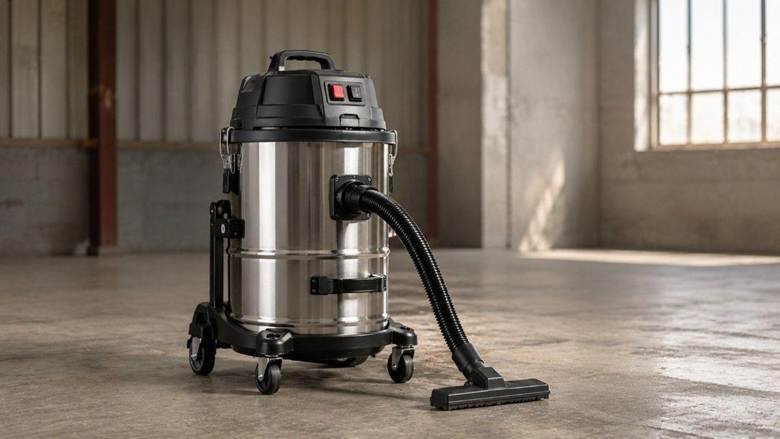
Portable units follow the work, which suits maintenance rounds and multi-bay plants. A centralized system with fixed piping suits one heavy source, like a bagging line, but locks you into that layout. Most plants are better off buying a portable heavy duty industrial vacuum first, then adding a second unit for the dirtiest process once the pattern of use is clear. Sharing one machine across production and washroom duties ends badly.
| Application | Guide airflow | Motor | Container | Filtration |
| Workshop / maintenance | 200–250 m³/h | 1.2–2.2 kW, 1-ph | 30–50 L | Cartridge, class M |
| Machine shop, swarf and coolant | 250–350 m³/h | 2.2–4 kW | 70–100 L, steel | Cyclone + cartridge |
| Food and pharma | 250–400 m³/h | 3–5.5 kW, 3-ph | 50–100 L, stainless | HEPA H13 + bag out |
| Cement, foundry, ceramics | 400–600 m³/h | 5.5–7.5 kW, 3-ph | 100–200 L | Jet-pulse cartridge |
Indicative Prices in India and What Moves Them
Treat these as indicative ranges that move with specification and duty. A single-phase factory vacuum cleaner in the 1.2 to 2.4 kW band typically lands between ₹35,000 and ₹1,00,000. Three-phase machines from 3 to 5.5 kW with jet-pulse cleaning run from about ₹1.5 lakh to ₹4 lakh, and stainless or hazardous-area builds push well past that.
What drives the number is filter technology, container material, blower type and IP rating, in roughly that order. An industrial vacuum cleaner for dust collection quoted suspiciously below the band is almost always a light commercial unit rebadged, and its duty cycle will tell you so within a month.
Keeping a Dust Extraction Machine Running
• Clean the primary filter to a written schedule, not when suction drops.
• Empty containers at two-thirds full; a heavy drum damages castors and backs.
• Inspect the hose for splits at the cuff, where wear starts.
• Keep one spare cartridge and one spare hose on the shelf.
Ask about spare parts at the quotation stage. A dust extraction machine with a six-week lead time on cartridges is one you’ll stop using.
Frequently Asked Questions
How much suction does an industrial vacuum cleaner for dust collection need?
Less than most buyers assume. Fine powders need filtration integrity and steady airflow more than extreme vacuum. Around 2,000 to 2,500 mm H₂O with 250 to 350 m³/h handles most floor and machine cleaning. Machines above 20,000 mm H₂O are for capturing at the tool, not general housekeeping.
Can one machine handle both wet and dry pickup?
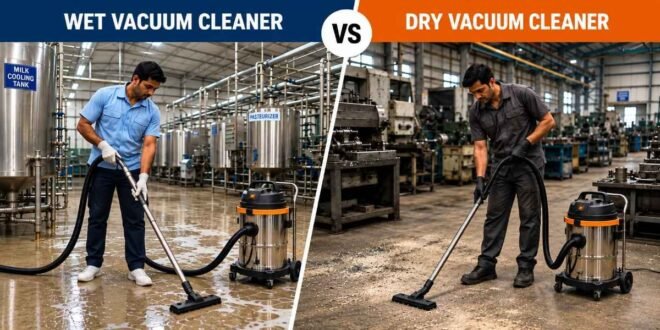
Many industrial models can, provided they have a float cut-off and a drain, and provided you remove or swap the dry filter first. Vacuuming coolant with a paper cartridge in place ruins it immediately. If wet recovery is a daily task, specify a machine designed for it rather than adapting one.
Is a three-phase machine worth it for a small unit?
If you run more than two hours a day, usually yes. Three-phase induction motors have no brushes to replace, run cooler, and cost less per hour of use. Below that, a single-phase factory vacuum cleaner is simpler to site and easier to move between buildings.
How often should filters be replaced?
Cartridges typically last six months to two years depending on dust load and whether the machine has automatic cleaning. Replace them when cleaned suction no longer recovers, or when you see visible pinholes. Abrasive dusts like cement and foundry sand shorten filter life considerably.
Conclusion
Specifying an industrial vacuum cleaner for dust collection comes down to three honest answers: what the dust is, how many hours a day the machine will run, and who empties it. Get those right and the rest of the spec sheet follows, from hose diameter to filter class and phase. Get them wrong and you’ll buy twice. The temptation is to compare headline wattage across quotations, but airflow, filter area and duty cycle tell you far more about how the machine behaves in month twelve. SGT Multiclean Equipments can help you assess these factors when selecting the right equipment for your site.
If you’re weighing up options for your site, walking a supplier like SGT Multiclean Equipments through your actual dust and shift pattern is the fastest way to get a specification matched to your situation rather than a catalogue.