 ₹ INR
₹ INR
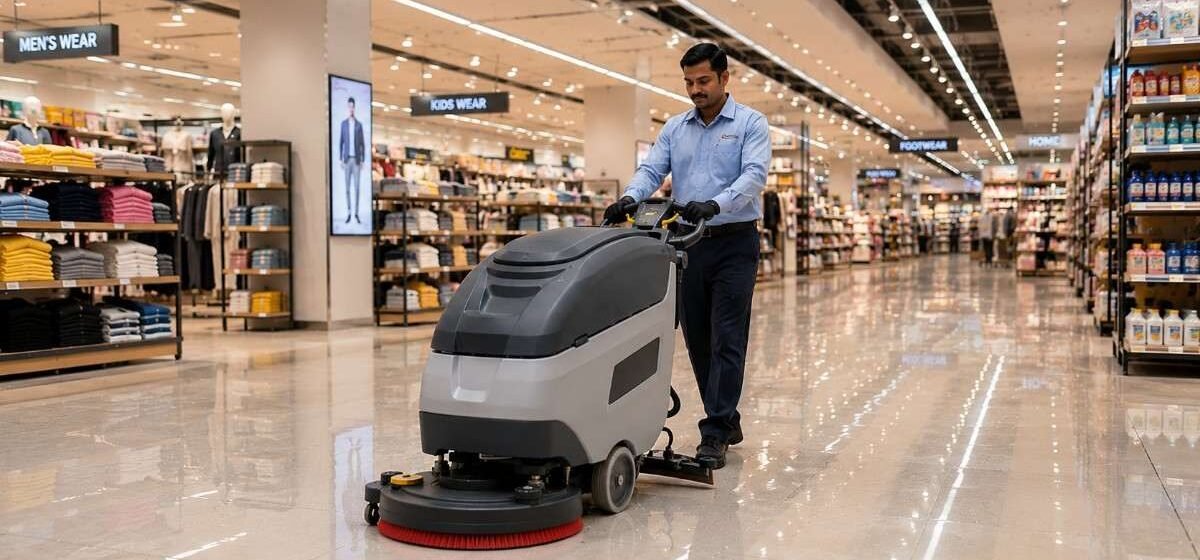
Walk through a mall atrium at 7am and you’ll see the difference immediately. One team is pushing a mop and bucket, leaving streaks that dry into a haze by opening time. The other has finished, and the floor is dry enough to walk on. A Floor Scrubber Machine does three jobs in one pass: it lays down solution, scrubs, and vacuums the dirty water back up. SGT Multiclean Equipments provides floor cleaning solutions designed for efficient commercial and industrial cleaning.
That last part separates it from mopping. A mop redistributes soil into the water and leaves it on the floor to dry, which no floor cleaning machine should do. If you manage a factory, hospital, hotel or warehouse, this guide covers how to size and specify a machine without overpaying for capacity you’ll never use. SGT Multiclean Equipments can help you choose a floor scrubber machine suited to your cleaning requirements.
What a Floor Scrubber Machine Actually Does
Inside the body of a Floor Scrubber Machine there are two tanks. Clean water and detergent go in one, dirty recovery water collects in the other. A rotating brush or pad agitates the floor while solution drips onto it, then a rubber squeegee at the rear pulls the slurry into the recovery tank through a vacuum motor. You’re left with a floor that’s clean and, crucially, dry within a minute or two.
Dry matters more than most buyers expect. Wet floors are the most common slip-hazard complaint in Indian retail and hospital settings, and during monsoon months a mopped floor can stay damp for half an hour. A scrubber dryer machine removes that window entirely, which is why insurers and safety auditors tend to like them.
Walk-Behind, Ride-On or Stand-On Floor Scrubber Machine
Walk-Behind Machines
The workhorse category. Scrub widths run 340mm to 700mm, tanks from 15 to 90 liters, and one operator can cover roughly 1,500 to 3,500 square meters an hour depending on width and obstacles. A walk-behind automatic floor scrubber fits supermarket aisles, hospital corridors, hotel banquet halls and most workshop floors.
Ride-On Machines
Above roughly 5,000 square meters per shift, walking stops making sense. A ride-on automatic floor scrubber covers 4,000 to 7,000 square meters an hour with scrub widths from 700mm to over a meter, and the operator is far less fatigued at the end of a shift. The trade-off is turning circle, storage space and price.
Stand-on units sit between the two and suit tight aisles with large total area. If you clean under racking in a distribution center, measure the narrowest aisle before falling for a wide deck.
Sizing a Floor Scrubber Machine by Area
Match the Floor Scrubber Machine to the area you clean per shift, not to your total built-up area. Here’s a rough guide.
| Area per shift | Format | Scrub width | Solution tank | Indicative price |
| Under 1,000 sq m | Compact walk-behind | 340–450 mm | 15–30 L | ₹90,000–₹2 lakh |
| 1,000–3,000 sq m | Walk-behind | 500–600 mm | 40–60 L | ₹2–4 lakh |
| 3,000–6,000 sq m | Large walk-behind | 600–750 mm | 60–90 L | ₹3.5–6 lakh |
| 6,000–15,000 sq m | Ride-on | 700–900 mm | 90–150 L | ₹6–12 lakh |
| Above 15,000 sq m | Large ride-on | 900–1,200 mm | 150–250 L | ₹10–20 lakh |
Treat those figures as indicative. Pricing depends on battery type, tank material, brush configuration and whether you specify traction drive.
Runtime is the number people forget. A 60-litre tank at a typical solution flow gives you somewhere around 45 to 70 minutes of scrubbing before a refill. If your floor takes 90 minutes, you’re walking to the water point mid-shift, which quietly kills the productivity gain you bought the machine for.
Brush or Pad, and Why the Floor Decides
Rough concrete, Kota stone and old industrial flooring need stiff bristles that reach into the texture. Polished vitrified tiles, epoxy and marble want soft pads that clean without dulling the finish. Using the wrong one is the commonest mistake, and it either leaves dirt behind or slowly ruins the floor.
A Floor Scrubber Machine with disc brushes is simpler, cheaper to re-kit and handles uneven surfaces well. Cylindrical brushes sweep debris into an onboard hopper as they scrub, which suits workshops and food areas where you’d otherwise sweep first. If your floor collects nuts, packing scrap or food waste, a cylindrical head saves a whole cleaning step.
Brush pressure matters as much as brush type. An industrial floor scrubber for a foundry or a machine shop needs downward pressure to lift oil film, while a hotel lobby needs the opposite. Ask what the deck pressure is in kilograms, not just the brush diameter.
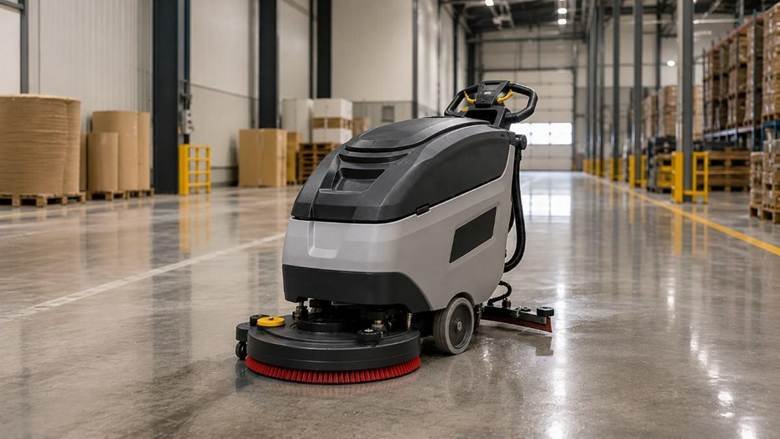
Battery or Cable Power for an Industrial Floor Scrubber
A cable-powered Floor Scrubber Machine costs less and never runs flat, but you’re dragging a lead across a busy floor. Realistically they suit small areas, single rooms and back-of-house spaces where a socket is always near.
Battery machines are the default for anything larger. Lead-acid batteries are cheaper up front and need topping up with distilled water, which requires someone to actually do it. Lithium costs more, charges faster, tolerates opportunity charging between shifts and lasts longer in a 24-hour operation. For a two-shift warehouse, lithium usually wins over five years despite the sticker shock.
Indian power conditions matter here. Voltage fluctuation shortens charger and battery life, so ask whether the charger has input protection, and keep the charging point away from wash areas.
What a Commercial Floor Scrubber Costs to Own
The purchase price is roughly half the story. Over five years, a Floor Scrubber Machine will also need:
• Brushes or pads, replaced every few hundred hours depending on floor abrasiveness
• Squeegee blades, which are consumable and cheap, but ignored until they streak
• Batteries, typically every 3 to 5 years on lead-acid, longer on lithium
• Detergent, which varies hugely with dilution discipline
• Annual service and vacuum motor replacement in heavy use
Against that, count the labour you no longer spend. One operator with a commercial floor scrubber typically replaces three or four people with mops on the same area, and finishes faster. That maths justifies the machine in most facilities, not cleaning quality alone.
Mistakes That Cost Money Later
1. Buying on tank size alone, without checking scrub width against your area.
2. Ignoring door widths, lift dimensions and ramp gradients on the route.
3. Choosing a Floor Scrubber Machine no one on the team is willing to operate daily.
4. Skipping the demo on your own floor with your own soiling.
5. Forgetting where the machine will be parked, charged and drained.
6. Assuming any floor cleaning machine can handle oil without the right brush and detergent.
The parking and charging point catch more sites than any spec error. A machine stored in a corridor gets damaged; one stored two floors away from where it’s used gets left idle.
Frequently Asked Questions
How long does a Floor Scrubber Machine take to pay for itself?
Most facilities cleaning several thousand square meters daily see the labour-saving cover the machine within one to two years. The maths depends on your wage costs, shift pattern and whether you were previously outsourcing housekeeping. Run the numbers on hours saved per week before committing.
Can I use one on epoxy and polished concrete?
Yes, with the right pad. Use a soft white or red pad and a neutral pH detergent on sealed epoxy, and avoid aggressive brushes that scratch the coating. For unsealed or heavily textured concrete, a medium bristle brush works better and won’t wear out as quickly.
How much water does one use per hour?
Typically, 30 to 90 liters an hour, depending on solution flow and scrub width. That is less than repeated mop-bucket changes over the same area. A scrubber dryer machine pulls most of that water straight back into the recovery tank, so the volume you dispose of is smaller than the volume you filled.
Is a walk-behind or ride-on better for a warehouse?
It depends on aisle width and area. Under 5,000 square meters per shift, a large walk-behind Floor Scrubber Machine is usually enough and easier to store. Beyond that, a ride-on pays back through operator productivity, provided your aisles and turning spaces genuinely accommodate the machine.
Conclusion
Choosing a Floor Scrubber Machine comes down to four honest measurements: area cleaned per shift, floor surface, narrowest access point, and who will operate and maintain it. Get those right and everything else follows, including whether you need a battery, how wide the deck should be and what a realistic budget looks like. Oversized machines sit idle because they’re awkward. Undersized ones frustrate the team and get abandoned within a year. The best result usually comes from a demonstration on your actual floor, at the time of day you’d normally clean. SGT Multiclean Equipments can help you evaluate these factors and choose a machine suited to your cleaning requirements.
If you’re comparing models, talking through your site layout with an experienced supplier like SGT Multiclean Equipments will narrow the shortlist faster than any brochure comparison.