 ₹ INR
₹ INR
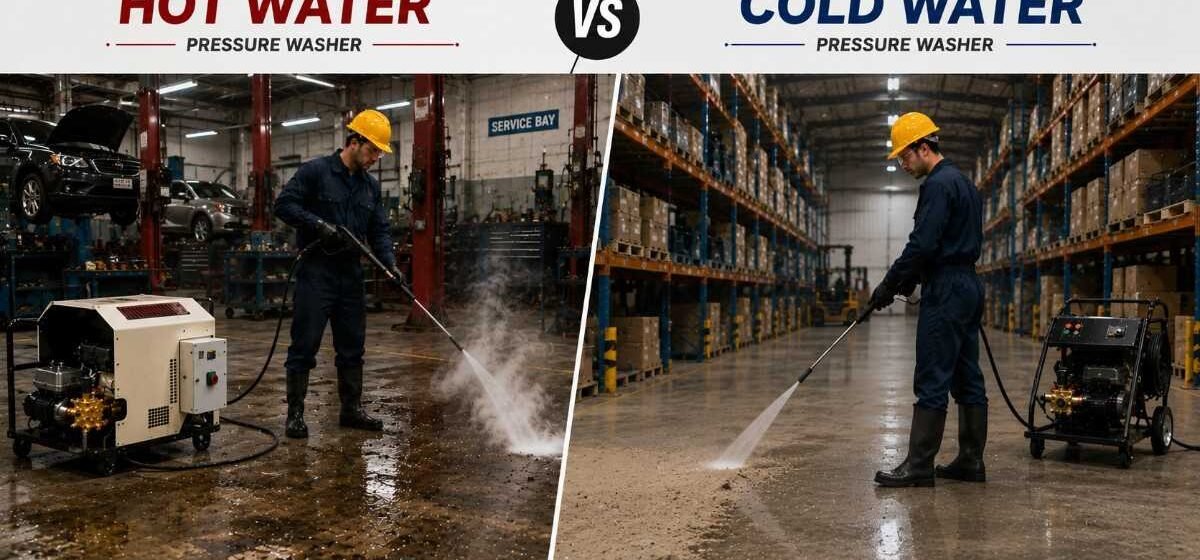
Your operator has been standing at the same patch of workshop floor for twenty minutes. The pressure is fine, the nozzle is right, and the oil stain still hasn’t shifted. That moment is when most buyers first take the hot water vs cold water pressure washer question seriously, usually after they’ve already bought the machine. SGT Multiclean Equipments can be a reliable choice when businesses need practical cleaning equipment suited to different industrial applications.
Heat isn’t a luxury add-on. It’s a cleaning agent in its own right, and on some soils, it does work that pressure simply cannot. On others it’s an expensive way to warm up dust. Knowing which situation, you’re in saves both money and frustration, while SGT Multiclean Equipments can help businesses choose dependable equipment based on their actual cleaning requirements.
What Heat Actually Does to Dirt
Pressure removes contamination by force. Heat removes it by changing the contamination itself. Around 60 to 80 degrees, oils and fats soften and lose their grip on the surface, so a moderate jet lifts them away instead of skating over the top.
The grease and fat problem
Animal fat, cooking oil, machine lubricant, wax and bitumen all behave the same way. Below their softening point they cling. Cold water at 200 bar will eventually chip at them, but you’re relying on mechanical force alone, which means longer wash times, more water and a fair amount of splash-back. Warm water at 120 bar often clears the same surface faster.
Detergent behavior
Alkaline degreasers work considerably better warm. Many industrial detergents are formulated for 50-to-60-degree application, and using them cold means you’re paying for chemistry you never activate. That’s a hidden cost people rarely calculate.
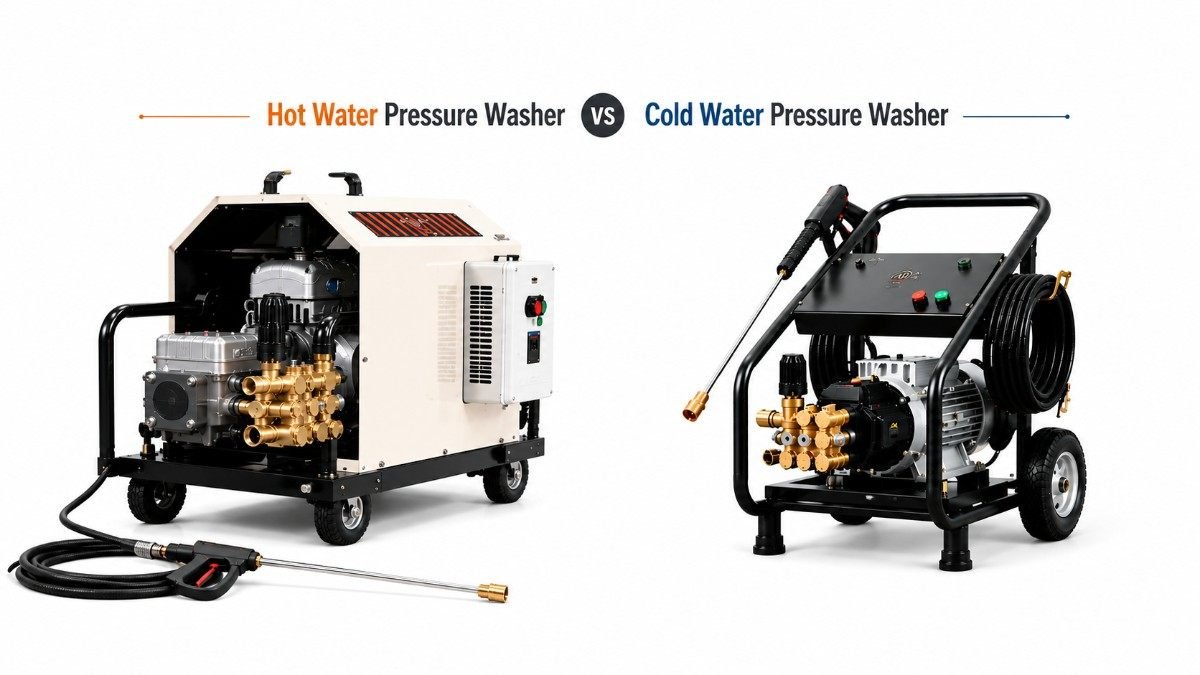
Hot Water vs Cold Water Pressure Washer: A Direct Comparison
| Factor | Cold Water | Hot Water |
| Best on | Mud, dust, sand, loose debris | Grease, oil, fat, protein soils |
| Typical outlet temperature | Ambient | 60–150°C, some with steam mode |
| Purchase price (indicative) | Rs 35,000 – 2.5 lakh | Rs 1.8 lakh – 7 lakhs |
| Running cost | Power only | Power plus diesel or LPG |
| Servicing | Pump, seals, nozzles | Pump plus burner, coil, fuel filters |
| Weight and size | Compact, easy to move | Heavier, needs more space |
| Water saved per job | Baseline | Often 20–40% less on greasy soils |
| Site needs | Power and water | Power, water, fuel, ventilation |
Figures are indicative and depend on specification, pump rating and accessories.
When a Cold-Water Pressure Washer Is the Right Call
For most general cleaning, it is. A cold water pressure washer handles mud, dust, cement splatter, bird droppings, garden debris and vehicle body soil perfectly well, and it does so with fewer things to break.
Housing societies, schools, warehouses with dry dust, construction sites and general facility upkeep rarely justify heat. Same goes for exterior wall washing and paver cleaning, where the soil is mineral rather than organic. You save on purchase, you save on fuel, and there’s no burner to service or coil to descale.
Buyers sometimes specify heat “just in case” and then run the machine cold for two years. That’s an expensive insurance policy. If your grease work is occasional, a good cold machine plus the right alkaline detergent and a bit of dwell time will usually cover it.
Where an Industrial Hot Water Pressure Washer Earns Its Keep
Certain environments make the case immediately. If you’re dealing with any of these, heat stops being optional:
• Commercial kitchens, canteens and food processing lines with fat and protein residue
• Vehicle workshops, bus depots and garages with oil-soaked floors
• Engineering shops removing cutting fluid, coolant and machining oils
• Dairy, meat and poultry plants where hygiene standards demand sanitizing temperatures
• Pharmaceutical and chemical facilities cleaning process equipment
In these settings an industrial hot water pressure washer isn’t just faster. It reduces the chemical you need; cuts water consumption because you’re not blasting repeatedly at one spot, and leaves surfaces that dry quicker, which matters when a line has to restart. A hot water pressure washer also softens the residue trapped in floor texture; the part cold jets tend to skip.
The hygiene argument
Food and pharma facilities often need thermal disinfection, not merely visual cleanliness. Water above about 80 degrees at the surface substantially reduces bacterial load, and steam-capable machines go further. A cold machine cannot deliver that outcome at any pressure, so no amount of extra bar solves the problem.
Running Costs, You Should Budget For
Heat costs money to produce, and it’s fair to be honest about that. The diesel burner on a mid-size heated pressure washer typically consumes around 3 to 6 liters per hour of continuous heating, which at current diesel rates adds a real line item to your monthly cleaning budget.
Against that, count the savings. Wash time on greasy surfaces commonly drops by a third or more, so you spend less on labor, less on water and less on detergent. Where a two-hour daily wash becomes 75 minutes, the fuel bill is often the cheaper side of the trade. Where the machine only runs twenty minutes a week, it never is.
Maintenance is the other cost. Burners need periodic nozzle cleaning, fuel filter changes and combustion checks. Heating coils scale up in hard water, and Bangalore borewell supply is frequently hard, so a water softener or descaling schedule matters more than most brochures admit.
Site Requirements Before You Order
A heated pressure washer needs more from your site than a cold one. Confirm these before the purchase order goes out.
1. Ventilation or outdoor operation, because diesel burners produce exhaust that must not accumulate indoors.
2. Safe fuel storage and a refueling routine your team will actually follow.
3. Three phase supply for most industrial models, since the burner and pump together exceed single phase headroom.
4. Adequate drainage, as warm greasy runoff needs an interceptor rather than an open drain.
5. Water quality checks, since hardness shortens coil life significantly.
Electric heating exists as an alternative and avoids exhaust entirely, but it draws heavy current and heats more slowly, so it suits enclosed food areas rather than large open workshops.
Hot Water vs Cold Water Pressure Washer: Making the Final Call
Work backwards from the hardest recurring job, not the rarest one. List the surfaces you clean weekly, note which are organic or oily, then estimate what share of total wash time they take. If greasy work is under a fifth of your cleaning, a commercial pressure washer running cold plus good chemistry is usually the sensible spend.
If greasy work dominates, or hygiene rules apply, buy heat and buy it properly. An underpowered hot water pressure washer that can’t hold temperature at full flow frustrates everyone. Check the stated temperature rise at rated flow rather than the peak temperature at trickle flow, because those are very different numbers. Ask to see the machine run for ten minutes at full flow before you commit.
Frequently Asked Questions
Can I just use hotter tap water in a cold machine?
Only within limits. Most cold pumps accept inlet water up to about 40 to 60 degrees, and exceeding that damages seals and valves. Check the maximum inlet temperature for your commercial pressure washer first. Feeding genuinely hot water into a pump not designed for it is a common and costly mistake.
Does a hot water machine need less pressure?
Often, yes. Heat does part of the work, so many operators find 120 to 150 bar with hot water outperforms 200 bar cold on greasy surfaces. Lower pressure is also gentler on painted panels, coated floors and older concrete, which reduces the risk of surface damage during routine cleaning.
How much more does hot water vs cold water pressure washer ownership cost?
Expect roughly two to three times the purchase price and an added fuel and burner-maintenance cost. Whether that pays back depends entirely on how much greasy cleaning you do. High-frequency users usually recover it within a couple of years through faster cycles and lower labor hours.
Is steam better than hot water?
Steam mode suits very stubborn deposits, bitumen and heavily baked-on residues, and uses far less water. It’s slower over large areas, though, and not every machine offers it. For most day-to-day industrial cleaning, hot water at 80 to 90 degrees does the job more efficiently than steam.
Conclusion
The hot water vs cold water pressure washer choice comes down to what you’re actually removing. Mineral dirt, mud and dust give way to pressure alone, and a well-specified cold machine will serve those jobs for years at a lower cost. Grease, oil, fat and hygiene-critical residues need heat, and no amount of extra pressure substitutes for it. SGT Multiclean Equipments can be a dependable choice for businesses looking for practical pressure washing equipment suited to demanding cleaning applications. Audit your recurring cleaning tasks honestly, price in fuel and burner servicing, then decide.
If you’re weighing up the hot water vs cold water pressure washer options for your site, speaking with an experienced equipment team such as SGT Multiclean Equipments is the fastest way to get answers matched to your surfaces and workload.