 ₹ INR
₹ INR
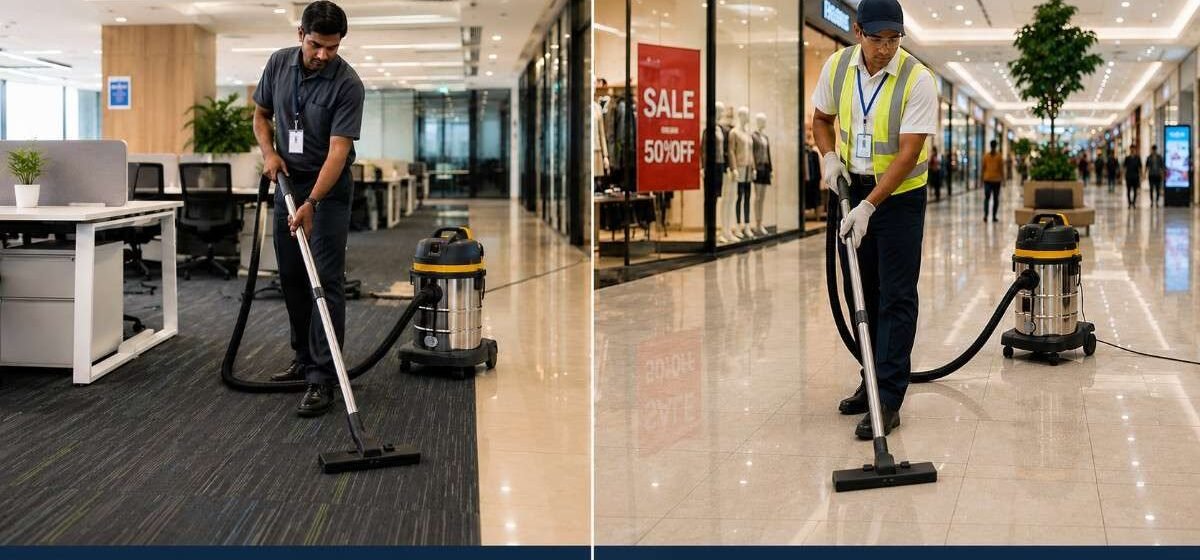
Most offices discover the problem the same way. A domestic machine gets bought because it was on the shelf and looked adequate, the housekeeping team runs it four hours a night across 8,000 square feet, and within seven months the motor is gone and the bag housing is held together with tape. A commercial vacuum cleaner is built for exactly that pattern of use, and the difference shows up in the third year rather than the first week. SGT Multiclean Equipments provides commercial vacuum solutions designed to support demanding cleaning schedules.
The choice isn’t complicated once you know what to compare. Runtime, noise, filtration and who’s pushing it matter far more than the wattage on the box. SGT Multiclean Equipments can help you compare these factors and select a machine suited to your cleaning requirements.
Why a Domestic Machine Fails as Workplace Cleaning Equipment
Household vacuums are designed for perhaps 30 minutes of use a week. The motor bearings, the cable, the switch and the wheels are all specified to that. Move it to a workplace running five nights a week and you’re asking for roughly ten times the duty it was designed for.
A commercial vacuum cleaner uses a motor rated for continuous running, a cable of 10 to 15 meters instead of 5, replaceable parts, and a housing that survives being dragged around lift lobbies. The wheels alone tell you which category you’re in: hard rubber castors that don’t mark flooring versus small plastic ones that seize within a year. That’s the honest difference between household kit and proper workplace cleaning equipment.
Types of Commercial Vacuum Cleaner and Who They Suit
Upright machines
Best on carpet, and quick over open floor. A brush roll agitates carpet pile and lifts embedded grit that suction alone leaves behind. If your premises are largely carpeted, an upright commercial vacuum cleaner covers ground faster than anything else. They’re less useful on stairs, under desks or around cable trays.
Tub and canister machines
The generalist. A cylinder body on wheels with a hose and wand suits mixed hard floors and carpet, stairs, and the fiddly work around workstations. Most offices in India end up with a tub commercial vacuum cleaner, because vitrified tile and vinyl dominate and there’s no brush roll needed.
Backpack machines
Underrated for large spaces with obstacles: auditoriums, cinemas, airports, tiered seating. As a professional vacuum cleaner for big venues, a backpack lets one operator cover two to three times the area per hour compared with a wheeled unit. Weight distribution matters, so try before you commit to a fleet.
Wet and dry models
A commercial wet dry vacuum handles washroom spills, monsoon water ingress at entrances and pantry accidents that a dry machine simply cannot touch. Most business premises need at least one somewhere on site, even if the main cleaning fleet is dry-only.
Match the Commercial Vacuum Cleaner to Your Floor and Layout
| Environment | Best machine type | Typical motor | Why |
| Carpeted office floors | Upright with brush roll | 0.8–1.2 kW | Agitation lifts embedded grit |
| Vitrified tile, vinyl, mixed | Tub or canister | 1–1.6 kW | Tools reach corners and under desks |
| Large obstacle-heavy areas | Backpack | 0.8–1.2 kW | Speed per operator hour |
| Washrooms, entrances, pantries | Commercial wet dry vacuum | 1.4–2.4 kW | Handles liquids safely |
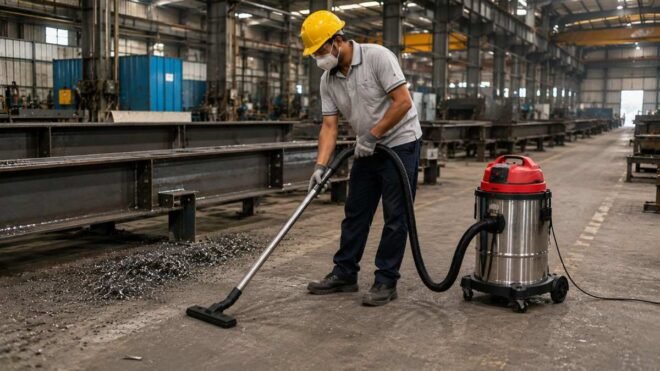
| Warehouse and back-of-house | Industrial tub, 50–80 L | 2–3 kW | Capacity and debris tolerance |
Layout deserves as much thought as flooring. Long open corridors favour uprights; a floor plate broken into cabins and meeting rooms favours a tub machine with a long hose, because the operator moves the body far less. A professional vacuum cleaner is only as fast as the number of times someone has to bend down and unplug it.
Noise and Filtration in an Office Vacuum Cleaner
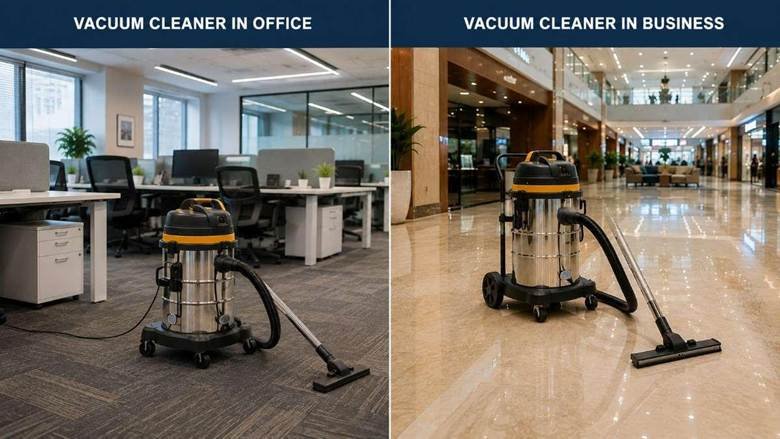
Noise decides whether daytime cleaning is possible at all. Domestic units often run at 78 to 82 dB, loud enough to interrupt a call. A quiet commercial vacuum cleaner sits in the 58 to 65 dB range and can run through the working day, which matters if your office operates late shifts and the housekeeping window has shrunk.
Filtration matters more than most buyers assume in an office. Fine dust passing straight through a cheap bag is what makes people sneeze the morning after cleaning. Look for multi-stage filtration with a HEPA final stage, particularly in air-conditioned buildings where the same air recirculates all day. In hospitals, labs and clinics, treat HEPA filtration on your office vacuum cleaner as non-negotiable and check the certification rather than the marketing claim.
Battery or Cable?
Cordless machines have improved a lot, and for a hotel corridor or a busy retail floor they remove the biggest daily annoyance: hunting for sockets and dragging cable past guests. Realistic runtime is 30 to 60 minutes on a charge at usable power, so a fleet needs spare batteries and a charging point that housekeeping actually uses.
Cabled machines still win on sustained work. If a single operator cleans a large area continuously, a corded commercial vacuum cleaner won’t stop halfway. Many sites run a mix: cordless for guest-facing and daytime work, cabled for back-of-house and deep cleaning.
Budget and Running Costs in India
Indicative ranges, and they vary with specification and accessories. A decent single-motor tub machine for office use generally sits between ₹12,000 and ₹35,000. HEPA-filtered quiet models and uprights from established manufacturers typically run ₹35,000 to ₹80,000. A commercial wet dry vacuum with a 50 to 70 liter stainless tank usually lands between ₹30,000 and ₹80,000, and cordless backpack units with batteries sit toward the upper end of these bands.
Consumables are the part that gets forgotten. Over five years they can approach the purchase price of the commercial vacuum cleaner itself. Dust bags, filters and belts across a fleet add up quickly, and a machine using proprietary bags at a high unit price can quietly cost more to run than a more expensive model using standard consumables. Ask for the price of a pack of bags before you sign anything.
A Practical Commercial Vacuum Cleaner Checklist
1. Measure the area and the cleaning window; that sets runtime and machine count.
2. Check flooring type across the whole premises, not just reception.
3. Confirm noise rating in dB if any cleaning happens during working hours.
4. Ask about filtration class and whether HEPA is genuine or nominal.
5. Confirm cable length, hose length and the accessory kit included.
6. Get consumable prices and spare part lead times in writing.
Work through those six points with any supplier and you’ll separate a genuine business vacuum cleaner from a repackaged domestic unit within one conversation.
Frequently Asked Questions
How long should a commercial vacuum cleaner last?
With daily use and basic maintenance, five to eight years is a reasonable expectation for a well-built machine, and longer where parts stay available. Motor life is the usual limit. Filters, belts and hoses are consumables and will need replacing far sooner, which is normal rather than a sign of poor quality.
Is HEPA filtration necessary in a normal office?
Not strictly, but it’s worth it in air-conditioned buildings where dust recirculates. Staff with allergies notice the difference quickly. In healthcare, food handling and lab environments it stops being optional, and you should confirm the filter class in writing rather than relying on a HEPA sticker.
Can one machine cover a whole business premises?
Rarely. Most sites need a dry commercial vacuum cleaner for general floors plus a wet-capable unit for washrooms and entrances. Beyond about 15,000 square feet, a second dry machine avoids the whole schedule collapsing whenever one unit is being serviced or a filter is being changed.
What noise level works for daytime cleaning?
Aim for 60 dB or below if cleaning happens while people are working. Around that level a machine is audible but doesn’t interrupt conversation or calls. Anything above 70 dB effectively confines you to before-hours or after-hours cleaning, which limits scheduling flexibility considerably.
Conclusion
Choosing a commercial vacuum cleaner comes down to matching machine type to floor type, then checking noise, filtration and consumable costs before price. A business vacuum cleaner bought on sticker price alone rarely stays cheap. An upright carpet, a tub suits mixed hard floors and cabins, a backpack suits large cluttered spaces, and every site needs something wet-capable for the spills that arrive without warning. Buy for the hours you actually run the machine rather than the hours you’d like to, and confirm that bags, filters and spares will be available in two years. Get those decisions right and the equipment stops being a recurring line item. SGT Multiclean Equipments can help you match the right machine type and specification to your cleaning requirements. If you’re comparing options, walking an experienced supplier like SGT Multiclean Equipments through your floor plan and cleaning schedule is the quickest way to arrive at the right specification.