 ₹ INR
₹ INR
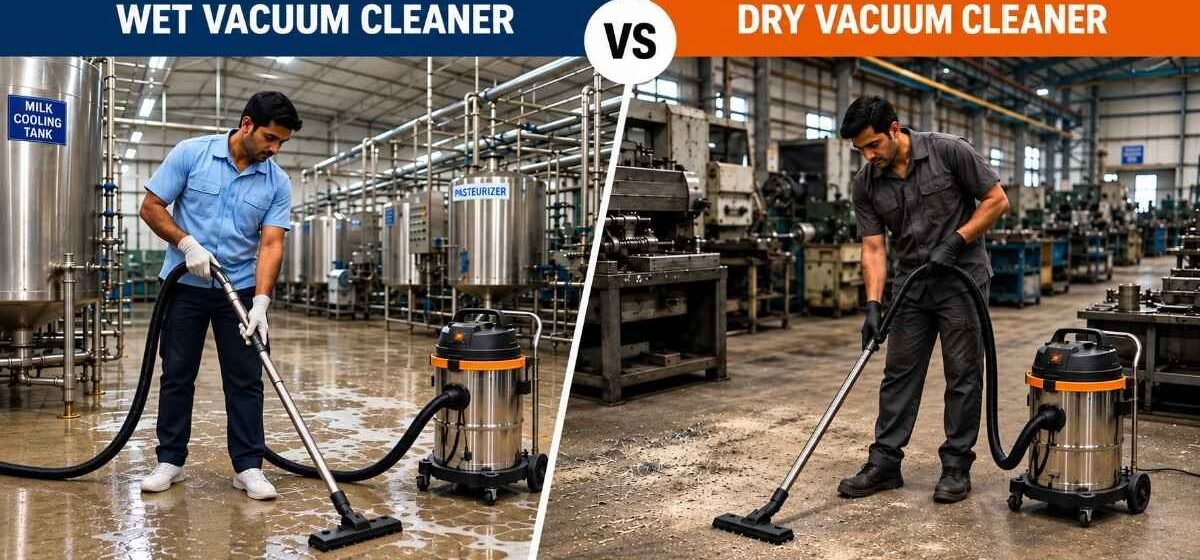
A washroom overflows at 7 pm in a hotel with a function starting at eight. Or a coolant line splits across a machine shop floor twenty minutes before shift change. In both cases somebody reaches for a mop, and in both cases a wet and dry vacuum cleaner would have cleared it in a fraction of the time with far less mess left behind. That’s the practical case for these machines: they handle the emergencies your regular equipment can’t touch. SGT Multiclean Equipments provides wet and dry vacuum solutions designed to handle demanding cleaning requirements.
The catch is that the category runs from ₹8,000 hardware-store units to three-phase machines costing several lakhs. Buying the wrong end of that range is easy, and expensive. SGT Multiclean Equipments can help you identify the right machine for your specific cleaning needs.
What Actually Makes a Machine Wet-Capable
Three features separate a genuine wet and dry vacuum cleaner from a dry vacuum with optimistic marketing. First, a float cut-off that shuts the inlet when the tank fills, protecting the motor from water ingestion. Second, a filter arrangement you can change or bypass, because paper and cellulose cartridges are ruined the moment, they get wet. Third, corrosion resistance in the tank, fittings and impeller, since detergent and coolant attack cheap metal fast.
A drain valve is the fourth thing you’ll wish you had. Tipping 60 liters of dirty water out of a tank is a two-person job and a guaranteed spill; a bottom drain with a hose tail turns it into a one-minute task.
Where a Commercial Wet Dry Vacuum Earns Its Keep
Hotels, restaurants and banquet halls
Spills, kitchen washdowns and post-event clearing are constant. A 50-to-70-liter machine on castors with a long hose covers most of it. Noise matters too; anything above roughly 70 dB is intrusive in guest areas, and quiet models are worth the premium.
Workshops, garages and car wash bays
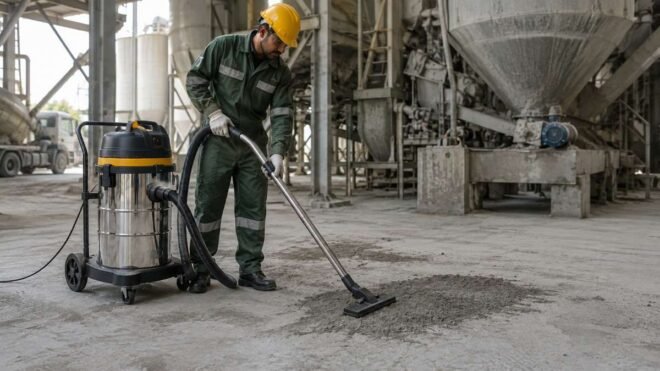
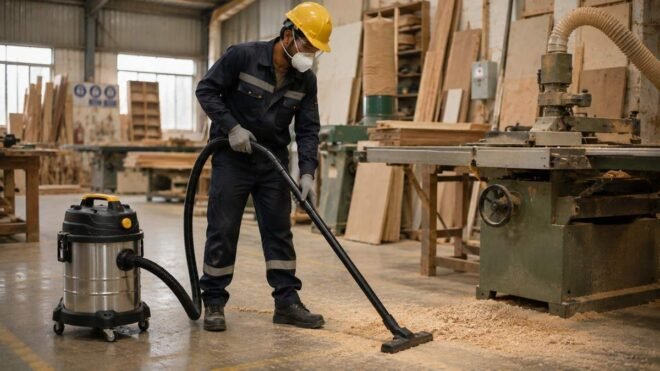
Water, detergent, grit and metal fragments all at once. This is where a heavy duty wet dry vacuum with a steel tank and a 50 mm hose is the right call, because plastic tanks crack and small-bore hoses block on wet grit.
Hospitals, labs and clean areas
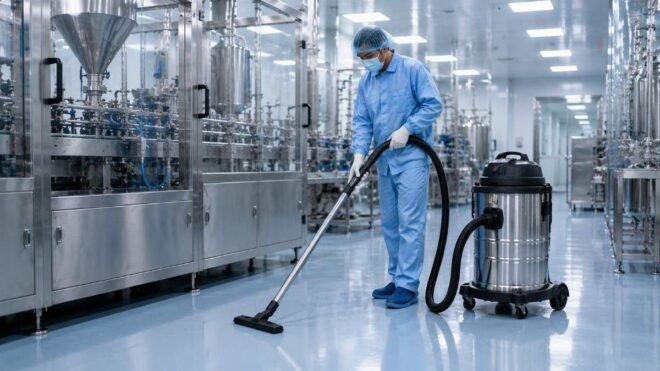
Filtration takes priority. HEPA-grade final filtration on the dry side and a tank that can be disinfected properly are the important specifications, alongside smooth wheels that don’t mark flooring.
Warehouses and retail floors
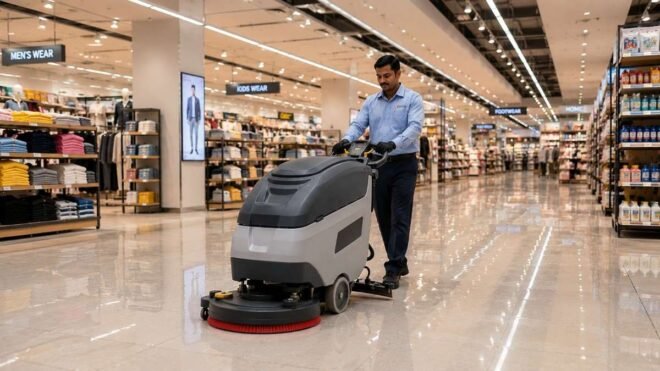
Large areas, occasional water ingress in monsoon months, and long distances between sockets. Battery models are gaining ground here, though a cabled industrial wet dry vacuum cleaner still gives longer continuous runtime on a heavy job.
Specifications That Decide Performance
Motor rating and duty cycle
Below about 1.4 kW you’re in light commercial territory suited to intermittent work. From 1.4 to 2.4 kW covers most daily commercial use, often with twin or triple motors so you can run one for light work and all of them for a flooded floor. Above 3 kW, three-phase machines take over for continuous industrial duty.
Duty cycle matters more than raw power, and buyers over-index on wattage when specifying a wet and dry vacuum cleaner. A 2-kW machine rated for continuous running will outlast a 3 kW one rated for 30 minutes.
Tank size and material
| Application | Tank capacity | Material | Typical motor |
| Small office, salon, clinic | 20–30 L | Plastic | 1–1.4 kW |
| Hotel housekeeping, restaurant | 50–70 L | Stainless | 1.4–2.4 kW |
| Workshop, garage, car wash | 70–100 L | Steel or stainless | 2–3 kW |
| Factory, warehouse | 100–200 L | Steel with drain | 3 kW+, 3-phase |
Stainless costs more and survives detergents and coolants that pit painted steel within a season. If you’re recovering anything other than clean water, it’s the sensible specification.
Hose diameter and accessories
A 32 mm hose suits fine debris and small spills. A 38 mm or 50 mm hose is what you need for wet grit, food waste or workshop debris. Squeegee nozzles matter more than people expect; a proper wet floor tool with a rubber lip recovers water in one pass instead of three.
Wet Dry Vacuum Cleaner Mistakes That Destroy Machines
• Vacuuming water with the dry cartridge still fitted. This ruins the filter immediately and often the motor soon after.
• Leaving dirty water in the tank overnight, which corrodes the base and creates a smell you’ll never fully remove.
• Ignoring the float; if the cut-off is jammed, the machine will happily drink water into the motor.
• Using the machine on hot liquids or solvents it isn’t rated for.
• Recovering fine dust straight after wet work without drying the tank, creating a paste that blinds the filter.
Most warranty claims in this category trace back to the first two. Ten minutes of operator training prevents them.
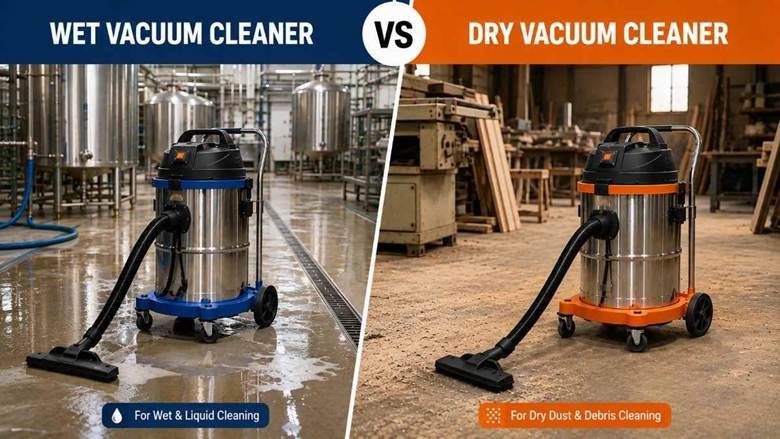
Choosing Between a Wet and Dry Vacuum Cleaner and Dedicated Machines
A single wet and dry vacuum cleaner covers a wide range of tasks, which is why it appeals to facilities teams working with one budget line. It isn’t always the best answer. If your main job is large-area floor cleaning, a scrubber-drier washes and dries in one pass. If it’s fine dust capture in a plant, a dedicated dust extractor with a large filter area does that better.
The honest position is that a wet and dry vacuum machine is the best generalist. It handles the unpredictable work, the spills, the after-hours mess and the jobs nobody planned for, and most commercial sites need exactly that alongside their specialist equipment.
Indicative Prices in India
Treat these as broad, specification-dependent ranges rather than quotes. Light commercial units of 20 to 30 liters typically sit between ₹12,000 and ₹30,000. A solid 50-to-70-liter stainless machine for hotel or restaurant use usually lands between ₹30,000 and ₹80,000. A heavy duty wet dry vacuum with a steel tank, twin motors and a drain generally run from ₹80,000 to ₹1.8 lakh, and three-phase industrial wet dry vacuum models go beyond that.
Accessory kits, hose length and tank material move the figure more than wattage does. Ask for the full kit list in the quotation.
Keeping a Wet and Dry Vacuum Cleaner Working
1. Empty and rinse the tank after every wet job, then leave the lid off to dry.
2. Store the dry cartridge separately so it never sits in a damp tank.
3. Check the float and its seal monthly; it’s a five-rupee part that saves the motor.
4. Inspect the hose cuff, where splits always start.
5. Clean or replace the foam wet filter as often as the manual suggests, not less.
A wet and dry vacuum machine treated this way lasts years. One that lives with standing water in the tank rarely sees a second monsoon.
Frequently Asked Questions
Can a wet and dry vacuum cleaner pick up any liquid?
Water, detergent solution and coolant, yes, within the machine’s rating. Not solvents, flammable liquids, hot liquids above the stated limit, or acids unless the unit is specifically built for them. Check the manual before recovering anything chemical, and involve your safety officer if the liquid is classified as hazardous.
How big a tank do I actually need?
For a hotel or office, 50 to 70 liters handles most spills without constant emptying. Under 30 liters suits small clinics and salons. Remember that a full 70-liter tank of water weighs about 70 kg, so a drain valve matters as much as capacity when one person is doing the job.
Is a stainless tank worth the extra cost?
If you recover detergent, coolant or food waste, yes. Painted steel pits and rusts within a year of that kind of use, while stainless keeps its condition and washes down properly. For occasional clean-water pickup in a dry office environment, a plastic tank is perfectly adequate.
What’s the difference between commercial and domestic models?
Duty cycle, tank material, hose diameter and filtration. A commercial wet dry vacuum is built for hours of daily use with serviceable parts and available spares. Domestic units use lighter motors rated for short bursts, and their filters and hoses generally can’t be replaced individually.
Conclusion
Choosing a wet and dry vacuum cleaner comes down to honest answers about volume, liquid type and who’s operating it. Get the tank size and material right for the mess you actually deal with, insist on a working float cut-off and a drain valve, and make sure the filter arrangement is easy enough that operators will swap it properly rather than skip the step. Spend a little more on hose diameter and the wet floor tool than feels necessary, because those two accessories decide how quickly the job gets done. SGT Multiclean Equipments can help you select a configuration with the right features and accessories for efficient cleaning.
If you’re weighing up models for your site, talking through your typical spills and cleaning hours with an experienced supplier like SGT Multiclean Equipments is the fastest way to get a machine matched to your situation.