 ₹ INR
₹ INR
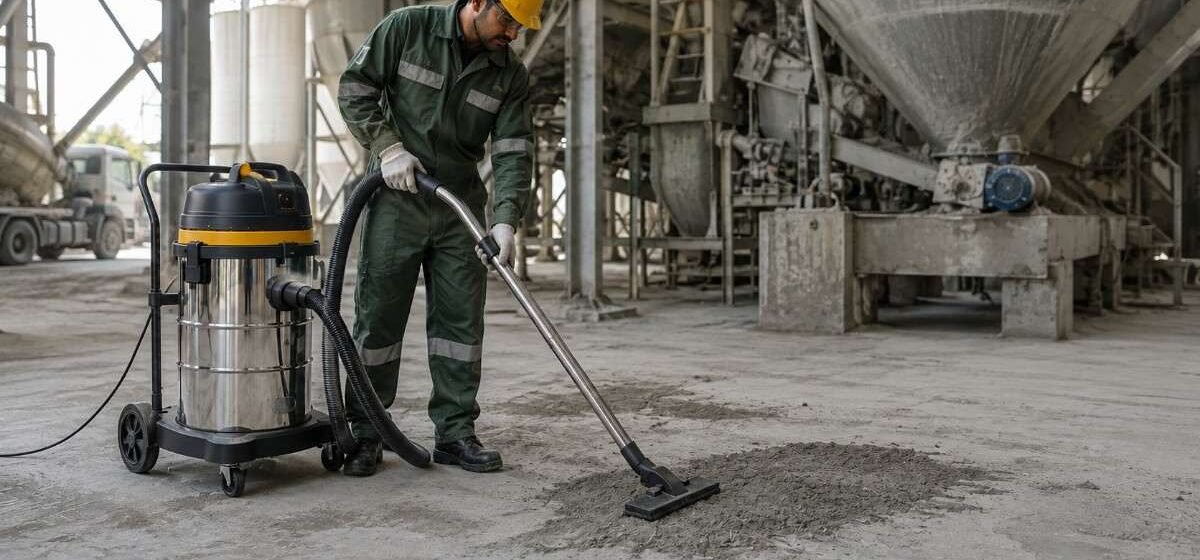
A supervisor at a machining unit once told me his floor got swept four times a shift and still felt gritty by lunch. That’s the gap plants find out about late. Brooms move dust sideways; they don’t remove it. Industrial Vacuum Cleaner Applications run from swarf under a CNC bed to flour dust in a packing hall, and the right machine quietly changes how a shift runs. SGT Multiclean Equipments provides industrial vacuum solutions suited to demanding cleaning applications.
If you run a factory, a fabrication workshop or a warehouse, the question isn’t whether you need suction. It’s how much, at what filtration grade, and on which power supply. Get those three rights and the machine repays itself in breakdowns you never have. SGT Multiclean Equipments can help you evaluate these factors and identify a suitable industrial vacuum solution.
Why a Broom and a Shop Vac Aren’t the Same Job
A DIY-grade wet-dry vacuum is built for twenty minutes at a stretch. Run it across a shift and the motor overheats. Industrial machines start from duty cycle: continuous-run bypass motors, more filter area, steel tanks.
The second difference is the exhaust. Cheap units push fine particulate back into the room, which is worse than leaving it underfoot. A proper industrial cleaning vacuum holds that dust in a rated cartridge.
Industrial Vacuum Cleaner Applications Across a Production Floor
Production areas throw up three categories of mess: dry particulate, wet or oily residue, and mixed debris with sharp edges. Plenty of plants cover all three with one machine and compromise on each. The most demanding Industrial Vacuum Cleaner Applications sit in this room.
Metal Swarf, Grinding Dust and Coolant
Turning and milling centres produce stringy swarf plus a coolant mist that settles on everything nearby. You want a steel tank, a chip basket, and a float cut-off so liquid never reaches the motor. Recovered coolant can often be filtered and reused, which shifts the payback maths on a factory vacuum cleaner in a shop running several machines around the clock.
Grinding bays are a different problem. The particulate is fine, abrasive and, with aluminum or magnesium, potentially combustible, which calls for antistatic hose and earthed metal parts.
Food, Pharma and Packing Halls
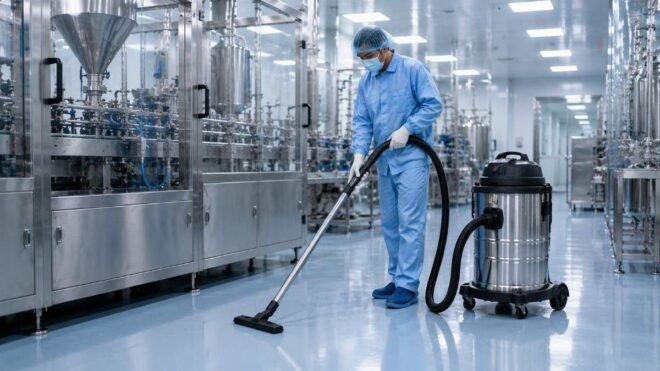
Sugar, flour, spice powder and milk powder behave nothing like metal dust. They’re hygroscopic, they clog filters fast, and auditors will ask about every wetted part. Stainless bodywork, tool-free strip-down and food-grade filters are worth the premium. A factory vacuum cleaner that can’t be dismantled at shift end becomes a contamination risk itself.
Workshop Vacuum Cleaner Tasks: Fine Dust, Chips and Wet Spills
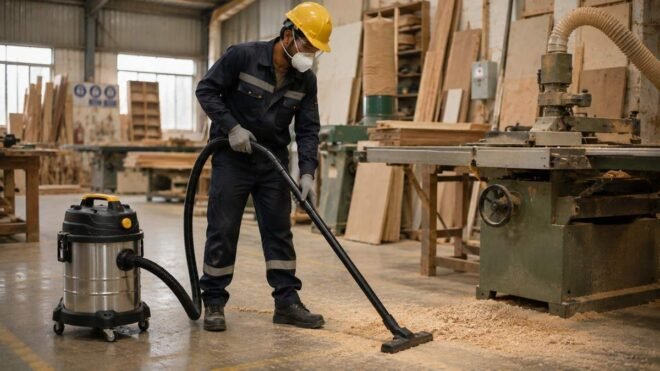
Smaller fabrication and joinery units have a different rhythm. The machine gets dragged around, plugged into whatever socket is free, and used for everything from sawdust to a burst hydraulic hose. Mobility matters more than motor size. A workshop vacuum cleaner with a 10-metre hose and decent castors gets used; one that needs two people to move sits in a corner.
Look for wet-and-dry capability with a genuine float shut-off. Sawdust that turns damp during the monsoon sets like cement inside a paper bag, so a washable cartridge with a manual shaker saves a recurring bill. These are the least glamorous Industrial Vacuum Cleaner Applications and the most frequent.
Warehouse Vacuum Cleaner Work: Aisles, Racking and Loading Docks
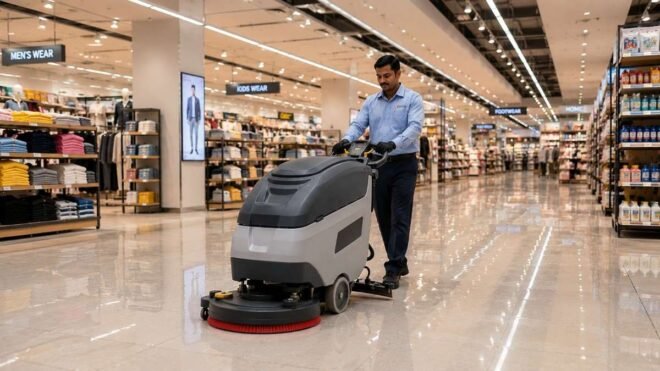
Warehouses are about distance and dust reintroduction. Forklift tires carry grit in from the yard, pallets shed splinters, and racking uprights collect dust where nobody looks until an audit. A warehouse vacuum cleaner earns its keep on the dock apron and in rack aisles, with a long wand set and a wide floor nozzle.
Above roughly 5,000 square meters of open floor, compare the vacuum against a ride-on sweeper. Sweepers cover open concrete far faster, but the vacuum still wins:
• Tight rack aisles and mezzanine walkways
• Around conveyors, weighbridges and packing benches
• Vertical surfaces: uprights, beams, cable trays
• Wet spills a sweeper would simply smear
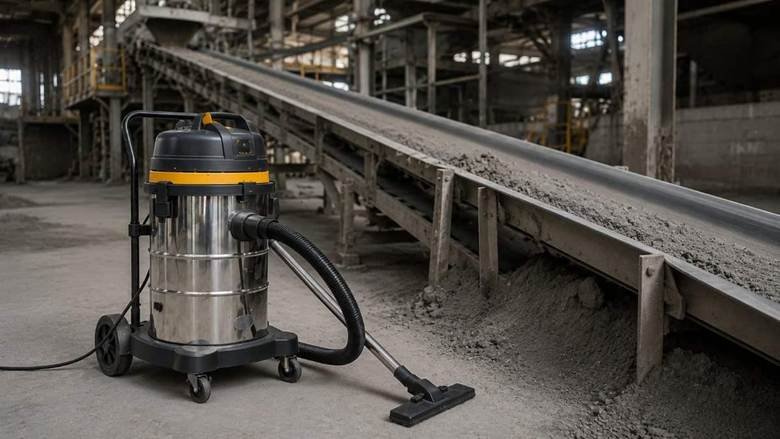
Matching Motor Power, Suction and Tank Size to the Task
Suction balances two numbers that pull against each other: airflow in liters per second, and vacuum pressure in millibar or mmWC. Airflow moves bulk debris along a hose. Vacuum pulls fine dust from crevices. Sellers quote whichever number flatters the machine, so ask both.
| Typical use | Motor | Tank | Filtration focus | Indicative price |
| Light workshop | 1.2–2.4 kW single phase | 30–50 L | Washable cartridge | ₹25,000–₹70,000 |
| General housekeeping | 2.4–3.6 kW single phase | 70–100 L | Cartridge plus bag | ₹70,000–₹1.6 lakh |
| Swarf and coolant | 3–5.5 kW three phase | 100–200 L steel | Separator, float cut-off | ₹1.5–4 lakh |
| Fine powder, continuous | 4–7.5 kW three phase | 100–200 L | HEPA-grade, reverse jet | ₹3–8 lakh |
Treat those bands as indicative. Real pricing moves with tank material, filtration class and accessory kit.
Filtration Classes and Industrial Dust Extraction
Filtration separates the cheap quote from the sensible one. Industrial dust extraction is graded by how much of the fine fraction the filter retains, and classes quoted in India follow the European L, M and H convention. L suits nuisance dust. M covers wood dust, most metal dusts and concrete. H is for hazardous material, including silica.
Filter Area Matters as Much as Filter Grade
Two machines can both claim HEPA and behave completely differently. The one with double the filter area holds suction longer between cleaning cycles and draws less current. Ask for filter area in square meters, and how it gets cleaned: manual shaker, pneumatic pulse, or reverse jet.
Capture at Source Beats Cleaning Up Later
Where a process makes dust continuously, connecting industrial dust extraction straight to the machine or hood beats sweeping afterwards. Source capture protects the operator’s breathing zone and keeps dust off the racking.
Industrial Vacuum Cleaner Applications That Justify Three-Phase Power
Single-phase machines are simpler to deploy, and in most Indian plants there’s a 16A socket within reach of the work. They suit intermittent housekeeping. Limits show up under sustained load: motors run hot, and voltage dips shorten brush life.
Three-phase makes sense once the vacuum runs for hours rather than minutes, or when you need side-channel blower performance across long ducting. Those units are industrial fans, built for thousands of hours of continuous duty. They cost more up front, but over five years they’re cheaper.
A Buying Checklist That Saves Regret Later
Before signing a purchase order for any of the Industrial Vacuum Cleaner Applications above, work through this:
1. Define the worst material the machine will lift, not the average one.
2. Confirm duty cycle in hours per shift, in writing.
3. Check socket rating and cable run at the point of use.
4. Ask what a filter set and a motor cost, and whether both are stocked locally.
5. Measure your narrowest aisle before choosing tank size.
6. Ask for a demo with your own debris, not a showroom sample.
That last item settles most arguments.
Frequently Asked Questions
How long does an industrial vacuum cleaner usually last?
With sensible filter maintenance, a well-built unit runs seven to ten years in a single-shift plant. Motor brushes are the usual first replacement, after a few thousand running hours. Machines used for wet pickup last longer if the tank is drained and dried rather than left standing.
Can one machine handle both wet and dry pickup?
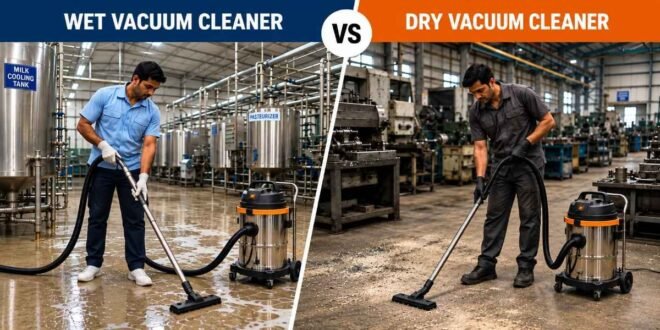
Most industrial wet-and-dry units can, provided they have a float cut-off and a filter you can remove before switching modes. The classic mistake is vacuuming liquid with a dry paper bag fitted. For heavy coolant recovery, a dedicated separator model beats switching one machine back and forth.
What are the most common Industrial Vacuum Cleaner Applications in mid-sized plants?
Machine-side swarf and coolant recovery, floor housekeeping between shifts, cleaning overhead beams and cable trays before audits, and dust pickup around packing lines. Many plants also use them for pit and sump clearing during shutdowns, where a large steel tank and long hose set earn their money.
Do I need HEPA filtration for a general workshop?
Not always. If you handle wood dust, concrete, silica or any respirable fine particulate, step up to at least M class, and treat H class as the default for hazardous material. For coarse sweepings and yard grit, an L-class cartridge with good surface area is usually enough.
Conclusion
Sites that get the most from Industrial Vacuum Cleaner Applications start from the material and the shift pattern, then work back to motor size and filtration. Buying on headline wattage alone is how a plant ends up with a machine that’s loud, thirsty and still not lifting the swarf. Think about who moves it, where it plugs in, how the filter gets cleaned, and what a spare costs. Those details decide whether an industrial cleaning vacuum is still in daily use three years on. SGT Multiclean Equipments can help you assess these practical factors and choose equipment suited to your site. If you’re comparing options for your own site, a demonstration with your actual debris and an honest conversation with an experienced supplier like SGT Multiclean Equipments will tell you more than any brochure.