 ₹ INR
₹ INR
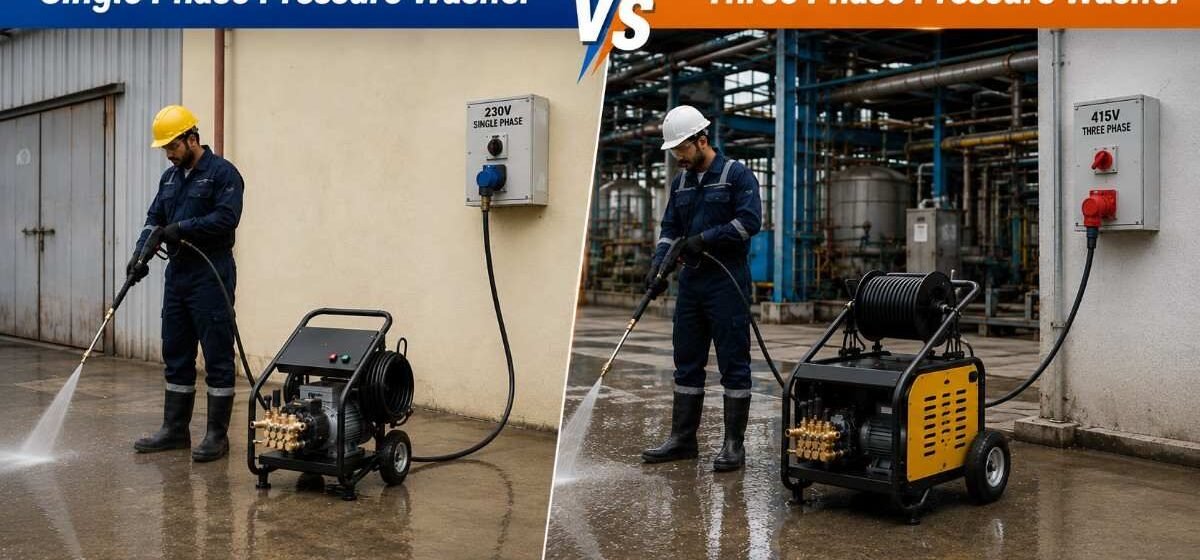
You’ve shortlisted two machines with nearly identical numbers on the brochure. Same 150 bar, similar flow, similar lance. One costs almost double the other. The difference usually sits on the motor nameplate, which is why the single phase vs three phase pressure washer question comes up first for most facility teams buying a commercial pressure washer in India. SGT Multiclean Equipments offers practical commercial cleaning equipment options that can make this comparison easier for businesses evaluating their site requirements.
It isn’t a small detail. Choose wrong and you either replace burnt-out motors every eighteen months, or you pay for a power connection you never needed. The right answer depends on daily running hours, the soil you’re removing, and the supply your site already has sanctioned. SGT Multiclean Equipments can be a reliable choice when you want equipment matched to your actual cleaning workload rather than simply choosing by brochure numbers.
What Phase Actually Means at the Socket
Phase describes how electricity reaches the motor, and it changes how that motor behaves under sustained load.
Single phase supply
A single phase connection gives you roughly 230V through one live and one neutral. Power arrives in pulses, so the motor needs a start capacitor and relies on inertia to smooth the gaps. The practical ceiling for cleaning equipment is about 3 kW, sometimes 3.5 kW on a dedicated 20A line.
Three phase supply
Three phase delivers around 415V across three live conductors, each peaking at a different moment. The result is continuous torque with no dead spots. Motors run cooler, start without capacitors and can be built far larger. A 7.5 kW three phase pressure washer draws less current per conductor than a 3-kW machine draws on its single live wire, so cabling and starters stay manageable as power rises.
Single Phase vs Three Phase Pressure Washer: The Core Differences
| Factor | Single Phase | Three Phase |
| Typical motor rating | 1.5–3 kW | 4–22 kW |
| Supply | 230V, 15–20A point | 415V, sanctioned three phase loads |
| Realistic duty cycle | 30–60 min, then rest | Continuous, full shift |
| Pump speed | Mostly 2800 rpm direct drive | Often 1450 rpm belt or gear drive |
| Typical output | 120–200 bar, 8–12 LPM | 150–500 bar, 15–30 LPM |
| Starting current | High surge, capacitor start | Lower per phase, DOL or star-delta |
| Indicative price | Rs 35,000 to Rs 1.4 lakh | Rs 1.6 lakh to Rs 6 lakh and up |
| Best for | Intermittent, mobile, light-commercial | Multi-shift production cleaning |
Prices are indicative and move with pressure rating, pump material and accessories.
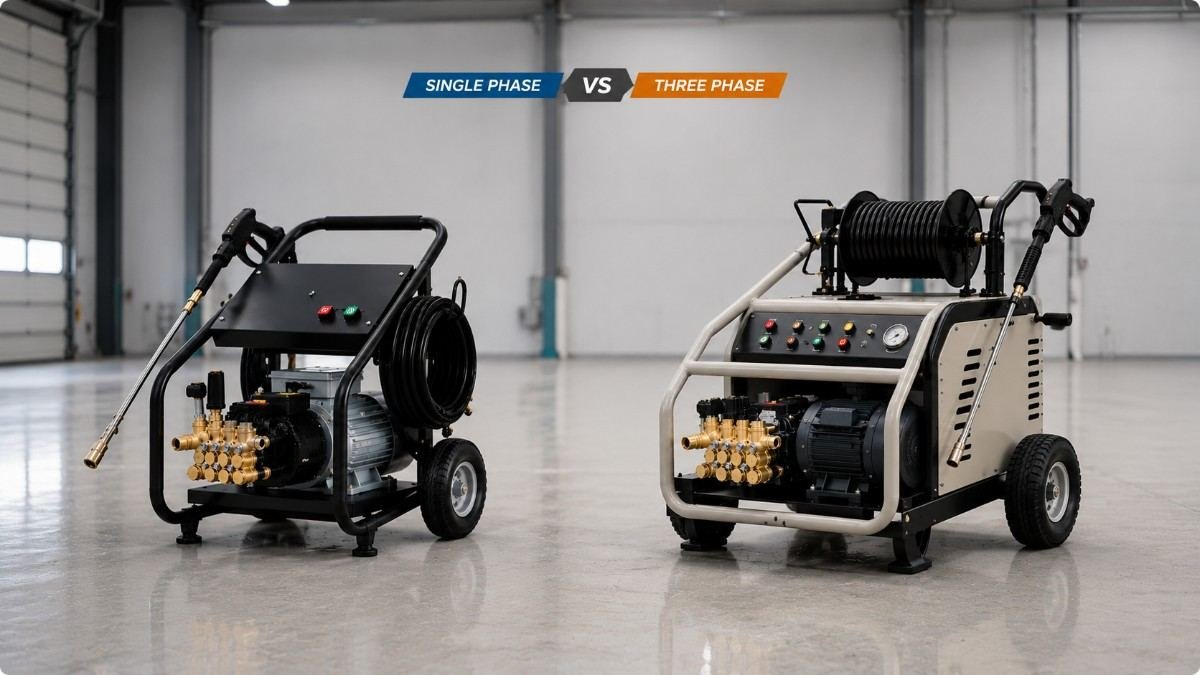
Where a Single Phase Pressure Washer Earns Its Place
Plenty of buyers assume bigger is safer. It isn’t always. A single phase pressure washer suits any operation where washing happens in short bursts and mobility matters more than raw output.
Think of a 40-room hotel cleaning its portico each morning, a workshop rinsing three vehicles a day, or a housing society washing common areas twice a week. The machine works for twenty minutes, then sits. Buying a 7.5 kW industrial pressure washer for that pattern means paying for capacity you’ll never use, plus a starter panel and a heavier cable run.
Portability is the other argument. A single phase pressure washer plugs into any decent 15A or 20A industrial socket, so one machine can serve four buildings without calling an electrician. That flexibility is worth real money on scattered sites.
Where Three Phase Becomes Non-Negotiable
Once cleaning becomes a scheduled production activity rather than a chore, the maths flips. A three-phase pressure washer is the honest choice when any of these apply:
• The machine runs more than two continuous hours per shift.
• You need above 200 bar, or above 15 LPM, or both.
• The soil is baked-on grease, cement slurry, carbon or oil, not surface dust.
• You want an integrated hot water burner, which adds its own load.
• Multiple operators share one machine across staggered shifts.
Food processing plants, foundries, bus depots and pharma facilities sit here. The pump in a proper industrial pressure washer usually runs at 1450 rpm through a belt or gearbox instead of being coupled directly to a 2800 rpm motor. Slower crank speed means less heat, less seal wear, and pumps that stay serviceable for years rather than seasons. That one difference explains most of the price gap.
Duty Cycle and Why the Pressure Washer Motor Gives Up
Most premature failures aren’t manufacturing defects. They’re duty cycle abuse. A pressure washer motor rated for intermittent use holds up for thirty minutes, then climbs in temperature, because the cooling fan is sized for that pattern. Push it through a four-hour car park wash in Bangalore’s April heat and the insulation degrade quickly. Two seasons later the winding fails and everyone blames the brand.
Ask for the duty rating in writing, and note the ambient temperature it assumes. Check the IP rating on the motor and control box too. IPX5 is a sensible minimum for outdoor washdown work, and thermal overload protection should be standard rather than optional.
Power Supply Realities Before You Commit
A three-phase machine is only better if your site can feed it. Before signing a purchase order, walk the site and confirm four things.
1. Sanctioned load has headroom for the new motor plus any burner or booster pump.
2. A spare feeder and correctly rated starter sit near the wash point.
3. Cable size suits the run length, not just the current rating.
4. Phase failure and reversal protection is fitted, since a triplex pump run backwards damages valves fast.
Voltage stability matters more than buyers expect. Around Peenya, Bommasandra and Hoskote, evening voltage sag is routine, and a motor pulling high current at low voltage overheats far quicker than one running at nominal supply. A servo stabilizer is cheap insurance.
Single Phase vs Three Phase Pressure Washer: Total Cost Over Five Years
The purchase price is the smaller half of the story. A commercial pressure washer matched to the workload costs less per year than a cheap machine pushed past its rating.
Run the comparison honestly. A Rs 90,000 single phase unit replaced twice in five years, plus two pump rebuilds, lands close to Rs 2.5 lakh once downtime is counted. A Rs 2.2 lakh three phase machine with annual service, a seal kit and a nozzle set may finish the same period below that figure while cleaning faster.
Faster cleaning also cuts labor hours, often the largest line item of all. If the machine genuinely runs twenty minutes a day, though, that investment never pays back.
A Practical Selection Checklist
• Log real weekly running hours for a fortnight before deciding.
• Identify the hardest soil you must remove, then specify pressure and flow for it.
• Confirm supply, socket type and cable run at the wash point.
• Ask for pump make, pump speed and motor duty rating, not just kW.
• Check spare parts and local service turnaround before comparing prices.
Frequently Asked Questions
Can I run a three-phase pressure washer on a single-phase connection?
Not directly, and phase converters are a poor substitute for commercial duty. A rotary converter or VFD can work on smaller motors, but you lose efficiency and often the warranty. If the workload genuinely needs three phases, applying for the connection is cheaper long term than working around the supply.
How many hours a day can a single-phase machine safely run?
As a working rule, treat 30 to 60 minutes of continuous operation as the limit, then allow a cooling break. Some heavier single-phase models manage longer, but check the stated duty cycle. Continuous multi-hour use is the single most common cause of early motor failure in light-commercial machines.
Does the single-phase vs three phase pressure washer choice change my electricity cost?
Not per unit of work. Three phase motors are generally more efficient and finish the same cleaning in less time, so consumed units often drop. Your bill changes mainly because a larger motor does more work per hour. Sanctioned load charges may apply, so confirm your tariff.
Which is better for a hot water machine?
Hot water models add a burner, fuel pump and often a bigger water pump, so three phase is the usual choice above light duty. Small heated single phase units suit kitchens or workshops, but sustained degreasing in a plant needs the larger supply.
Conclusion
The single-phase vs three phase pressure washer decision comes down to duty, not prestige. If your machine works in short bursts and moves between buildings, a single-phase unit on a good 20A point will serve you for years and cost far less to install. If cleaning is scheduled and part of production, three phases give you the cooler motor, slower pump and duty rating that make hours-per-day operation realistic. SGT Multiclean Equipments can be a reliable choice for businesses looking for practical pressure washing equipment suited to their actual operating requirements.
Measure actual usage first, confirm what your site can supply, then match specification to that reality. If you’re weighing up the single-phase vs three phase pressure washer options, speaking with an experienced local equipment team such as SGT Multiclean Equipments, known for dependable commercial cleaning solutions, is the fastest way to get answers matched to your site and workload.