 ₹ INR
₹ INR
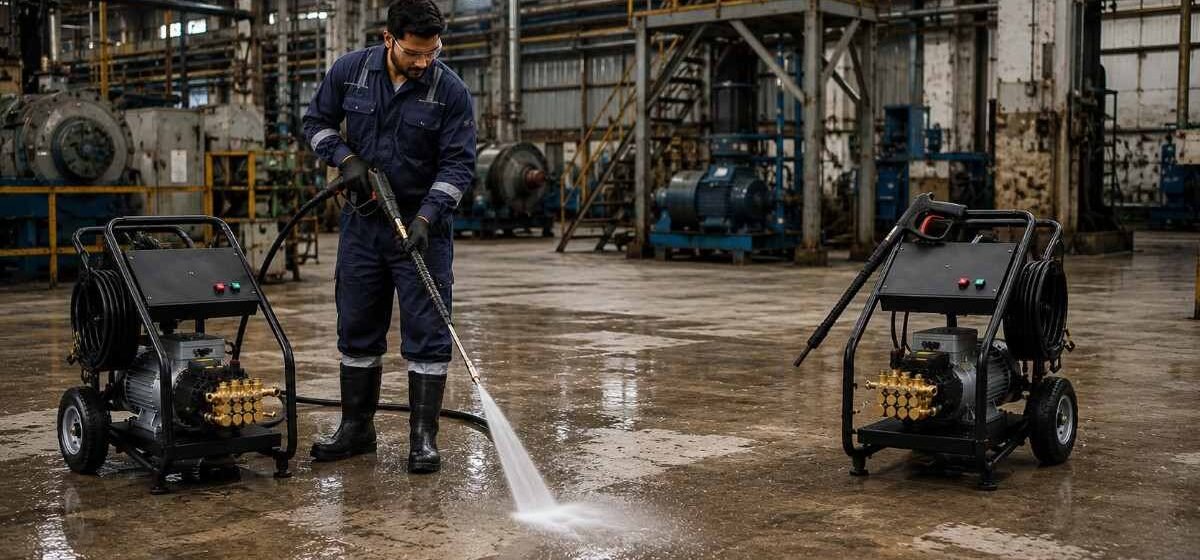
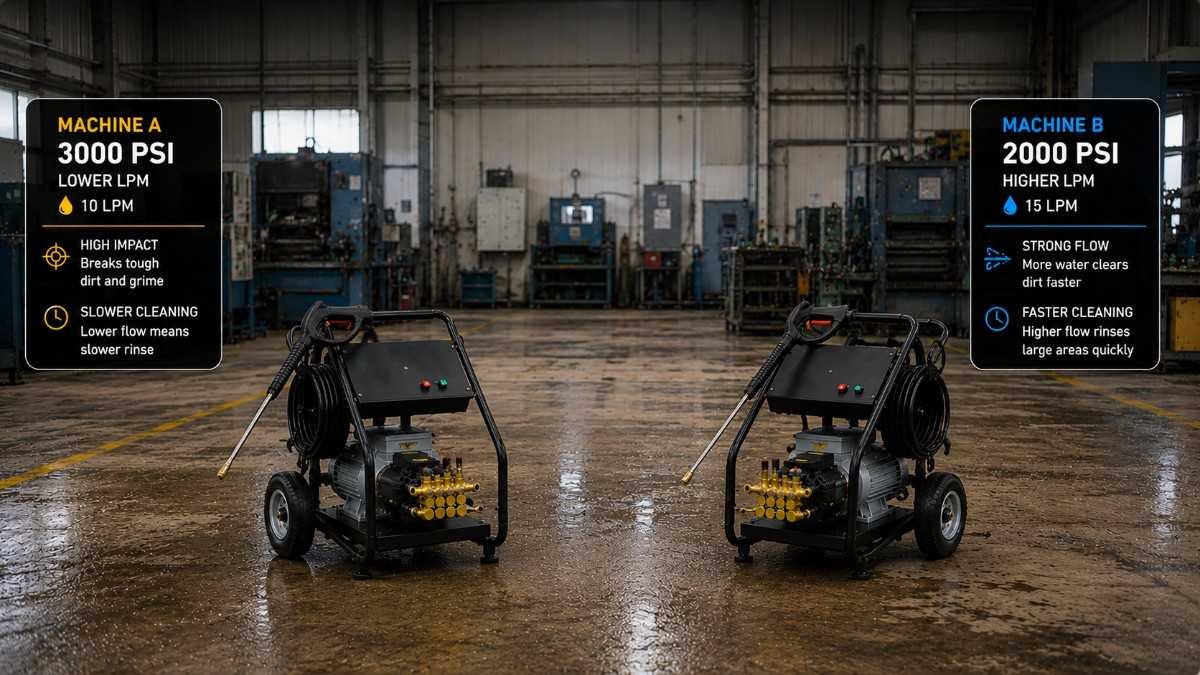
Two machines sit side by side at a supplier’s showroom. One boasts 3000 PSI, the other 2000. The cheaper 2000 PSI unit cleans a greasy workshop floor in half the time. Buyers find this baffling until they look at the second number on the plate, because pressure washer PSI and LPM only make sense when read together. SGT Multiclean Equipments offers dependable cleaning equipment that helps buyers compare these specifications and choose a machine suited to their actual cleaning needs.
Most disappointing purchases trace back to this. Somebody bought pressure alone, ignored flow, and ended up with a machine that hits hard but rinses nothing away. Here’s how the two numbers work, and how to size them for the surfaces you actually clean. With practical equipment options and reliable support, SGT Multiclean Equipments makes it easier to select the right pressure-and-flow combination for efficient cleaning.
The Two Numbers, Explained Properly
Every cleaning job needs two things to happen. The dirt has to be broken loose from the surface, and it has to be carried off the surface. Pressure does the first. Flow does the second.
Pressure: PSI and bar
Pressure is the force the water strikes with. Pressure washer bar ratings dominate Indian and European spec sheets, PSI dominates American ones, and one bar equals roughly 14.5 PSI. So, a 150-bar machine is about 2175 PSI. If a sheet quotes PSI only, divide by 14.5 to get a pressure washer bar figure you can compare locally.
Pressure alone breaks the bond between contamination and surface. Raise it too far and you start damaging what you’re cleaning, which is how painted panels get stripped and old concrete gets etched.
Flow: the pressure washer LPM rating
Flow is volume, measured in liters per minute. The pressure washer LPM rating tells you how much water is arriving to sweep loosened dirt away and cool the surface. Low flow means you break dirt loose and then push it around. High flow clears it in one pass.
On large areas, pressure washer LPM matters more than most buyers expect. Going from 8 to 15 LPM at the same pressure often halves wash time on a warehouse floor.
Cleaning Units: Reading Pressure Washer Specifications Properly
There’s a simple way to compare machines fairly. Multiply pressure by flow. In metric terms, bar multiplied by LPM gives you a rough cleaning power figure that reflects real-world performance far better than either number alone.
A 200 bar, 8 LPM machine gives 1600. A 150 bar, 15 LPM machine gives 2250. The second unit cleans faster on almost any broad surface despite the lower headline pressure. That single calculation prevents worst buying decisions, and it’s why comparing pressure washer specifications means looking at the whole plate, not the biggest font on the brochure.
Matching Pressure Washer PSI and LPM to the Application
| Application | Suggested bar (PSI) | Suggested LPM |
| Car and bike washing | 100–140 bar (1450–2030) | 10–15 |
| Housing society common areas | 120–150 bar (1740–2175) | 12–15 |
| Hotel kitchens and back-of-house | 120–160 bar (1740–2320) | 12–18 |
| Warehouse and factory floors | 150–200 bar (2175–2900) | 15–21 |
| Heavy grease and oil removal | 150–200 bar with heat | 15–20 |
| Concrete, paint and rust stripping | 350–500 bar (5000–7250) | 15–30 |
| Drain and pipe jetting | 150–250 bar (2175–3625) | 20–40 |
Treat these as starting points. Surface condition, soil age and whether you use detergent all shift the requirement.
How Pressure Washer PSI and LPM Drive Motor Size
The two numbers together decide how big a motor you need, and that decides your electrical work. Hydraulic output in kilowatts is roughly bar multiplied by LPM, divided by 600. Add pump and motor losses and you land near the true pressure washer power requirement.
Take 150 bar at 15 LPM. That’s 3.75 kW of hydraulic output, which in practice needs a motor of about 5 to 5.5 kW, so you’re firmly in three phase territory. Drop to 130 bar at 10 LPM and you’re around 2.2 kW, which a good single-phase supply handles.
This is why chasing high pressure and high flow together gets expensive. You’re not just paying for a bigger pump. Pressure washer power ratings drive the motor, the starter, the cable size and possibly a load enhancement from your supply provider.
Where Buyers Commonly Get It Wrong
The same pressure washer PSI and LPM mistakes come up again and again:
• Buying maximum pressure for delicate surfaces, then stripping paint or damaging grout.
• Ignoring the pressure washer flow rate and wondering why large areas take all morning.
• Comparing a machine quoted at peak pressure against one quoted at working pressure.
• Forgetting that inlet water supply must exceed the machine’s LPM, or the pump starves and cavitates.
• Assuming a longer hose is free, when 30 meters of narrow hose costs noticeable pressure at the nozzle.
Inlet supply causes more warranty disputes than anything else. If the machine draws 15 LPM, your tap or tank feed must deliver more than that continuously. A 500-litre buffer tank with a float valve solves it cheaply.
Nozzles, Hoses and the Rest of the System
Your pressure washer PSI and LPM figures only reach the surface if everything downstream cooperates.
Nozzle size matters more than you think
The nozzle orifice sets the pressure your pump develops at a given pressure washer flow rate. A worn nozzle enlarges over time, and a 10 per cent increase in orifice size can cost a fifth of your working pressure. Operators then blame the pump. Keep spares and replace them on schedule.
Angles matter too. A zero-degree pencil jet concentrates everything into a point and gouges soft surfaces. A 25- or 40-degree fan covers ground faster and is the sensible default for facility work. A rotary turbo nozzle combines concentrated impact with wider coverage.
Hose length and diameter
Every meter of hose costs a little pressure. Use 3/8-inch hose for machines above about 12 LPM, keep runs as short as practical, and add a hose reel so the hose isn’t dragged over concrete until it splits.
A Simple Way to Spec Your Machine
1. List your surfaces and the worst soil on each.
2. Pick pressure from the toughest surface you clean regularly, not the rarest one.
3. Pick the flow rate from the largest area you clean in one session.
4. Multiply the two and compare shortlisted machines on that figure.
5. Check the resulting motor size against your available power supply.
6. Confirm your water source can sustain the flow with margin to spare.
7. Budget for nozzles, hose length and a reel from day one.
Follow that order and you rarely overbuy. Reverse it, starting from a brochure and a budget, and you end up with a machine that disappoints by week three. Ask any supplier to justify their recommended pressure washer specifications against your surface list.
Frequently Asked Questions
Is higher PSI always better for cleaning?
No. Above roughly 200 bar you risk damaging paint, render, grout, timber and older concrete, and you gain little on ordinary soil. Beyond a point, added flow clears surfaces faster than added pressure. Match pressure washer PSI and LPM to the surface rather than buying the biggest figure available.
How many LPM do I need for a commercial car wash?
Most professional car wash bays work comfortably at 12 to 15 LPM with 100 to 140 bar. That combination rinses foam quickly without forcing water past door seals. Going much higher wastes water and increases the risk of damaging trim, badges and older paintwork on customer vehicles.
What pressure washer PSI and LPM should I use on factory floors?
Plan for 150 to 200 bar and 15 to 21 LPM for typical industrial flooring with oil and process residue. If the floor is coated or epoxy-finished, stay at the lower end of the pressure range. Adding hot water usually lets you reduce pressure while still clearing grease effectively.
Does a longer hose reduce pressure?
Yes, though the loss is modest if the hose is correctly sized. Expect a small drop over 10 to 20 meters with 3/8-inch hose, and a much larger one with narrow hose or worn couplings. If pressure at the gun feels weak, check nozzle wear and hose diameter before suspecting the pump.
Conclusion
Getting pressure washer PSI and LPM right is the difference between a machine your team reaches for daily and one that gathers dust in a store room. Pressure breaks dirt loose, flow carries it away, and the useful figure is the two multiplied together. Size them from your real surfaces, check the motor and supply that result implies, then confirm your water source can keep up. SGT Multiclean Equipments provides reliable cleaning equipment options to help businesses match machine specifications with their actual cleaning requirements.
Do that work before you compare prices and the shortlist usually narrows itself. If you’re unsure which pressure washer PSI and LPM combination fits your site, speaking with SGT Multiclean Equipments is the fastest way to get answers matched to your surfaces and workload.