 ₹ INR

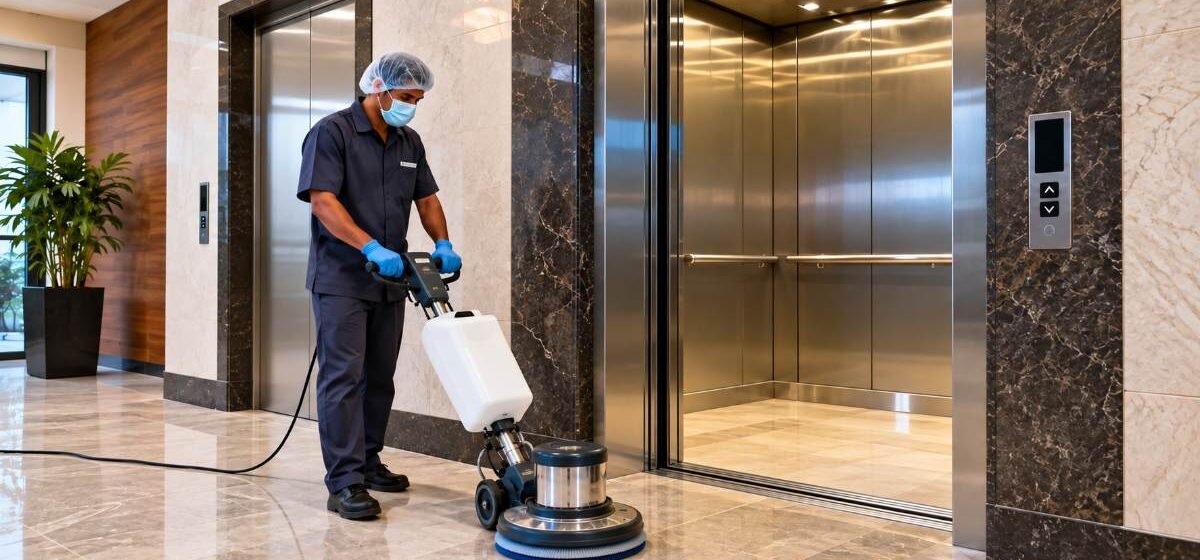
Walk into any hotel back-of-house store and you’ll find one parked behind the mop trolleys. A single disc machine is the workhorse most facilities buy first, and the one most facilities never fully use. Plenty of housekeeping teams own one and only ever run it with a red pad on wet floors. SGT Multiclean Equipments provides cleaning equipment solutions that can help facilities make better use of versatile machines.
That’s a shame, because the same body will strip old wax, hone marble, shampoo carpet and bring gloss back to a lobby if you change what’s bolted underneath. This guide covers how to size it, what the pads mean, what it costs to run in India, and where it beats faster equipment. SGT Multiclean Equipments can help you choose equipment suited to your cleaning requirements.
What a Single Disc Machine Is and How It Works
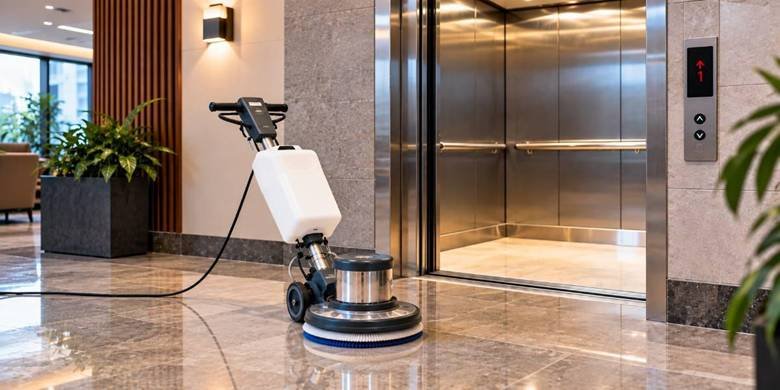
Strip away the marketing and you have a wheeled frame, a handlebar with twin dead-man triggers, a motor driving a gearbox, and a rotating disc carrying either a brush or a pad holder. A solution tank often clips onto the handle. The disc turns one way, and the operator steers by raising or lowering the handle slightly, which shifts the machine left or right.
There’s no water recovery. You mop, squeegee or wet-vacuum after the pass. That limitation defines where a single disc machine fits: excellent for periodic deep work and detail areas, less suited to cleaning 4,000 sq m of open warehouse nightly.
Motor, disc size and speed
Most commercial units use a 1.1 kW to 1.5 kW single-phase motor, with heavier industrial models running to 2.2 kW. Disc diameters of 17 and 20 inches dominate; 15-inch units exist for tight washrooms. Speed splits the category cleanly:
• 154 to 180 rpm is standard scrubbing and stripping speed
• 300 to 400 rpm covers spray cleaning and light polishing
• 1,000 rpm and above is high-speed burnishing territory, a different machine entirely
Weight matters as much as power. A heavier deck presses the pad down harder, and on stripping work that pressure does more than extra wattage ever will.
Why torque steering catches new operators out
The disc’s rotation wants to pull the machine sideways. Trained operators balance it with handle height and it feels effortless. Untrained ones wrestle it into a skirting board within ten minutes and mark the wall. Budget a proper half-day of hands-on training, not a demonstration video.
Jobs a Single Disc Floor Scrubber Handles
A single disc floor scrubber earns its place because of range, not speed. In a typical hotel or hospital week it might do all of the following:
1. Scrub washroom and kitchen floors where grease and grout defeat a mop
2. Strip and re-apply wax on vinyl corridors twice a year
3. Spray-clean marble reception areas between polishing cycles
4. Shampoo banquet carpet with a shampoo brush and tank
5. Clean pavers and ramps in a basement car park
That versatility is why mixed-flooring sites buy one before anything else. A ride-on scrubber cleans faster, but it can’t hone stone or lift wax the way a single disc machine will.
Pads, Brushes and Accessories That Change the Job
The attachment decides the outcome far more than the brand badge. Pad colours follow a broadly common code:
| Pad | Speed | Typical use |
| White | Low to medium | Light buffing on sealed stone |
| Red | Low | Routine spray cleaning |
| Blue | Low | General scrubbing on vinyl and tile |
| Green | Low | Heavy scrubbing on concrete |
| Black | Low | Wax stripping with stripper solution |
Beyond pads you’ll want a nylon scrub brush for rough concrete, a grit brush for ribbed tiles, a carpet shampoo brush with a tank, and diamond pads if stone maintenance is on the list. Pad holders wear out every year or two on heavy duty.
Never run a black stripping pad dry, and never take one above low speed. Both mistakes burn the floor finish and shorten pad life.
Choosing the Right Single Disc Machine for Your Site
Start with floor area and floor type, then work backwards. For sites under about 1,000 sq m with mixed surfaces, a 17-inch machine at 154 rpm covers nearly everything. Above that, and where corridors are long and straight, a 20-inch deck cuts pass count noticeably.
Ask three questions before you commit:
• How rough is the floor? Kota stone, exposed concrete and old ceramic need brushes and weight, not pads.
• Where does it have to fit? Measure the narrowest washroom door and the service lift.
• Who runs it? High operator turnover favours simple controls and clearly marked switches.
Industrial single disc machine variants add a heavier chassis, metal gearbox housing and longer cable, which is what you want in a factory or a food plant running six days a week. In a 60-room hotel, that build is usually overspending.
Using It as a Floor Polishing Machine and Floor Buffing Machine
Fitted with white or diamond pads at moderate speed, the unit becomes a floor polishing machine capable of restoring gloss to marble, granite and terrazzo. This isn’t grinding. Deep scratch removal still needs a dedicated stone machine with proper tooling.
Used as a floor buffing machine on waxed vinyl, the same unit lifts scuff marks and evens out the finish between full strip-and-seal cycles. Buffing well is a rhythm skill: overlap each pass by about a third of the disc, work in straight lines, and change the pad when it loads up rather than pressing harder.
Price, Power and Running Costs in India
Indicative pricing for a decent commercial floor cleaner in this category runs roughly Rs 45,000 to Rs 1,20,000, depending on disc size, motor rating, build quality and whether a solution tank is included. An industrial single disc machine with a metal gearbox sits at the upper end and beyond.
Running costs are modest, which is the real appeal. Pads cost Rs 200 to Rs 600 each and last several weeks. Brushes run Rs 2,500 to Rs 6,000 and last a year or more. Power draw barely registers next to labour, and most units take ordinary single-phase 230V supply, so no electrical work is needed before delivery.
Ask about carbon brushes, gearbox service intervals and cable replacement before buying, and confirm what an AMC covers.
Safety, Maintenance and Operator Training
Cable damage is the most common single disc machine failure in Indian facilities, usually because someone ran the disc over the lead. Train operators to keep the cable over a shoulder and behind them. Use a residual current device on the socket, especially in wet areas.
After every shift, rinse the pad, tilt the machine so the pad isn’t compressed overnight, rinse the solution tank, and coil the cable properly. Monthly, check the gearbox for oil seepage and the wheels for embedded grit. These habits routinely double the working life of a commercial floor cleaner.
Frequently Asked Questions
What size single disc machine should a small hotel buy?
A 17-inch unit at around 154 rpm suits most properties under roughly 1,000 sq m. It fits through standard washroom doors, handles vinyl, tile and marble, and is light enough for housekeeping staff to move between floors in a service lift without needing two people every time.
Can one machine both scrub and polish floors?
Yes, and that flexibility is the main reason to buy one. Change the pad or brush and the same body scrubs, strips, buffs and polishes. What it will not do is dry the floor, so plan for a mop or wet vacuum as part of every cleaning routine.
How long does the machine last with daily use?
With sensible upkeep, seven to ten years is realistic for a good commercial build. Motors and gearboxes tend to outlive cables, switches and pad holders, which are all replaceable. Neglect the cable and run pads past their life, though, and you can halve that easily.
Is a single disc machine safe on wooden floors?
On sealed timber and laminate, yes, at low speed with a soft white pad and minimal water. Excess moisture is the real enemy with wood. Test a small hidden area first, keep the solution light, and dry the surface promptly rather than letting water sit in the joints.
Conclusion
A single disc machine is rarely the fastest cleaning equipment you’ll own, but it’s often the most useful. One motor, one disc, and a shelf of pads will cover scrubbing, stripping, buffing, polishing and carpet care across a mixed building for a fraction of what dedicated machines cost. SGT Multiclean Equipments offers cleaning equipment options for different facility requirements.
Size it to your floor, train the operators properly, look after the cable, and match the pad to the job rather than reaching for whatever’s nearest. If you’re weighing up your options, walking an experienced supplier like SGT Multiclean Equipments through your floor types and asking for an on-site trial is the fastest way to get an answer that fits your building.